
Shaoxing Day Trip from Hangzhou: Lu Xun, Yellow Wine, and Water Canals
Updated July 2026 — train times, ticket prices, and itinerary timing verified.
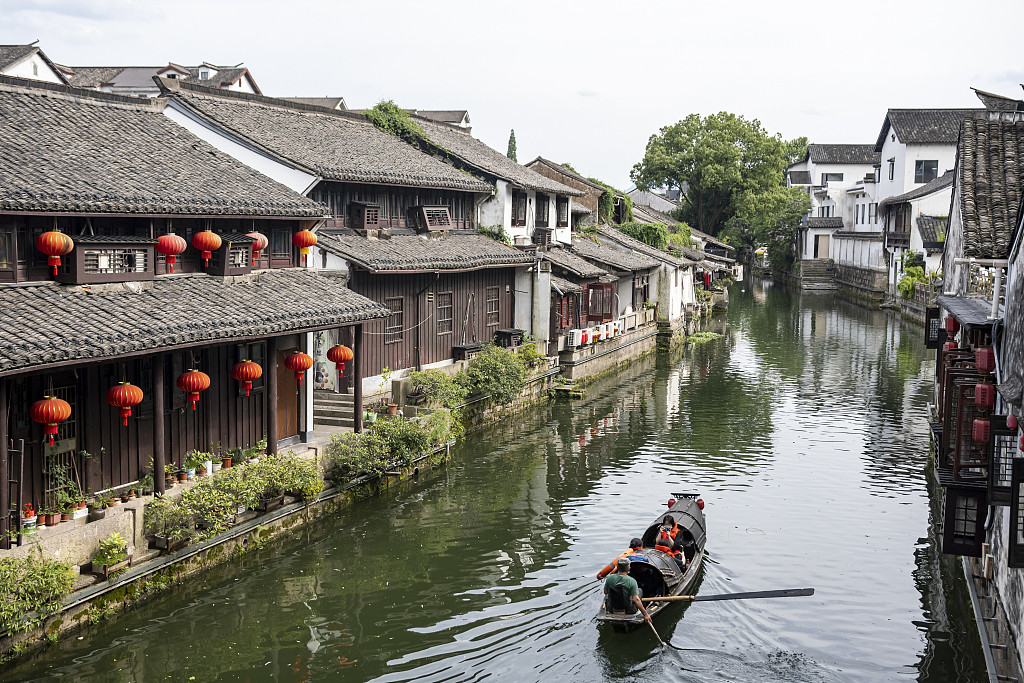
Shaoxing (绍兴) is a 2,500-year-old water-town one hour south of Hangzhou, and one of the easiest, most rewarding day trips you can take from the city. It’s the birthplace of Lu Xun (China’s most famous 20th-century writer), the home of Shaoxing yellow wine (the rice-based wine that’s been produced here for over 2,000 years), and one of the best-preserved canal cities in the Yangtze Delta. Unlike the more famous Wuzhen (which has been heavily restored for tourists), Shaoxing is still a working city — locals live in the old houses, the canal boats are still used for transport, and the cultural sites are integrated with daily life.
This guide covers how to get from Hangzhou to Shaoxing, what to see when you arrive, what to eat, and a tested day-trip itinerary that covers the highlights without rushing.
Why Shaoxing Is Worth a Day
Three reasons Shaoxing is a better day trip than the alternatives from Hangzhou:
- It’s the most authentic water town you can reach in a day. Wuzhen is the most famous, but it’s also the most touristed — restored in the 2000s and now essentially an open-air museum with hotel guests. Shaoxing is older, more lived-in, and less expensive, and the canal boats are still the way people get around the city center.
- It has real cultural depth. Lu Xun’s former home is here, and his writing is taught in every Chinese school — the museum is genuinely moving even if you don’t read Chinese. Yellow wine culture is a few thousand years old and is integrated into the local food. The city has produced dozens of famous writers, painters, and politicians over the centuries.
- It’s easy to reach. 50-60 minutes by train from Hangzhou, with departures every 20-30 minutes all day. No need to pre-book a tour or join a bus group.
How to Get to Shaoxing from Hangzhou
Three options, in order of how most tourists do it.
Option 1: High-Speed Train (Recommended)
Trains run from Hangzhou East Railway Station to Shaoxing North Station every 20-30 minutes from 6 a.m. to 10 p.m. The trip takes 25-35 minutes on the fastest trains, 50-60 minutes on slower ones. Second-class seats cost ¥20-35. Tickets are easy to buy the day of at the station, or in advance via Trip.com / 12306 (Chinese rail app).
From Shaoxing North Station to the old city center is a 30-minute DiDi ride (¥40-60) or a 20-minute metro ride (Line 1 to the city center, ¥3-5).
Total time door-to-door from a Hangzhou lakeside hotel to the Shaoxing old city: about 2 hours. Total cost: ¥25-50 per person.
Option 2: Tourist Bus
Several Hangzhou travel agencies run daily tourist buses to Shaoxing, departing from hotels or central pickup points. The bus ride is 1.5-2 hours (longer than the train because of the road route), but the bus includes a guide and sometimes a few admission tickets. ¥150-300 per person.
The advantage is convenience: hotel pickup, no need to navigate the train station, a guide to explain the sites. The disadvantage is less flexibility, fewer departure times, and a longer total trip.
Option 3: DiDi or Car
A private DiDi Premier (or a hired car) from Hangzhou to Shaoxing takes 1.5-2 hours, costs ¥400-700 each way, and gives you total flexibility. Good for groups of 3-4 people, families with kids, or anyone who hates public transit. The car drops you at the old city center directly.
What to See in Shaoxing
Shaoxing is compact — the entire old city is walkable in a day. The main sites are concentrated within a 1.5 km radius of the city center. Here are the must-sees.
1. Lu Xun’s Hometown (鲁迅故里)
The most important cultural site in Shaoxing. Lu Xun (1881-1936) is widely considered China’s greatest 20th-century writer, and his short stories — including “The True Story of Ah Q” and “Diary of a Madman” — are required reading in every Chinese school. The complex includes his former home (a traditional Shaoxing courtyard house, free to enter), the Sanwei Study (the school where he studied as a child), and a museum of his life and work.
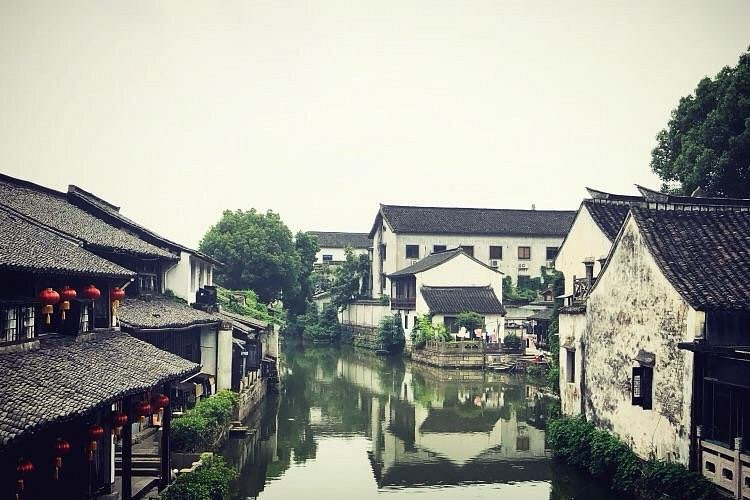
Even if you don’t read Chinese, the museum is fascinating. There are English translations of several of his works, and the displays give good context on early-20th-century Chinese intellectual life. The traditional Shaoxing house itself — with its black-tile roof, whitewashed walls, and central courtyard — is also architecturally beautiful.
Allow 2-3 hours. Free entry (with passport for the museum). Open 8:30 a.m. to 5 p.m. daily. Located on Lu Xun Middle Road, in the heart of the old city.
2. Shen Garden (沈园)
A classical Chinese garden and one of the few surviving Song-dynasty gardens in China. The garden is most famous for the love story of Lu You and Tang Wan, a 12th-century poet and his cousin, who were forced apart by his family. The garden contains a small museum about the couple, several pavilions and ponds, and a 400-year-old ginkgo tree.
The garden is small (45 minutes is enough) but atmospheric. The Song-era architecture and the willow-lined ponds make it a great spot for photography. ¥40 entry. Open 8 a.m. to 5 p.m. daily. Located 5 minutes’ walk from Lu Xun’s hometown.
3. East Lake (东湖)
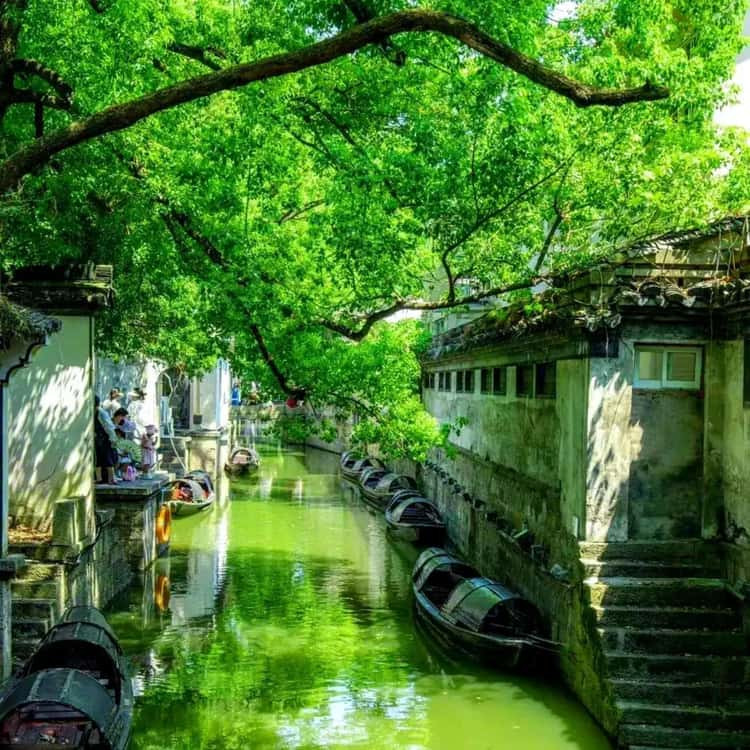
The most beautiful natural site in Shaoxing. East Lake is a narrow, deep lake lined with sheer cliffs and stone-cut caves, formed by quarrying in the Han dynasty. The most popular activity is the traditional black-awning boat (乌篷船, ¥80-150 per boat) that takes you through the caves and under the cliffs. Each boat holds 2-3 people; the trip lasts 30-40 minutes.
The lake and the surrounding park are also worth walking around. The cliffs are dramatic, the water is jade-green, and the willow-lined paths are beautiful. Allow 2-3 hours for the boat and a walk.
¥45 entry to the park (boat is extra). Open 7:30 a.m. to 5:30 p.m. daily. Located 4 km east of the old city — DiDi 15-20 minutes (¥20-30) or bus 1/7/38 from the city center.
4. Bazi Bridge (八字桥)
The most photogenic bridge in Shaoxing, and one of the most unusual bridges in China. Built in the Southern Song dynasty (1256), the bridge is shaped like a Chinese character 八 (meaning “eight”), with two arms splitting at right angles over a canal junction. Free to walk on, and the surrounding neighborhood is one of the most authentic old-city areas in Shaoxing.
Located 1.5 km east of Lu Xun’s hometown, 5 minutes’ walk. Combine with a walk through the surrounding residential streets for the most authentic local experience.
5. Cangqiao Straight Street (仓桥直街)
A 1.5 km historic street that runs north from the old city center, lined with preserved Ming and Qing-era houses, small shops, and snack vendors. Less touristed than the Lu Xun area, with more locals. Several small museums along the way (the Shaoxing Yellow Wine Museum is on this street). Free to walk.
Great for an hour or two of slow browsing. Try the local rice wine ice cream, the stinky tofu, and the various Shaoxing snacks.
6. Shaoxing Yellow Wine Museum (中国黄酒博物馆)
A small museum dedicated to Shaoxing’s most famous export — the amber-colored rice wine that’s been made here for over 2,000 years. The museum covers the history, the production process, and the cultural role of yellow wine in Chinese life. There’s a tasting room at the end where you can try several varieties.
¥30 entry. Open 8:30 a.m. to 5 p.m. Located on Cangqiao Straight Street. Allow 1-1.5 hours. Even if you don’t drink, the museum is interesting for the cultural context.
What to Eat: Shaoxing’s Signature Dishes
Shaoxing cuisine is related to Hangzhou cuisine (both are part of the Jiangnan tradition) but distinct in a few ways: it uses more rice wine in cooking, more preserved ingredients, and has a stronger fermented flavor. The signature dishes are worth trying.
Must-Try Dishes
- Shaoxing wine-braised pork (糟肉): pork belly braised in aged Shaoxing wine until the fat is translucent and the flavor is rich and slightly fermented. The signature Shaoxing dish. ¥40-60 a portion at most local restaurants.
- Stinky tofu (臭豆腐): not actually stinky when cooked — the fermentation smell dissipates in the pan. Crispy outside, soft inside, served with chili sauce and pickled vegetables. ¥5-10 a portion at street vendors.
- Yellow wine popsicle (黄酒棒冰): an ice cream made with Shaoxing yellow wine. Slightly sweet, slightly alcoholic, only available in Shaoxing. ¥5-10. Worth trying once.
- Soy-braised duck (酱鸭): duck marinated in dark soy and Shaoxing wine, then air-dried and steamed. Sweet, savory, with a strong wine aroma. ¥50-80 a portion.
- Wined-up fermented rice balls (酒酿圆子): glutinous rice balls in a sweet fermented rice soup with Shaoxing yellow wine. Sweet, slightly alcoholic, very warming. ¥15-25 a bowl.
- Black-awning boat noodles (乌篷船面): noodles served in a small dish that looks like a tiny boat. A Shaoxing tradition, often eaten on the East Lake boat trips. ¥20-30 a bowl.
Where to Eat
- Lu Xun Hometown area: most restaurants on Lu Xun Middle Road cater to tourists. The food is decent but slightly more expensive. Look for places with menus in the window showing pictures.
- Cangqiao Straight Street: more local feel, with several famous old restaurants. Try Xianheng Hotel (咸亨酒店), the most famous Shaoxing restaurant, dating from 1894. It’s the setting for several of Lu Xun’s stories.
- Shaoxing snacks: try the stinky tofu at any of the street vendors, the yellow wine popsicle from the convenience stores, and the rice wine ice cream at the Yellow Wine Museum.
Buying Shaoxing Yellow Wine to Take Home
Yellow wine is one of the few genuinely regional products that you can’t really get outside China. The Shaoxing varieties are the most famous. If you want to take a bottle home, here’s what to know.
- What to buy: look for Shaoxing Huadiao (花雕酒) or Shaoxing Jiafan (加饭酒), the two most respected styles. Aged 5+ years is the sweet spot for flavor (¥80-200 per bottle); 10+ years is the premium (¥300+).
- Where to buy: the Yellow Wine Museum shop has certified bottles, or the Guyuelongshan (古越龙山) flagship store on Cangqiao Straight Street. Both are reliable and offer shipping within China. For international shipping, ask at the museum shop — they sometimes can.
- Packing for the flight: yellow wine is 14-18% alcohol, so it’s typically allowed in checked luggage. Wrap the bottles well (the museum and shop can pack them) and put them in the center of your checked bag. Some countries have limits on how much alcohol you can bring in; check before you buy.
A Tested Day-Trip Itinerary
Here’s how to spend a full day in Shaoxing without rushing. This assumes an 8 a.m. start from Hangzhou and a 7 p.m. return.
Morning: Lu Xun and the Old City
7:30 a.m.: breakfast at the hotel in Hangzhou. DiDi to Hangzhou East Railway Station (¥30-50).
8:30 a.m.: board a high-speed train to Shaoxing North (¥30, 30 min). Buy tickets at the station or in advance via Trip.com.
9:30 a.m.: arrive at Shaoxing North. DiDi to Lu Xun’s Hometown (¥40-60, 30 min) or take the metro (¥5, 20 min).
10 a.m. – 12:30 p.m.: explore Lu Xun’s Hometown, the Sanwei Study, and the museum. Allow 2-3 hours. The museum is the most moving part; budget time here.
12:30 – 1:30 p.m.: lunch at Xianheng Hotel on Lu Xun Middle Road. Try the wine-braised pork, stinky tofu, and a bowl of rice wine soup.
Afternoon: Shen Garden and East Lake
1:30 – 2:15 p.m.: walk to Shen Garden (5 minutes). Explore the garden, the Lu You museum, and the ginkgo tree. Allow 45 minutes.
2:15 – 3:30 p.m.: walk to Cangqiao Straight Street (15 minutes). Browse the old houses, stop at the Yellow Wine Museum for a quick visit and tasting, and try the yellow wine popsicle.
3:30 p.m.: DiDi to East Lake (15 min, ¥20-30). Or take bus 1 from the old city center.
3:45 – 5:30 p.m.: East Lake. Buy the park entry ticket (¥45), then rent a traditional black-awning boat (¥80-150 for 2-3 people, 30-40 min). Walk the cliff-side paths before or after the boat.
Evening: Return
5:30 p.m.: DiDi back to Shaoxing North Station (¥40-60, 30 min) or to a restaurant in the old city for one last meal.
6:30 p.m.: board a train back to Hangzhou East. Last train is around 9:30 p.m., so no rush.
7:30 p.m.: arrive at Hangzhou East. DiDi back to your hotel (¥30-50).
Total trip cost: ¥150-250 per person (excluding dinner), depending on how many of you share the boat and the DiDi rides.
What to Skip
Not everything in Shaoxing is worth a day-tripper’s time. A few things to skip or treat as low-priority:
- The Shaoxing Rice Wine Factory tour: interesting if you have a deep interest in fermentation, but the tour is mostly Chinese-language and the actual production is automated. Skip if you’re short on time.
- The Orchid Pavilion (兰亭): the famous calligraphy site is 13 km southwest of the city, requires a 30-minute DiDi each way, and the actual site is small. Worth it only if you have a specific interest in Chinese calligraphy. Skip otherwise.
- Most of the old city’s residential streets: the restored parts (Lu Xun area, Shen Garden) are great; the unrestored residential streets can be dirty and the canals smell bad. Stick to the main tourist streets.
What If You Want to Stay Overnight?
If you can stretch to 2 days, Shaoxing has several interesting boutique hotels in the old city that make the trip feel less rushed. The best options:
- Shaoxing Hotel (绍兴饭店): a 60-year-old hotel in the old city, with a beautiful garden, lake views, and a strong sense of place. ¥400-700/night.
- Holiday Inn Shaoxing Central: reliable mid-range, central location, ¥350-500/night. Best for families.
- Various boutique guesthouses on Cangqiao Straight Street: restored courtyard houses, ¥300-500/night. Atmospheric but basic.
Overnight also lets you see the canals lit up at night (much more atmospheric than daytime) and try several of the local restaurants without rushing.
The Bottom Line
Shaoxing is the day trip from Hangzhou that most visitors underrate. It’s older than Wuzhen, more lived-in, and the cultural sites (Lu Xun especially) are genuinely world-class. A full day here is enough to see the highlights, and the train ride from Hangzhou is so easy that there’s no reason to skip it. Take the train, eat the wine-braised pork, ride the black-awning boat through East Lake’s caves, and you’ll understand why this place has been a center of Chinese culture for 2,500 years.