
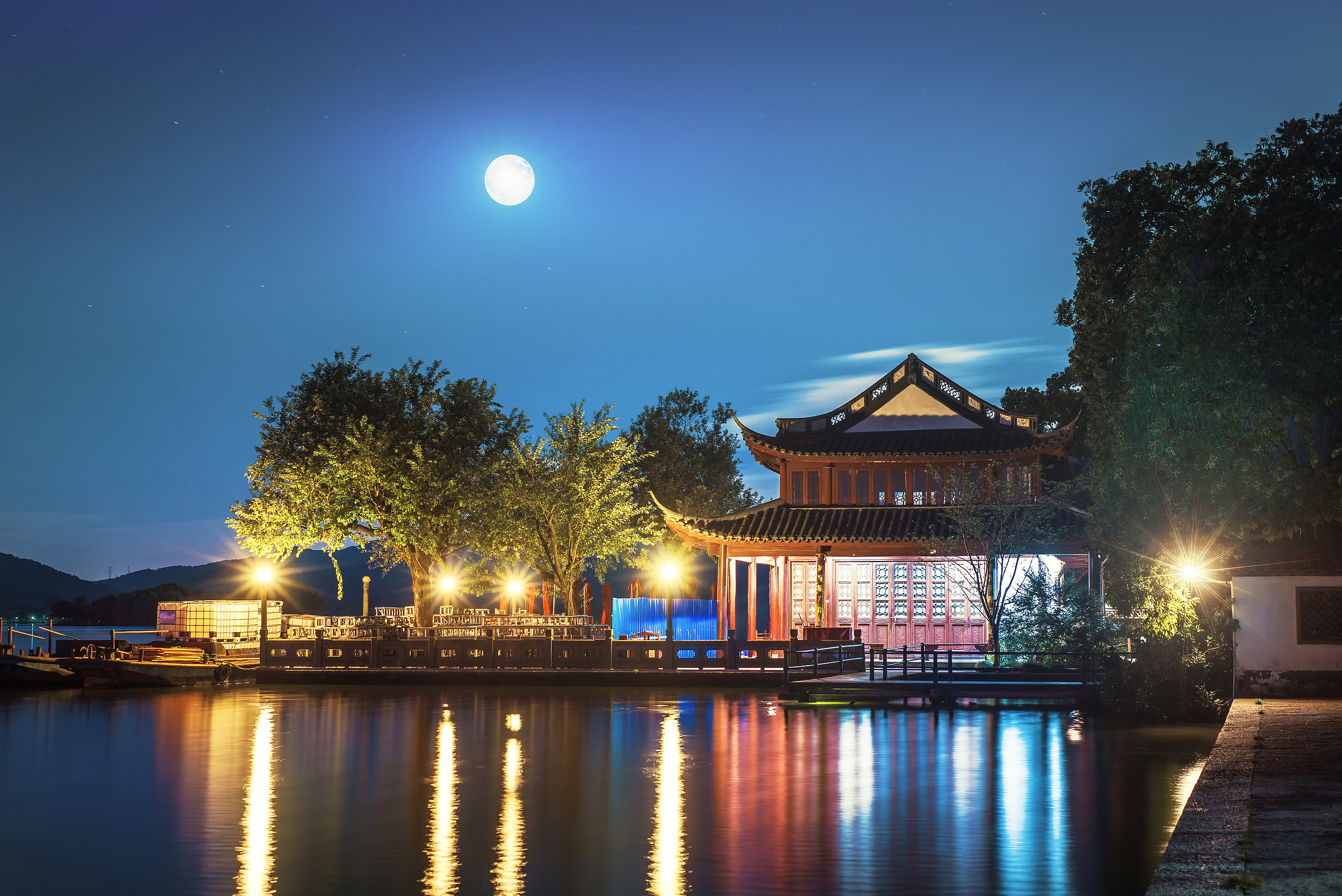
Hangzhou in Autumn 2026: Osmanthus, Maples, Mid-Autumn Festival & What to Expect (Oct-Nov)
Updated July 2026 – bloom dates, Mid-Autumn Festival timing, and autumn weather re-checked against Hangzhou Meteorological Bureau data.
Autumn in Hangzhou is the best two months of the year. The summer heat breaks in mid-September, the osmanthus blooms from the last week of September through the first three weeks of October, the maple trees at Jiuxi turn red from late October through mid-November, the Mid-Autumn Festival lands on a full moon over West Lake, and the rain slows to 7-8 days per month (vs. 14-15 in spring). Hotel rates in October and November are 30-40% below the April peak, and the air quality is the cleanest of the year.
The one drawback: the second half of October and the first half of November overlap with the National Day holiday (October 1-7) and the Hangzhou International Marathon (early November). Avoid those exact weeks. The rest of the autumn window – September 20-30, October 8-25, and November 5-30 – is the best balance of weather, blooms, and price.
What Autumn Actually Looks Like (Week by Week)
Hangzhou’s autumn is more compressed than spring – the visual changes happen in a tight 8-week window, and missing the peak is easier.
Mid to late September: Late summer, first osmanthus hints
The first three weeks of September are still hot (27-30°C) but the humidity drops sharply. The earliest osmanthus (sweet osmanthus, 桂花) start opening around September 20-25 in 2026, first in the warmer city-center gardens. Manjuelong Village and Hupao are the densest osmanthus areas and the bloom there runs 5-7 days later than the city. By September 30, the city has a faint sweet smell at dawn – the first sign of the main bloom.
Early October: Osmanthus peak + National Day crowds
The first 1-2 weeks of October are the osmanthus peak. The flowers are small (4mm) and yellow-orange, and the fragrance is intense at dawn and dusk. Manjuelong Village is ground-zero: the entire village smells like osmanthus, the ground is yellow with fallen flowers, and the village sells osmanthus-flavored everything (cakes, tea, ice cream, rice wine).
The catch: the first week of October is the National Day holiday (国庆节), the worst crowd week of the year. Manjuelong on October 2-4 is shoulder-to-shoulder. If your dates are flexible, target the second or third week of October for the same osmanthus at 1/3 the crowds.
Mid-October: Ginkgo + second osmanthus peak
By October 10-15, the ginkgo trees on the south side of West Lake (along Hubin Road, near the Su Causeway entrance) turn bright yellow. The peak is October 15-25. Combined with the osmanthus still going at Manjuelong (the bloom lasts 3-4 weeks in total), mid-October is the densest color week in the city.
The 2026 Mid-Autumn Festival (中秋节) is on September 21 in the lunar calendar, which falls in late October in the Gregorian calendar. The exact date varies year to year – check the lunar calendar before booking. The festival itself is a single evening celebration: moon-viewing, mooncakes, and a lantern walk along West Lake. Beautiful but quiet; not the multi-day event that Chinese New Year is.
Late October to mid-November: Maple peak
The maple (红枫) trees at Jiuxi (九溪), Manjuelong, and the Lingyin Temple approach turn red from late October through mid-November. Peak is November 1-10 in 2026. The Jiuxi Maple Walk (九溪红枫) is the single best autumn walk in Hangzhou: a 4-km path through the forest, mostly flat, lined with red and yellow maples, with stream crossings every 500 meters. The temperature is 14-18°C, the air is clean, and the path is shaded.
Late November: Late autumn, first cold snap
By the last week of November, the maple peak is over and the ginkgo leaves are mostly fallen. The first cold snap of winter usually hits around November 25-30, dropping the low temperature to 5-8°C. The city quiets down significantly; this is the cheapest and least-crowded week of the autumn window, but the visual peak is past. Best for travelers who want price and quiet over color.
Osmanthus (桂花): The Scent of Hangzhou Autumn
Osmanthus is the single most distinctive sensory experience of Hangzhou autumn. The flowers are small, yellow-orange, and the scent is sweet and slightly apricot-like. The trees are everywhere in the city – planted along roads, in temples, in residential gardens – and during the bloom the entire central city smells faintly sweet at dawn and dusk.
Where to go for the densest osmanthus:
- Manjuelong Village (满觉陇): 30 minutes south of West Lake by DiDi. The village has 7,000+ osmanthus trees, the densest concentration in the city. Tea houses line the lanes and serve osmanthus-infused Longjing tea (桂花龙井, the autumn specialty). Peak: October 5-20 in 2026.
- Hupao (虎跑): The spring-water source area south of West Lake. Osmanthus is mixed with bamboo and camphor trees, the air is fresh, and the crowds are smaller than Manjuelong. Combine with the Hupao Spring Park (15 RMB entry) for a half-day.
- Su Causeway: 200+ osmanthus trees along the causeway itself. Lower density than Manjuelong but you see them in context with the lake.
- Chenghuang Pavilion (城隍阁): The hilltop pavilion on Wushan, south of West Lake. Osmanthus and a panoramic city view. Small entrance fee (10 RMB).
What to eat with osmanthus:
- Osmanthus cake (桂花糕): The traditional sweet. Glutinous rice with sugar and osmanthus petals, steamed. Sold at every Manjuelong tea house and most Hangzhou dessert shops.
- Osmanthus rice wine (桂花酒): Sweet, low-alcohol, traditionally served warm. Available at Manjuelong tea houses (30-50 RMB per small pot) and at the Hefang Ancient Street shops.
- Osmanthus-scented Longjing (桂花龙井): The autumn blend – spring-picked Longjing leaves stored with fresh osmanthus until the flowers dry. 400-800 RMB / 100g in 2026. The Hupao and Manjuelong tea houses sell the freshly-blended version; the supermarket version is from the previous year.
The Jiuxi Maple Walk (九溪红枫)
The Jiuxi Maple Walk is the single best autumn walk in Hangzhou. 4 km of forested path, mostly flat, with stream crossings and dense maple trees that turn red, orange, and yellow from late October through mid-November.
The route: Jiuxi Bus Terminal (九溪公交站) to Longjing Village (龙井村). 4 km, 1.5-2 hours at a slow pace with photo stops. The path is paved in the first half and becomes a stone-and-dirt path in the second. Several small bridges and tea houses along the way. The endpoint is Longjing Village, where you can stop for a tea house visit or a DiDi back to West Lake.
How to get to the start: Bus 4, 39, or 308 from the West Lake shore to Jiuxi Bus Terminal. 30-40 minutes, 2 RMB. Or a DiDi directly to “Jiuxi” (45-60 RMB from Hubin).
Peak timing: November 1-10 in 2026. The maples peak later than the osmanthus, so a late-October trip catches the osmanthus at Manjuelong and an early-November trip catches the maples at Jiuxi. Combine both in a 4-day trip.
What to bring: comfortable walking shoes (the stone path is uneven), a light jacket, water. The walk is shaded and the temperature drops 2-3°C below the city. No ticket required, free entry.
Mid-Autumn Festival (中秋节) in Hangzhou
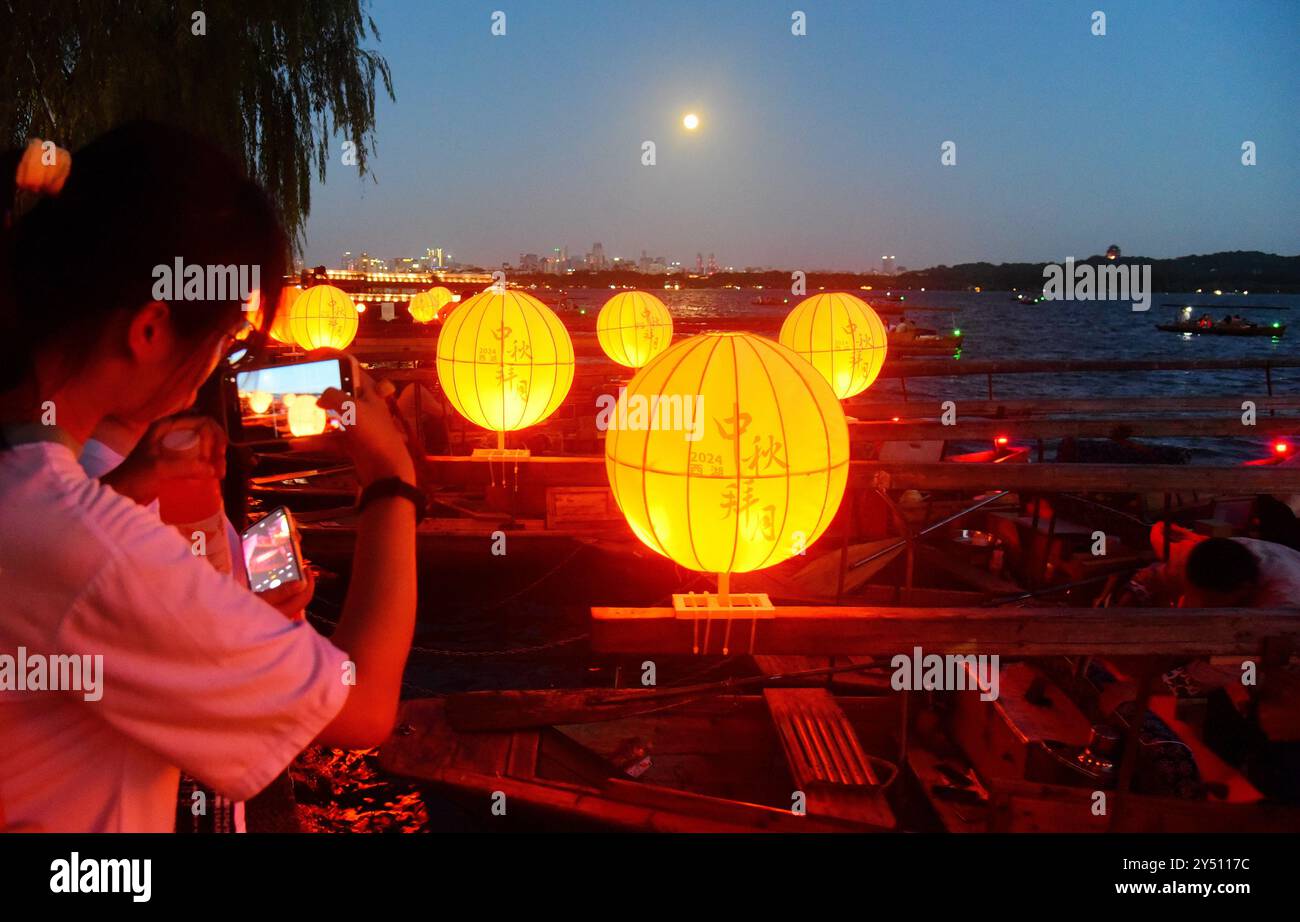
The Mid-Autumn Festival falls on the 15th day of the 8th lunar month. In 2026, the Gregorian date is October 6 – the second day of the National Day holiday, which complicates things. The festival itself is a single evening event, not the multi-day celebration that Chinese New Year is. The main activities:
- Moon viewing on West Lake: The lake shore at Hubin No. 1 Park and the Broken Bridge are the most popular spots. The full moon rises around 6:30 p.m. in October. Bring a blanket or a folding stool; the seating fills up by 6 p.m.
- Lantern walks on Hefang Ancient Street: The street is lit with lanterns and the shops sell mooncakes and pomelo. Atmospheric but crowded.
- Mooncakes (月饼): The traditional food. Try the local variations: the small green-tea mooncakes from Zhi Wei Guan (12-25 RMB each), the osmanthus mooncakes from Manjuelong tea houses (20-30 RMB), or the chain-store versions at Wedome or Daoxiangcun (8-15 RMB).
Skip the Mid-Autumn Festival as a primary draw. The festival is a quiet family event in China, not a major public celebration. The moon is full and the moon cakes are good, but if you book a trip specifically for Mid-Autumn and ignore the rest of the autumn calendar, you’ll have a 2-hour evening and 8 days of waiting.
Weather in October and November: What to Plan For
Hangzhou autumn is the driest and most stable weather of the year.
- Average high temperature October: 22-24°C
- Average low temperature October: 13-15°C
- Average high temperature November: 16-18°C
- Average low temperature November: 8-10°C
- Rainy days October / November: 8 / 7
- Humidity: 60-70% (significantly drier than spring and summer)
- Air quality: Best of the year. AQI typically 40-70 (good to moderate).
What to pack: layers – a light sweater or jacket for the evening, a long-sleeve shirt for daytime, comfortable walking shoes. The temperature can swing 10°C between noon and 6 p.m. in October. An umbrella is useful but less critical than in spring; the rain is lighter.
Autumn-Specific Foods to Try
Hangzhou has a few seasonal dishes that are worth trying in autumn:
- Hairtail fish (带鱼): Caught in the East China Sea, peak season October-November. The Lou Wai Lou version (steamed with salt and ginger) is the standard. 100-150 RMB per person as a side dish.
- Chestnut chicken (栗子鸡): Fresh chestnuts from the western hills, slow-cooked with chicken. Available at most Hangzhou-cuisine restaurants in October-November. 60-90 RMB per dish.
- Crab: The Yangcheng Lake hairy crabs are closer to Suzhou but Hangzhou restaurants serve them in October. 80-150 RMB per crab at the better restaurants.
- Sweet osmanulus wine and osmanthus cakes: See above.
What to Skip in Autumn
- October 1-7 National Day week: Avoid at all costs. The city is at 2-3x normal crowd levels, hotel rates are 2x, and the West Lake area is unpleasantly dense. Even the locals leave.
- Hangzhou International Marathon weekend (early November): The marathon route closes major roads including parts of Su Causeway and the lakeshore path. Hotel rates spike 50% for the weekend.
- Leifeng Pagoda in late October. The view is fine, but the climb to the top is 200+ steps and the autumn wind at the top is cold. Skip the climb and walk around the base.
- The Wushan Night Market in late November. The night market is great in summer but cold and thin in late November. Some vendors close by 10 p.m. in the cold weather.
Common Mistakes
- Booking the first week of October for osmanthus. The osmanthus is at peak, but so are the National Day crowds. The second or third week of October has the same osmanthus at 1/3 the crowds and 30-40% lower hotel rates.
- Wearing a heavy coat. Autumn Hangzhou is mild. A heavy coat is overkill; you’ll be carrying it by noon. Layers are the right call.
- Missing the Jiuxi Maple Walk. The single best autumn walk in the city, and most visitors miss it because it’s not on the West Lake shore. The 30-minute bus ride from the lake is worth it.
- Booking a lake-view hotel for the autumn fog. Autumn mornings have heavy fog over the lake. The view is “atmospheric” but it’s also white for 2-3 hours after sunrise. Save the lake-view markup for a clearer season.
The Bottom Line
Autumn is the right season for Hangzhou. The weather is mild and dry, the colors are real, the osmanthus is something you can’t experience anywhere else in the same way, and the Jiuxi maple walk is a peak experience. The 8-week window from September 20 to November 15 is the best balance. Avoid National Day week specifically. Book 2-3 weeks ahead for late October and the first half of November; you can walk-in for the rest.
Total Stats
- Osmanthus peak 2026: October 5-20 (Manjuelong)
- Maple peak 2026: November 1-10 (Jiuxi)
- Average high / low October: 23°C / 14°C
- Average high / low November: 17°C / 9°C
- Rainy days October / November: 8 / 7
- Hotel rate vs. April peak: 30-40% lower
Hangzhou in Autumn 2026: Osmanthus, Maples, Mid-Autumn Festival & What to Expect (Oct-Nov)
Updated July 2026 – bloom dates, Mid-Autumn Festival timing, and autumn weather re-checked against Hangzhou Meteorological Bureau data.
Autumn in Hangzhou is the best two months of the year. The summer heat breaks in mid-September, the osmanthus blooms from the last week of September through the first three weeks of October, the maple trees at Jiuxi turn red from late October through mid-November, the Mid-Autumn Festival lands on a full moon over West Lake, and the rain slows to 7-8 days per month (vs. 14-15 in spring). Hotel rates in October and November are 30-40% below the April peak, and the air quality is the cleanest of the year.
The one drawback: the second half of October and the first half of November overlap with the National Day holiday (October 1-7) and the Hangzhou International Marathon (early November). Avoid those exact weeks. The rest of the autumn window – September 20-30, October 8-25, and November 5-30 – is the best balance of weather, blooms, and price.
What Autumn Actually Looks Like (Week by Week)
Hangzhou’s autumn is more compressed than spring – the visual changes happen in a tight 8-week window, and missing the peak is easier.
Mid to late September: Late summer, first osmanthus hints
The first three weeks of September are still hot (27-30°C) but the humidity drops sharply. The earliest osmanthus (sweet osmanthus, 桂花) start opening around September 20-25 in 2026, first in the warmer city-center gardens. Manjuelong Village and Hupao are the densest osmanthus areas and the bloom there runs 5-7 days later than the city. By September 30, the city has a faint sweet smell at dawn – the first sign of the main bloom.
Early October: Osmanthus peak + National Day crowds
The first 1-2 weeks of October are the osmanthus peak. The flowers are small (4mm) and yellow-orange, and the fragrance is intense at dawn and dusk. Manjuelong Village is ground-zero: the entire village smells like osmanthus, the ground is yellow with fallen flowers, and the village sells osmanthus-flavored everything (cakes, tea, ice cream, rice wine).
The catch: the first week of October is the National Day holiday (国庆节), the worst crowd week of the year. Manjuelong on October 2-4 is shoulder-to-shoulder. If your dates are flexible, target the second or third week of October for the same osmanthus at 1/3 the crowds.
Mid-October: Ginkgo + second osmanthus peak
By October 10-15, the ginkgo trees on the south side of West Lake (along Hubin Road, near the Su Causeway entrance) turn bright yellow. The peak is October 15-25. Combined with the osmanthus still going at Manjuelong (the bloom lasts 3-4 weeks in total), mid-October is the densest color week in the city.
The 2026 Mid-Autumn Festival (中秋节) is on September 21 in the lunar calendar, which falls in late October in the Gregorian calendar. The exact date varies year to year – check the lunar calendar before booking. The festival itself is a single evening celebration: moon-viewing, mooncakes, and a lantern walk along West Lake. Beautiful but quiet; not the multi-day event that Chinese New Year is.
Late October to mid-November: Maple peak
The maple (红枫) trees at Jiuxi (九溪), Manjuelong, and the Lingyin Temple approach turn red from late October through mid-November. Peak is November 1-10 in 2026. The Jiuxi Maple Walk (九溪红枫) is the single best autumn walk in Hangzhou: a 4-km path through the forest, mostly flat, lined with red and yellow maples, with stream crossings every 500 meters. The temperature is 14-18°C, the air is clean, and the path is shaded.
Late November: Late autumn, first cold snap
By the last week of November, the maple peak is over and the ginkgo leaves are mostly fallen. The first cold snap of winter usually hits around November 25-30, dropping the low temperature to 5-8°C. The city quiets down significantly; this is the cheapest and least-crowded week of the autumn window, but the visual peak is past. Best for travelers who want price and quiet over color.
Osmanthus (桂花): The Scent of Hangzhou Autumn
Osmanthus is the single most distinctive sensory experience of Hangzhou autumn. The flowers are small, yellow-orange, and the scent is sweet and slightly apricot-like. The trees are everywhere in the city – planted along roads, in temples, in residential gardens – and during the bloom the entire central city smells faintly sweet at dawn and dusk.
Where to go for the densest osmanthus:
- Manjuelong Village (满觉陇): 30 minutes south of West Lake by DiDi. The village has 7,000+ osmanthus trees, the densest concentration in the city. Tea houses line the lanes and serve osmanthus-infused Longjing tea (桂花龙井, the autumn specialty). Peak: October 5-20 in 2026.
- Hupao (虎跑): The spring-water source area south of West Lake. Osmanthus is mixed with bamboo and camphor trees, the air is fresh, and the crowds are smaller than Manjuelong. Combine with the Hupao Spring Park (15 RMB entry) for a half-day.
- Su Causeway: 200+ osmanthus trees along the causeway itself. Lower density than Manjuelong but you see them in context with the lake.
- Chenghuang Pavilion (城隍阁): The hilltop pavilion on Wushan, south of West Lake. Osmanthus and a panoramic city view. Small entrance fee (10 RMB).
What to eat with osmanthus:
- Osmanthus cake (桂花糕): The traditional sweet. Glutinous rice with sugar and osmanthus petals, steamed. Sold at every Manjuelong tea house and most Hangzhou dessert shops.
- Osmanthus rice wine (桂花酒): Sweet, low-alcohol, traditionally served warm. Available at Manjuelong tea houses (30-50 RMB per small pot) and at the Hefang Ancient Street shops.
- Osmanthus-scented Longjing (桂花龙井): The autumn blend – spring-picked Longjing leaves stored with fresh osmanthus until the flowers dry. 400-800 RMB / 100g in 2026. The Hupao and Manjuelong tea houses sell the freshly-blended version; the supermarket version is from the previous year.
The Jiuxi Maple Walk (九溪红枫)
The Jiuxi Maple Walk is the single best autumn walk in Hangzhou. 4 km of forested path, mostly flat, with stream crossings and dense maple trees that turn red, orange, and yellow from late October through mid-November.
The route: Jiuxi Bus Terminal (九溪公交站) to Longjing Village (龙井村). 4 km, 1.5-2 hours at a slow pace with photo stops. The path is paved in the first half and becomes a stone-and-dirt path in the second. Several small bridges and tea houses along the way. The endpoint is Longjing Village, where you can stop for a tea house visit or a DiDi back to West Lake.
How to get to the start: Bus 4, 39, or 308 from the West Lake shore to Jiuxi Bus Terminal. 30-40 minutes, 2 RMB. Or a DiDi directly to “Jiuxi” (45-60 RMB from Hubin).
Peak timing: November 1-10 in 2026. The maples peak later than the osmanthus, so a late-October trip catches the osmanthus at Manjuelong and an early-November trip catches the maples at Jiuxi. Combine both in a 4-day trip.
What to bring: comfortable walking shoes (the stone path is uneven), a light jacket, water. The walk is shaded and the temperature drops 2-3°C below the city. No ticket required, free entry.
Mid-Autumn Festival (中秋节) in Hangzhou
The Mid-Autumn Festival falls on the 15th day of the 8th lunar month. In 2026, the Gregorian date is October 6 – the second day of the National Day holiday, which complicates things. The festival itself is a single evening event, not the multi-day celebration that Chinese New Year is. The main activities:
- Moon viewing on West Lake: The lake shore at Hubin No. 1 Park and the Broken Bridge are the most popular spots. The full moon rises around 6:30 p.m. in October. Bring a blanket or a folding stool; the seating fills up by 6 p.m.
- Lantern walks on Hefang Ancient Street: The street is lit with lanterns and the shops sell mooncakes and pomelo. Atmospheric but crowded.
- Mooncakes (月饼): The traditional food. Try the local variations: the small green-tea mooncakes from Zhi Wei Guan (12-25 RMB each), the osmanthus mooncakes from Manjuelong tea houses (20-30 RMB), or the chain-store versions at Wedome or Daoxiangcun (8-15 RMB).
Skip the Mid-Autumn Festival as a primary draw. The festival is a quiet family event in China, not a major public celebration. The moon is full and the moon cakes are good, but if you book a trip specifically for Mid-Autumn and ignore the rest of the autumn calendar, you’ll have a 2-hour evening and 8 days of waiting.
Weather in October and November: What to Plan For
Hangzhou autumn is the driest and most stable weather of the year.
- Average high temperature October: 22-24°C
- Average low temperature October: 13-15°C
- Average high temperature November: 16-18°C
- Average low temperature November: 8-10°C
- Rainy days October / November: 8 / 7
- Humidity: 60-70% (significantly drier than spring and summer)
- Air quality: Best of the year. AQI typically 40-70 (good to moderate).
What to pack: layers – a light sweater or jacket for the evening, a long-sleeve shirt for daytime, comfortable walking shoes. The temperature can swing 10°C between noon and 6 p.m. in October. An umbrella is useful but less critical than in spring; the rain is lighter.
Autumn-Specific Foods to Try
Hangzhou has a few seasonal dishes that are worth trying in autumn:
- Hairtail fish (带鱼): Caught in the East China Sea, peak season October-November. The Lou Wai Lou version (steamed with salt and ginger) is the standard. 100-150 RMB per person as a side dish.
- Chestnut chicken (栗子鸡): Fresh chestnuts from the western hills, slow-cooked with chicken. Available at most Hangzhou-cuisine restaurants in October-November. 60-90 RMB per dish.
- Crab: The Yangcheng Lake hairy crabs are closer to Suzhou but Hangzhou restaurants serve them in October. 80-150 RMB per crab at the better restaurants.
- Sweet osmanulus wine and osmanthus cakes: See above.
What to Skip in Autumn
- October 1-7 National Day week: Avoid at all costs. The city is at 2-3x normal crowd levels, hotel rates are 2x, and the West Lake area is unpleasantly dense. Even the locals leave.
- Hangzhou International Marathon weekend (early November): The marathon route closes major roads including parts of Su Causeway and the lakeshore path. Hotel rates spike 50% for the weekend.
- Leifeng Pagoda in late October. The view is fine, but the climb to the top is 200+ steps and the autumn wind at the top is cold. Skip the climb and walk around the base.
- The Wushan Night Market in late November. The night market is great in summer but cold and thin in late November. Some vendors close by 10 p.m. in the cold weather.
Common Mistakes
- Booking the first week of October for osmanthus. The osmanthus is at peak, but so are the National Day crowds. The second or third week of October has the same osmanthus at 1/3 the crowds and 30-40% lower hotel rates.
- Wearing a heavy coat. Autumn Hangzhou is mild. A heavy coat is overkill; you’ll be carrying it by noon. Layers are the right call.
- Missing the Jiuxi Maple Walk. The single best autumn walk in the city, and most visitors miss it because it’s not on the West Lake shore. The 30-minute bus ride from the lake is worth it.
- Booking a lake-view hotel for the autumn fog. Autumn mornings have heavy fog over the lake. The view is “atmospheric” but it’s also white for 2-3 hours after sunrise. Save the lake-view markup for a clearer season.
The Bottom Line
Autumn is the right season for Hangzhou. The weather is mild and dry, the colors are real, the osmanthus is something you can’t experience anywhere else in the same way, and the Jiuxi maple walk is a peak experience. The 8-week window from September 20 to November 15 is the best balance. Avoid National Day week specifically. Book 2-3 weeks ahead for late October and the first half of November; you can walk-in for the rest.
Total Stats
- Osmanthus peak 2026: October 5-20 (Manjuelong)
- Maple peak 2026: November 1-10 (Jiuxi)
- Average high / low October: 23°C / 14°C
- Average high / low November: 17°C / 9°C
- Rainy days October / November: 8 / 7
- Hotel rate vs. April peak: 30-40% lower
Hangzhou in Autumn 2026: Osmanthus, Maples, Mid-Autumn Festival & What to Expect (Oct-Nov)
Updated July 2026 – bloom dates, Mid-Autumn Festival timing, and autumn weather re-checked against Hangzhou Meteorological Bureau data.
Autumn in Hangzhou is the best two months of the year. The summer heat breaks in mid-September, the osmanthus blooms from the last week of September through the first three weeks of October, the maple trees at Jiuxi turn red from late October through mid-November, the Mid-Autumn Festival lands on a full moon over West Lake, and the rain slows to 7-8 days per month (vs. 14-15 in spring). Hotel rates in October and November are 30-40% below the April peak, and the air quality is the cleanest of the year.
The one drawback: the second half of October and the first half of November overlap with the National Day holiday (October 1-7) and the Hangzhou International Marathon (early November). Avoid those exact weeks. The rest of the autumn window – September 20-30, October 8-25, and November 5-30 – is the best balance of weather, blooms, and price.
What Autumn Actually Looks Like (Week by Week)
Hangzhou’s autumn is more compressed than spring – the visual changes happen in a tight 8-week window, and missing the peak is easier.
Mid to late September: Late summer, first osmanthus hints
The first three weeks of September are still hot (27-30°C) but the humidity drops sharply. The earliest osmanthus (sweet osmanthus, 桂花) start opening around September 20-25 in 2026, first in the warmer city-center gardens. Manjuelong Village and Hupao are the densest osmanthus areas and the bloom there runs 5-7 days later than the city. By September 30, the city has a faint sweet smell at dawn – the first sign of the main bloom.
Early October: Osmanthus peak + National Day crowds
The first 1-2 weeks of October are the osmanthus peak. The flowers are small (4mm) and yellow-orange, and the fragrance is intense at dawn and dusk. Manjuelong Village is ground-zero: the entire village smells like osmanthus, the ground is yellow with fallen flowers, and the village sells osmanthus-flavored everything (cakes, tea, ice cream, rice wine).
The catch: the first week of October is the National Day holiday (国庆节), the worst crowd week of the year. Manjuelong on October 2-4 is shoulder-to-shoulder. If your dates are flexible, target the second or third week of October for the same osmanthus at 1/3 the crowds.
Mid-October: Ginkgo + second osmanthus peak
By October 10-15, the ginkgo trees on the south side of West Lake (along Hubin Road, near the Su Causeway entrance) turn bright yellow. The peak is October 15-25. Combined with the osmanthus still going at Manjuelong (the bloom lasts 3-4 weeks in total), mid-October is the densest color week in the city.
The 2026 Mid-Autumn Festival (中秋节) is on September 21 in the lunar calendar, which falls in late October in the Gregorian calendar. The exact date varies year to year – check the lunar calendar before booking. The festival itself is a single evening celebration: moon-viewing, mooncakes, and a lantern walk along West Lake. Beautiful but quiet; not the multi-day event that Chinese New Year is.
Late October to mid-November: Maple peak
The maple (红枫) trees at Jiuxi (九溪), Manjuelong, and the Lingyin Temple approach turn red from late October through mid-November. Peak is November 1-10 in 2026. The Jiuxi Maple Walk (九溪红枫) is the single best autumn walk in Hangzhou: a 4-km path through the forest, mostly flat, lined with red and yellow maples, with stream crossings every 500 meters. The temperature is 14-18°C, the air is clean, and the path is shaded.
Late November: Late autumn, first cold snap
By the last week of November, the maple peak is over and the ginkgo leaves are mostly fallen. The first cold snap of winter usually hits around November 25-30, dropping the low temperature to 5-8°C. The city quiets down significantly; this is the cheapest and least-crowded week of the autumn window, but the visual peak is past. Best for travelers who want price and quiet over color.
Osmanthus (桂花): The Scent of Hangzhou Autumn
Osmanthus is the single most distinctive sensory experience of Hangzhou autumn. The flowers are small, yellow-orange, and the scent is sweet and slightly apricot-like. The trees are everywhere in the city – planted along roads, in temples, in residential gardens – and during the bloom the entire central city smells faintly sweet at dawn and dusk.
Where to go for the densest osmanthus:
- Manjuelong Village (满觉陇): 30 minutes south of West Lake by DiDi. The village has 7,000+ osmanthus trees, the densest concentration in the city. Tea houses line the lanes and serve osmanthus-infused Longjing tea (桂花龙井, the autumn specialty). Peak: October 5-20 in 2026.
- Hupao (虎跑): The spring-water source area south of West Lake. Osmanthus is mixed with bamboo and camphor trees, the air is fresh, and the crowds are smaller than Manjuelong. Combine with the Hupao Spring Park (15 RMB entry) for a half-day.
- Su Causeway: 200+ osmanthus trees along the causeway itself. Lower density than Manjuelong but you see them in context with the lake.
- Chenghuang Pavilion (城隍阁): The hilltop pavilion on Wushan, south of West Lake. Osmanthus and a panoramic city view. Small entrance fee (10 RMB).
What to eat with osmanthus:
- Osmanthus cake (桂花糕): The traditional sweet. Glutinous rice with sugar and osmanthus petals, steamed. Sold at every Manjuelong tea house and most Hangzhou dessert shops.
- Osmanthus rice wine (桂花酒): Sweet, low-alcohol, traditionally served warm. Available at Manjuelong tea houses (30-50 RMB per small pot) and at the Hefang Ancient Street shops.
- Osmanthus-scented Longjing (桂花龙井): The autumn blend – spring-picked Longjing leaves stored with fresh osmanthus until the flowers dry. 400-800 RMB / 100g in 2026. The Hupao and Manjuelong tea houses sell the freshly-blended version; the supermarket version is from the previous year.
The Jiuxi Maple Walk (九溪红枫)
The Jiuxi Maple Walk is the single best autumn walk in Hangzhou. 4 km of forested path, mostly flat, with stream crossings and dense maple trees that turn red, orange, and yellow from late October through mid-November.
The route: Jiuxi Bus Terminal (九溪公交站) to Longjing Village (龙井村). 4 km, 1.5-2 hours at a slow pace with photo stops. The path is paved in the first half and becomes a stone-and-dirt path in the second. Several small bridges and tea houses along the way. The endpoint is Longjing Village, where you can stop for a tea house visit or a DiDi back to West Lake.
How to get to the start: Bus 4, 39, or 308 from the West Lake shore to Jiuxi Bus Terminal. 30-40 minutes, 2 RMB. Or a DiDi directly to “Jiuxi” (45-60 RMB from Hubin).
Peak timing: November 1-10 in 2026. The maples peak later than the osmanthus, so a late-October trip catches the osmanthus at Manjuelong and an early-November trip catches the maples at Jiuxi. Combine both in a 4-day trip.
What to bring: comfortable walking shoes (the stone path is uneven), a light jacket, water. The walk is shaded and the temperature drops 2-3°C below the city. No ticket required, free entry.
Mid-Autumn Festival (中秋节) in Hangzhou
The Mid-Autumn Festival falls on the 15th day of the 8th lunar month. In 2026, the Gregorian date is October 6 – the second day of the National Day holiday, which complicates things. The festival itself is a single evening event, not the multi-day celebration that Chinese New Year is. The main activities:
- Moon viewing on West Lake: The lake shore at Hubin No. 1 Park and the Broken Bridge are the most popular spots. The full moon rises around 6:30 p.m. in October. Bring a blanket or a folding stool; the seating fills up by 6 p.m.
- Lantern walks on Hefang Ancient Street: The street is lit with lanterns and the shops sell mooncakes and pomelo. Atmospheric but crowded.
- Mooncakes (月饼): The traditional food. Try the local variations: the small green-tea mooncakes from Zhi Wei Guan (12-25 RMB each), the osmanthus mooncakes from Manjuelong tea houses (20-30 RMB), or the chain-store versions at Wedome or Daoxiangcun (8-15 RMB).
Skip the Mid-Autumn Festival as a primary draw. The festival is a quiet family event in China, not a major public celebration. The moon is full and the moon cakes are good, but if you book a trip specifically for Mid-Autumn and ignore the rest of the autumn calendar, you’ll have a 2-hour evening and 8 days of waiting.
Weather in October and November: What to Plan For
Hangzhou autumn is the driest and most stable weather of the year.
- Average high temperature October: 22-24°C
- Average low temperature October: 13-15°C
- Average high temperature November: 16-18°C
- Average low temperature November: 8-10°C
- Rainy days October / November: 8 / 7
- Humidity: 60-70% (significantly drier than spring and summer)
- Air quality: Best of the year. AQI typically 40-70 (good to moderate).
What to pack: layers – a light sweater or jacket for the evening, a long-sleeve shirt for daytime, comfortable walking shoes. The temperature can swing 10°C between noon and 6 p.m. in October. An umbrella is useful but less critical than in spring; the rain is lighter.
Autumn-Specific Foods to Try
Hangzhou has a few seasonal dishes that are worth trying in autumn:
- Hairtail fish (带鱼): Caught in the East China Sea, peak season October-November. The Lou Wai Lou version (steamed with salt and ginger) is the standard. 100-150 RMB per person as a side dish.
- Chestnut chicken (栗子鸡): Fresh chestnuts from the western hills, slow-cooked with chicken. Available at most Hangzhou-cuisine restaurants in October-November. 60-90 RMB per dish.
- Crab: The Yangcheng Lake hairy crabs are closer to Suzhou but Hangzhou restaurants serve them in October. 80-150 RMB per crab at the better restaurants.
- Sweet osmanulus wine and osmanthus cakes: See above.
What to Skip in Autumn
- October 1-7 National Day week: Avoid at all costs. The city is at 2-3x normal crowd levels, hotel rates are 2x, and the West Lake area is unpleasantly dense. Even the locals leave.
- Hangzhou International Marathon weekend (early November): The marathon route closes major roads including parts of Su Causeway and the lakeshore path. Hotel rates spike 50% for the weekend.
- Leifeng Pagoda in late October. The view is fine, but the climb to the top is 200+ steps and the autumn wind at the top is cold. Skip the climb and walk around the base.
- The Wushan Night Market in late November. The night market is great in summer but cold and thin in late November. Some vendors close by 10 p.m. in the cold weather.
Common Mistakes
- Booking the first week of October for osmanthus. The osmanthus is at peak, but so are the National Day crowds. The second or third week of October has the same osmanthus at 1/3 the crowds and 30-40% lower hotel rates.
- Wearing a heavy coat. Autumn Hangzhou is mild. A heavy coat is overkill; you’ll be carrying it by noon. Layers are the right call.
- Missing the Jiuxi Maple Walk. The single best autumn walk in the city, and most visitors miss it because it’s not on the West Lake shore. The 30-minute bus ride from the lake is worth it.
- Booking a lake-view hotel for the autumn fog. Autumn mornings have heavy fog over the lake. The view is “atmospheric” but it’s also white for 2-3 hours after sunrise. Save the lake-view markup for a clearer season.
The Bottom Line
Autumn is the right season for Hangzhou. The weather is mild and dry, the colors are real, the osmanthus is something you can’t experience anywhere else in the same way, and the Jiuxi maple walk is a peak experience. The 8-week window from September 20 to November 15 is the best balance. Avoid National Day week specifically. Book 2-3 weeks ahead for late October and the first half of November; you can walk-in for the rest.
Total Stats
- Osmanthus peak 2026: October 5-20 (Manjuelong)
- Maple peak 2026: November 1-10 (Jiuxi)
- Average high / low October: 23°C / 14°C
- Average high / low November: 17°C / 9°C
- Rainy days October / November: 8 / 7
- Hotel rate vs. April peak: 30-40% lower
Hangzhou in Autumn 2026: Osmanthus, Maples, Mid-Autumn Festival & What to Expect (Oct-Nov)
Updated July 2026 – bloom dates, Mid-Autumn Festival timing, and autumn weather re-checked against Hangzhou Meteorological Bureau data.
Autumn in Hangzhou is the best two months of the year. The summer heat breaks in mid-September, the osmanthus blooms from the last week of September through the first three weeks of October, the maple trees at Jiuxi turn red from late October through mid-November, the Mid-Autumn Festival lands on a full moon over West Lake, and the rain slows to 7-8 days per month (vs. 14-15 in spring). Hotel rates in October and November are 30-40% below the April peak, and the air quality is the cleanest of the year.
The one drawback: the second half of October and the first half of November overlap with the National Day holiday (October 1-7) and the Hangzhou International Marathon (early November). Avoid those exact weeks. The rest of the autumn window – September 20-30, October 8-25, and November 5-30 – is the best balance of weather, blooms, and price.
What Autumn Actually Looks Like (Week by Week)
Hangzhou’s autumn is more compressed than spring – the visual changes happen in a tight 8-week window, and missing the peak is easier.
Mid to late September: Late summer, first osmanthus hints
The first three weeks of September are still hot (27-30°C) but the humidity drops sharply. The earliest osmanthus (sweet osmanthus, 桂花) start opening around September 20-25 in 2026, first in the warmer city-center gardens. Manjuelong Village and Hupao are the densest osmanthus areas and the bloom there runs 5-7 days later than the city. By September 30, the city has a faint sweet smell at dawn – the first sign of the main bloom.
Early October: Osmanthus peak + National Day crowds
The first 1-2 weeks of October are the osmanthus peak. The flowers are small (4mm) and yellow-orange, and the fragrance is intense at dawn and dusk. Manjuelong Village is ground-zero: the entire village smells like osmanthus, the ground is yellow with fallen flowers, and the village sells osmanthus-flavored everything (cakes, tea, ice cream, rice wine).
The catch: the first week of October is the National Day holiday (国庆节), the worst crowd week of the year. Manjuelong on October 2-4 is shoulder-to-shoulder. If your dates are flexible, target the second or third week of October for the same osmanthus at 1/3 the crowds.
Mid-October: Ginkgo + second osmanthus peak
By October 10-15, the ginkgo trees on the south side of West Lake (along Hubin Road, near the Su Causeway entrance) turn bright yellow. The peak is October 15-25. Combined with the osmanthus still going at Manjuelong (the bloom lasts 3-4 weeks in total), mid-October is the densest color week in the city.
The 2026 Mid-Autumn Festival (中秋节) is on September 21 in the lunar calendar, which falls in late October in the Gregorian calendar. The exact date varies year to year – check the lunar calendar before booking. The festival itself is a single evening celebration: moon-viewing, mooncakes, and a lantern walk along West Lake. Beautiful but quiet; not the multi-day event that Chinese New Year is.
Late October to mid-November: Maple peak
The maple (红枫) trees at Jiuxi (九溪), Manjuelong, and the Lingyin Temple approach turn red from late October through mid-November. Peak is November 1-10 in 2026. The Jiuxi Maple Walk (九溪红枫) is the single best autumn walk in Hangzhou: a 4-km path through the forest, mostly flat, lined with red and yellow maples, with stream crossings every 500 meters. The temperature is 14-18°C, the air is clean, and the path is shaded.
Late November: Late autumn, first cold snap
By the last week of November, the maple peak is over and the ginkgo leaves are mostly fallen. The first cold snap of winter usually hits around November 25-30, dropping the low temperature to 5-8°C. The city quiets down significantly; this is the cheapest and least-crowded week of the autumn window, but the visual peak is past. Best for travelers who want price and quiet over color.
Osmanthus (桂花): The Scent of Hangzhou Autumn
Osmanthus is the single most distinctive sensory experience of Hangzhou autumn. The flowers are small, yellow-orange, and the scent is sweet and slightly apricot-like. The trees are everywhere in the city – planted along roads, in temples, in residential gardens – and during the bloom the entire central city smells faintly sweet at dawn and dusk.
Where to go for the densest osmanthus:
- Manjuelong Village (满觉陇): 30 minutes south of West Lake by DiDi. The village has 7,000+ osmanthus trees, the densest concentration in the city. Tea houses line the lanes and serve osmanthus-infused Longjing tea (桂花龙井, the autumn specialty). Peak: October 5-20 in 2026.
- Hupao (虎跑): The spring-water source area south of West Lake. Osmanthus is mixed with bamboo and camphor trees, the air is fresh, and the crowds are smaller than Manjuelong. Combine with the Hupao Spring Park (15 RMB entry) for a half-day.
- Su Causeway: 200+ osmanthus trees along the causeway itself. Lower density than Manjuelong but you see them in context with the lake.
- Chenghuang Pavilion (城隍阁): The hilltop pavilion on Wushan, south of West Lake. Osmanthus and a panoramic city view. Small entrance fee (10 RMB).
What to eat with osmanthus:
- Osmanthus cake (桂花糕): The traditional sweet. Glutinous rice with sugar and osmanthus petals, steamed. Sold at every Manjuelong tea house and most Hangzhou dessert shops.
- Osmanthus rice wine (桂花酒): Sweet, low-alcohol, traditionally served warm. Available at Manjuelong tea houses (30-50 RMB per small pot) and at the Hefang Ancient Street shops.
- Osmanthus-scented Longjing (桂花龙井): The autumn blend – spring-picked Longjing leaves stored with fresh osmanthus until the flowers dry. 400-800 RMB / 100g in 2026. The Hupao and Manjuelong tea houses sell the freshly-blended version; the supermarket version is from the previous year.
The Jiuxi Maple Walk (九溪红枫)
The Jiuxi Maple Walk is the single best autumn walk in Hangzhou. 4 km of forested path, mostly flat, with stream crossings and dense maple trees that turn red, orange, and yellow from late October through mid-November.
The route: Jiuxi Bus Terminal (九溪公交站) to Longjing Village (龙井村). 4 km, 1.5-2 hours at a slow pace with photo stops. The path is paved in the first half and becomes a stone-and-dirt path in the second. Several small bridges and tea houses along the way. The endpoint is Longjing Village, where you can stop for a tea house visit or a DiDi back to West Lake.
How to get to the start: Bus 4, 39, or 308 from the West Lake shore to Jiuxi Bus Terminal. 30-40 minutes, 2 RMB. Or a DiDi directly to “Jiuxi” (45-60 RMB from Hubin).
Peak timing: November 1-10 in 2026. The maples peak later than the osmanthus, so a late-October trip catches the osmanthus at Manjuelong and an early-November trip catches the maples at Jiuxi. Combine both in a 4-day trip.
What to bring: comfortable walking shoes (the stone path is uneven), a light jacket, water. The walk is shaded and the temperature drops 2-3°C below the city. No ticket required, free entry.
Mid-Autumn Festival (中秋节) in Hangzhou
The Mid-Autumn Festival falls on the 15th day of the 8th lunar month. In 2026, the Gregorian date is October 6 – the second day of the National Day holiday, which complicates things. The festival itself is a single evening event, not the multi-day celebration that Chinese New Year is. The main activities:
- Moon viewing on West Lake: The lake shore at Hubin No. 1 Park and the Broken Bridge are the most popular spots. The full moon rises around 6:30 p.m. in October. Bring a blanket or a folding stool; the seating fills up by 6 p.m.
- Lantern walks on Hefang Ancient Street: The street is lit with lanterns and the shops sell mooncakes and pomelo. Atmospheric but crowded.
- Mooncakes (月饼): The traditional food. Try the local variations: the small green-tea mooncakes from Zhi Wei Guan (12-25 RMB each), the osmanthus mooncakes from Manjuelong tea houses (20-30 RMB), or the chain-store versions at Wedome or Daoxiangcun (8-15 RMB).
Skip the Mid-Autumn Festival as a primary draw. The festival is a quiet family event in China, not a major public celebration. The moon is full and the moon cakes are good, but if you book a trip specifically for Mid-Autumn and ignore the rest of the autumn calendar, you’ll have a 2-hour evening and 8 days of waiting.
Weather in October and November: What to Plan For
Hangzhou autumn is the driest and most stable weather of the year.
- Average high temperature October: 22-24°C
- Average low temperature October: 13-15°C
- Average high temperature November: 16-18°C
- Average low temperature November: 8-10°C
- Rainy days October / November: 8 / 7
- Humidity: 60-70% (significantly drier than spring and summer)
- Air quality: Best of the year. AQI typically 40-70 (good to moderate).
What to pack: layers – a light sweater or jacket for the evening, a long-sleeve shirt for daytime, comfortable walking shoes. The temperature can swing 10°C between noon and 6 p.m. in October. An umbrella is useful but less critical than in spring; the rain is lighter.
Autumn-Specific Foods to Try
Hangzhou has a few seasonal dishes that are worth trying in autumn:
- Hairtail fish (带鱼): Caught in the East China Sea, peak season October-November. The Lou Wai Lou version (steamed with salt and ginger) is the standard. 100-150 RMB per person as a side dish.
- Chestnut chicken (栗子鸡): Fresh chestnuts from the western hills, slow-cooked with chicken. Available at most Hangzhou-cuisine restaurants in October-November. 60-90 RMB per dish.
- Crab: The Yangcheng Lake hairy crabs are closer to Suzhou but Hangzhou restaurants serve them in October. 80-150 RMB per crab at the better restaurants.
- Sweet osmanulus wine and osmanthus cakes: See above.
What to Skip in Autumn
- October 1-7 National Day week: Avoid at all costs. The city is at 2-3x normal crowd levels, hotel rates are 2x, and the West Lake area is unpleasantly dense. Even the locals leave.
- Hangzhou International Marathon weekend (early November): The marathon route closes major roads including parts of Su Causeway and the lakeshore path. Hotel rates spike 50% for the weekend.
- Leifeng Pagoda in late October. The view is fine, but the climb to the top is 200+ steps and the autumn wind at the top is cold. Skip the climb and walk around the base.
- The Wushan Night Market in late November. The night market is great in summer but cold and thin in late November. Some vendors close by 10 p.m. in the cold weather.
Common Mistakes
- Booking the first week of October for osmanthus. The osmanthus is at peak, but so are the National Day crowds. The second or third week of October has the same osmanthus at 1/3 the crowds and 30-40% lower hotel rates.
- Wearing a heavy coat. Autumn Hangzhou is mild. A heavy coat is overkill; you’ll be carrying it by noon. Layers are the right call.
- Missing the Jiuxi Maple Walk. The single best autumn walk in the city, and most visitors miss it because it’s not on the West Lake shore. The 30-minute bus ride from the lake is worth it.
- Booking a lake-view hotel for the autumn fog. Autumn mornings have heavy fog over the lake. The view is “atmospheric” but it’s also white for 2-3 hours after sunrise. Save the lake-view markup for a clearer season.
The Bottom Line
Autumn is the right season for Hangzhou. The weather is mild and dry, the colors are real, the osmanthus is something you can’t experience anywhere else in the same way, and the Jiuxi maple walk is a peak experience. The 8-week window from September 20 to November 15 is the best balance. Avoid National Day week specifically. Book 2-3 weeks ahead for late October and the first half of November; you can walk-in for the rest.
Total Stats
- Osmanthus peak 2026: October 5-20 (Manjuelong)
- Maple peak 2026: November 1-10 (Jiuxi)
- Average high / low October: 23°C / 14°C
- Average high / low November: 17°C / 9°C
- Rainy days October / November: 8 / 7
- Hotel rate vs. April peak: 30-40% lower