Hefang Ancient Street: Shopping, Snacks, and Old Hangzhou
Updated July 2026 — shop hours, snack prices, and routing tips verified.
Hefang Street (河坊街, also called Qinghefang Old Street) is Hangzhou’s best-preserved historic shopping street and the closest thing the modern city has to a “back to the Ming dynasty” experience. The 1.5 km pedestrian street runs between Wushan Square in the south and Dingan Road in the north, packed with traditional tea shops, silk stores, handicraft sellers, street food vendors, and small museums. It’s touristy — every visitor to Hangzhou comes here — but it’s touristy for a reason: nowhere else in the city gives you this much old-Hangzhou atmosphere in one walkable stretch.
This guide covers exactly what to see, what to eat, what to buy (and what to skip), how to avoid the common scams, and how to combine a Hefang Street visit with the nearby Song Dynasty Imperial Street and the Chenghuang Temple for a full half-day in old Hangzhou.
What Hefang Street Actually Is (and Isn’t)
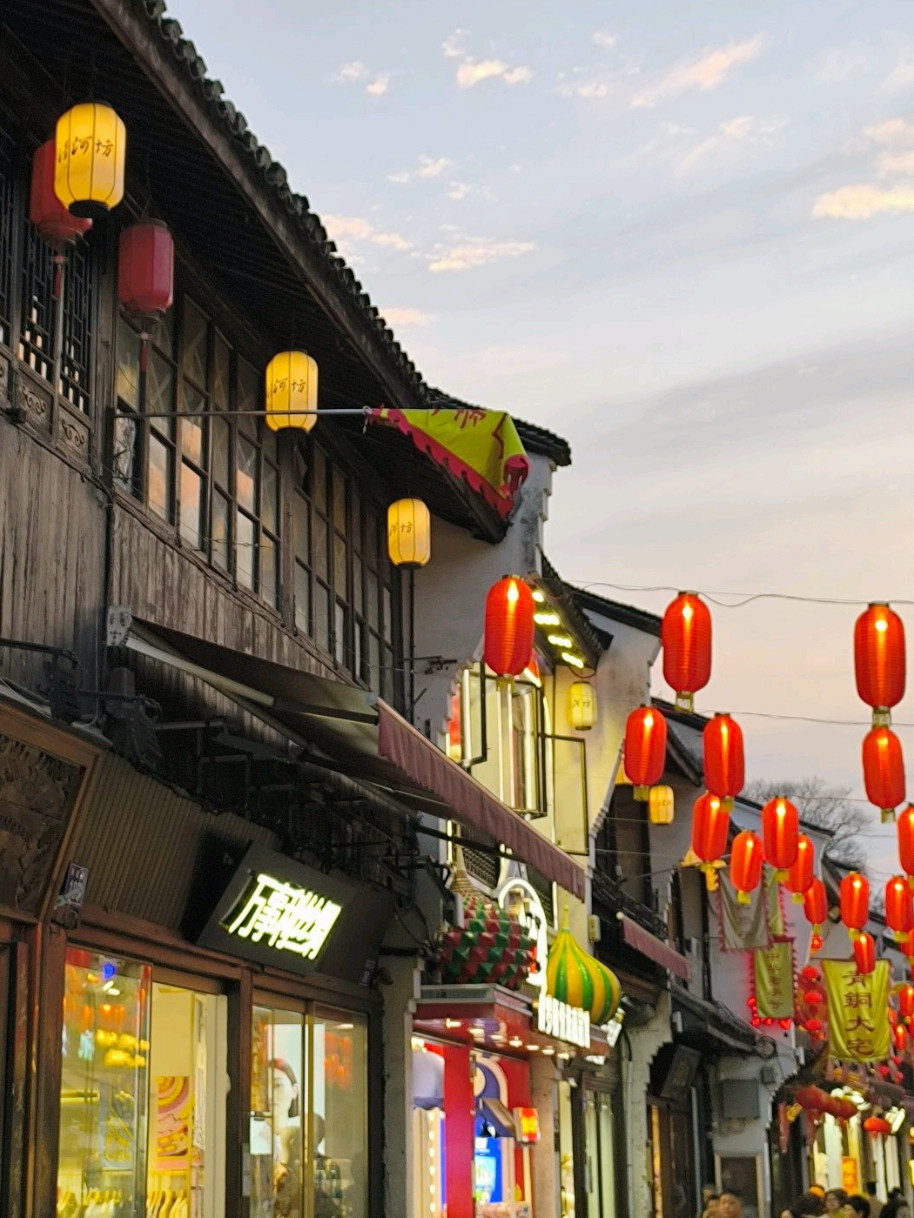
Hefang Street is a rebuilt old street, not an untouched historic district. The current buildings date from a 2000-2002 restoration that aimed to recreate the late-Qing and Republican-era look of the neighborhood. The result is convincing — most of the buildings are in the traditional Jiangnan style with whitewashed walls, dark tile roofs, upturned eaves, and wooden lattice windows — but the shops inside are mostly modern businesses selling tea, snacks, and souvenirs.
This is a feature, not a bug. The street is lively, safe, and full of things to do. You will not find authentic “local” life here the way you would in a real residential hutong, but you will find a clean, atmospheric introduction to old Hangzhou that’s worth the 2-3 hours most visitors spend.
The Street in 30 Seconds
The pedestrian street runs roughly north-south, about 1.5 km end to end. The main section (Wushan Square to Dingan Road) is paved in stone, lined with shops on both sides, and gets 30,000-50,000 visitors on busy weekends. It connects to two related sites worth a visit:
- Southern end (Wushan Square 吴山广场): the main entry, with the Wushan Night Market on Friday-Sunday evenings, and easy metro access (Line 1 to Dingan Road, 5-minute walk south).
- Northern end (Dingan Road): connects to the Dingan Road metro station (Line 1) and a smaller historic section with the Hu Xueyin Former Residence.
- Eastern side (parallel street): the smaller Zhongshan Middle Road section, which has more locals and fewer tourists, plus a small night market.
- Western side (parallel street): the historic Dapo Lane area with preserved Ming-era residential houses (free to walk through).
What to Eat: 8 Snacks Worth Trying
Hefang Street is one of the best places in Hangzhou to try the city’s signature street food. Most snacks are ¥5-20 and the vendors are used to foreign visitors — most have pictures on the menu and many have English signage. Bring cash (small bills) since some of the smaller stalls don’t take Alipay.
1. Cong Bao Hui (葱包桧)
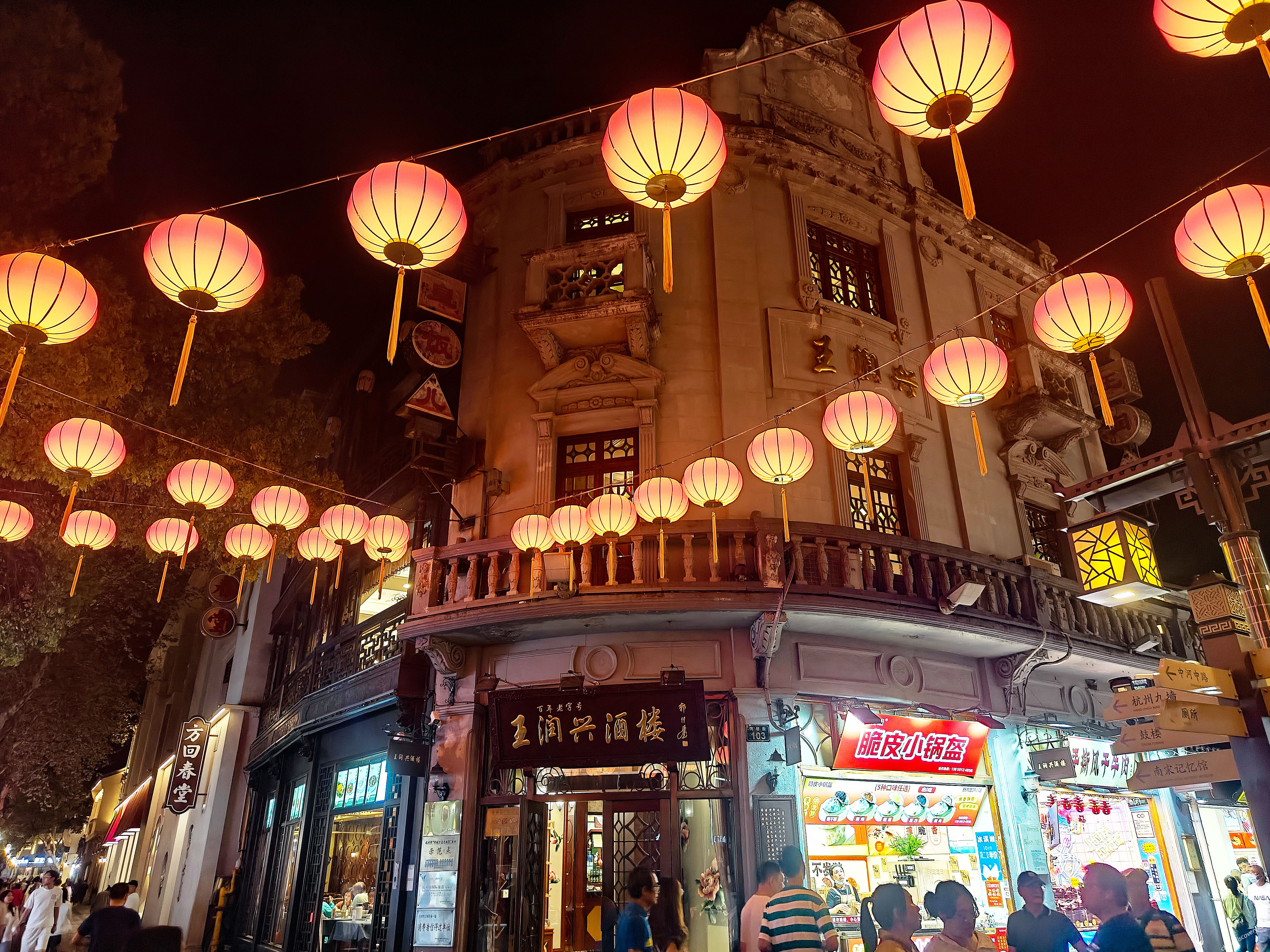
The signature Hefang Street snack. A thin wheat-flour pancake rolled around a scallion and a deep-fried youtiao (crispy cruller), griddled with sweet bean sauce. The name is a political joke from the Southern Song dynasty (桧 = the name of the treacherous prime minister Qin Hui, who is said to have been “pressed” between the scallion and youtiao in effigy). Available from the Wang Runxing Restaurant on the main street, ¥6-10 each.
2. Dingsheng Cake (定胜糕)
A small steamed rice-flour cake shaped like a Chinese ingot, pink-dyed, slightly sweet, very fluffy. Traditionally given to scholars before the imperial exam. ¥5-8 each, sold at most of the pastry shops along the main street.
3. Sweet Fermented Rice (酒酿圆子)
Glutinous rice balls in a warm sweet soup made from fermented rice and osmanthus flower. Floral, sweet, slightly alcoholic, perfect on a cold day. ¥15-25 a bowl at the dessert shops near the south end.
4. Longjing Tea Eggs (龙井茶叶蛋)
Regular tea eggs but made with Longjing tea leaves — more floral, less bitter than the standard version. ¥3-5 each, sold at convenience stalls and small vendors throughout the street.
5. Pian Er Chuan Noodles (片儿川)
Hangzhou’s signature noodle dish: wide wheat noodles in a light pork-and-bamboo broth with sliced pork, fresh bamboo shoots, and preserved mustard greens. The Fang La Noodle Shop has a branch on Hefang Street. ¥20-30 a bowl.
6. Wang Runxing Restaurant (王润兴酒楼)
The most famous restaurant on the street, dating from the 1840s. Specializes in Hangbang cai (Hangzhou cuisine) — try the beggar’s chicken, Dongpo pork, West Lake vinegar fish, or the restaurant’s signature claypot rice. ¥80-150 per person with a few dishes. Worth it for one meal even if the rest of your Hefang visit is street food.
7. Scallion Pancakes (葱油饼)
Crispy pan-fried pancakes layered with scallions, often served with a small dish of soy sauce for dipping. ¥8-15 each at various stalls.
8. Dragon’s Beard Candy (龙须糖)
A traditional Chinese candy made by stretching sugar into thousands of fine threads wrapped around a peanut or coconut filling. The vendor pulls the sugar in front of you — it’s part of the appeal. ¥10-20 a box, makes a good souvenir.
What to Buy (and What to Skip)
Hefang Street is one of Hangzhou’s main souvenir shopping areas. The honest truth: most of what you see here is overpriced compared to the same items at supermarkets, regular tea shops, or the wholesale markets, and some stalls are aimed at uninformed tourists. Here’s how to navigate it.
Worth Buying
- Longjing tea: the real thing is excellent, and a small tin makes a great gift. Buy from the established tea houses on the main street (Longjin Tea House, etc.) and ask to see the certification. ¥80-200 for 50g of “Pre-Qing Ming” Pre-Qing Ming Longjing is fair; anything under ¥50/50g is almost certainly not Longjing.
- Silk items: Hangzhou is the historical silk capital of China. Pillowcases, scarves, and small accessories are reasonable. ¥30-80 for a silk pillowcase, ¥100-200 for a decent scarf. Avoid the “100% mulberry silk” claims at ¥20-30 — they’re usually a blend or a synthetic.
- Hand fans and paper umbrellas: the traditional Chinese paper parasol and folding fan are beautifully made here. ¥20-50 for a fan, ¥40-80 for a small paper umbrella. Genuinely nice souvenirs.
- Dragon’s Beard Candy and other traditional sweets: see above. Makes a good small gift.
Skip These
- “Antique” items: most are reproductions, and the few that aren’t genuine are way overpriced. If you want Chinese antiques, go to a dedicated antique market (Shanghai has better ones) or just skip it.
- Mass-produced “Chinese” souvenirs: the fans with printed “I ♥ Hangzhou” or the silk robes with dragons stitched on — these are machine-made, exported, and sold at 5x the wholesale price. You can find the same items on Amazon for a fraction of the cost.
- Counterfeit tea and “wild” mushrooms: if a vendor claims their tea is “wild picked” or “from a secret garden,” be skeptical. Real Longjing comes from the protected Longjing village area and is certified. Same for “wild” mushrooms, herbs, and medicines.
- Large carved-wood or jade items: if a single item costs more than ¥1,000, you almost certainly don’t have the expertise to know if it’s real, and most likely it’s not. Walk away.
What to See Beyond the Shopping
Hefang Street has more than shops. Three small sites along or near the main street are worth 30-60 minutes each.
1. China National Tea Museum (中国茶叶博物馆) — Southern Branch
A small branch of the larger Tea Museum (the main one is on the south side of West Lake). The southern branch has rotating exhibits on Chinese tea history, a tea-tasting room, and a small shop. Free entry, open 9 a.m. to 5 p.m. Tuesday-Sunday. Worth a 30-minute stop if you’re a tea person.
2. Hu Qing Yu Tang (胡庆余堂) — The Chinese Medicine Museum
A 140-year-old traditional Chinese medicine pharmacy and museum, on the eastern side of the main street (look for the big red sign and the traditional shop front). The pharmacy still operates; you can buy herbal medicines, teas, and tonics. The attached museum (free, 30 minutes) covers the history of Chinese medicine. Even if you’re not into TCM, the architecture and old apothecary displays are fascinating.
3. Chenghuang Temple (城隍阁) — The Wushan Hilltop
At the southern end of Hefang Street, a short walk uphill takes you to the Wushan hilltop and the Chenghuang Pavilion. The pavilion itself is a 2008 reconstruction, but the hilltop views over West Lake and the city are excellent, and there’s a small section of preserved Ming-era city wall at the base. Free to walk up; ¥10-30 to enter the pavilion.
The Common Scams (and How to Avoid Them)
Hefang Street has a few predictable scams aimed at foreign tourists. None of them are dangerous, but all of them waste money.
Scam 1: The Tea Ceremony Invite
A young woman in a traditional Chinese dress (or sometimes a young man in a scholar’s robe) approaches you and asks in broken English if you want to “see a traditional tea ceremony” or “taste real Longjing tea.” If you go, you’ll end up at a fake tea house a few blocks off the main street, drink a few cups of mediocre tea, and get a bill for ¥500-1,500. The fix: politely decline and keep walking. Real tea houses on the main street have visible price lists and don’t need to recruit customers in the street.
Scam 2: The Calligraphy Artist
An older man in traditional dress asks you to write your name in Chinese characters, then charges ¥100-500 for the “artwork.” The fix: don’t write anything. If you want a Chinese name calligraphy, ask your hotel concierge for a referral, or just buy a pre-printed scroll from one of the legitimate shops.
Scam 3: The Photo with Costume
Vendors with elaborate traditional costumes (Ming dynasty robes, empress dresses, etc.) want to dress you up and take photos, then charge ¥50-200 per photo. Some are legit (clearly marked prices, no surprise bills), but many will demand more after the photo. The fix: only agree if the price is clearly posted. Otherwise, walk away.
Scam 4: The “Free” Sample
Someone hands you a small sample of food or tea in the street. You eat it, and suddenly there’s a bill. This is rarer than it used to be but still happens. The fix: don’t take food or drink from anyone in the street, even if they seem friendly. Buy from shops with posted prices.
When to Go: Timing and Crowds
Hefang Street is open 24/7 but the shops are generally 9 a.m. to 10 p.m. Crowds are heaviest on weekend afternoons and during Chinese national holidays. The best times to visit:
- Weekday morning (9-11 a.m.): the street is quiet, most shops are open, and you can take photos without crowds in the background.
- Evening (7-10 p.m.): the lanterns are on, the atmosphere is best, and there are street performers. Crowds are heavier but the experience is more fun.
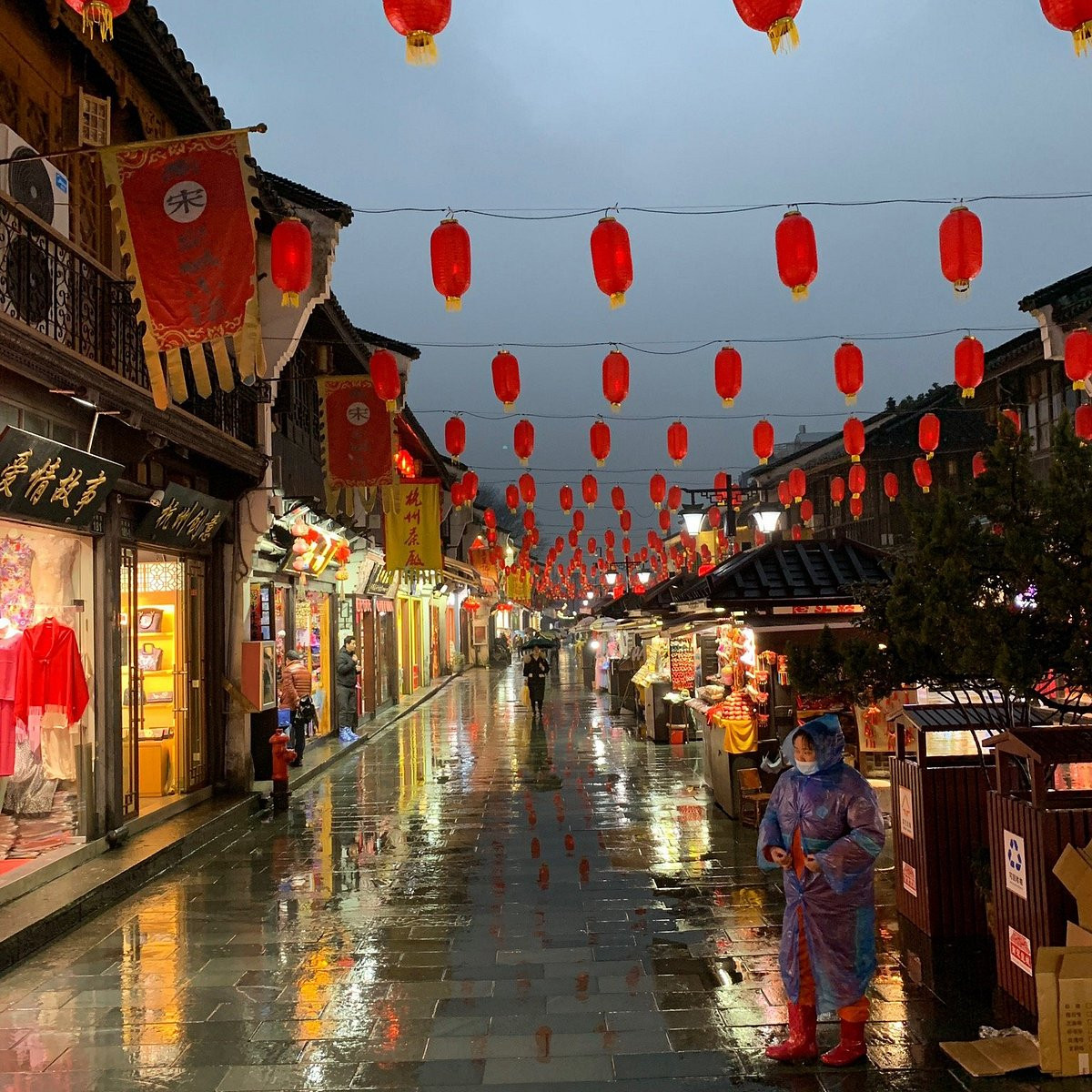
- Rainy day: the stone pavement looks gorgeous when wet, and 80% of the tourists stay away. The lanterns reflect on the wet ground. This is the photographer’s best time.
- Avoid: Chinese New Year week (most shops closed), Golden Week Oct 1-7, and any summer weekend afternoon (heat + crowds + tour groups).
Combining Hefang Street with Other Sites
Hefang Street is in the southeast corner of the city, close to several other worthwhile stops. A good half-day itinerary:
Morning (3 hours): Start at Dingan Road metro station (Line 1, Exit C), walk the main Hefang Street from north to south. Allow 1.5 hours for the main street, with stops at Hu Qing Yu Tang museum and a snack break. At the south end, take the Wushan hilltop walk to the Chenghuang Pavilion (30 minutes).
Late morning (1 hour): Continue to the Song Dynasty Imperial Street (南宋御街), which runs east from the south end of Hefang Street. This is a parallel pedestrian street with preserved Song-era paving stones, several small museums, and a more local feel than Hefang.
Lunch (1.5 hours): Eat at Wang Runxing on Hefang Street, or at one of the smaller Hangzhou restaurants on Song Imperial Street.
Afternoon: Walk 10 minutes to the China National Silk Museum (free, 1.5 hours), or take a DiDi 15 minutes to West Lake for the southern shore walk.
Practical Info
Address: Hefang Street, Shangcheng District, Hangzhou (河坊街, 上城区). Most maps will find it by searching “Hefang Street” or “Qinghefang Old Street.”
Metro: Line 1, Dingan Road Station (定安路), Exit C — 5-minute walk to the north end of the street. Or Line 7, Wushan Square Station (吴山广场), Exit A — direct access to the south end.
Hours: 24/7 pedestrian access. Most shops 9 a.m. – 10 p.m. Restaurants 10 a.m. – 9 p.m. Night market 6 p.m. – 11 p.m. on Friday-Sunday.
Cost: free to walk. Budget ¥30-80 for snacks if you sample a few things. ¥80-150 for a sit-down meal. ¥100-300 if you buy tea or silk souvenirs.
Toilets: there are 4-5 public toilets along the main street, marked on the tourist map at the south end. Most are clean and free.
Wheelchair access: the main street is fully paved and flat, but some of the side alleys have steps. The main drag is fine for wheelchairs and strollers.
The Bottom Line
Hefang Street is the easiest, most concentrated way to experience old Hangzhou, and the 2-3 hours you’ll spend here are well worth the trip. Come for the snacks, stay for the atmosphere, and walk out with a small tin of Longjing tea. Combine it with the Song Dynasty Imperial Street and Wushan hilltop for a full half-day, and you’ll have seen one of the most atmospheric corners of modern Hangzhou.