
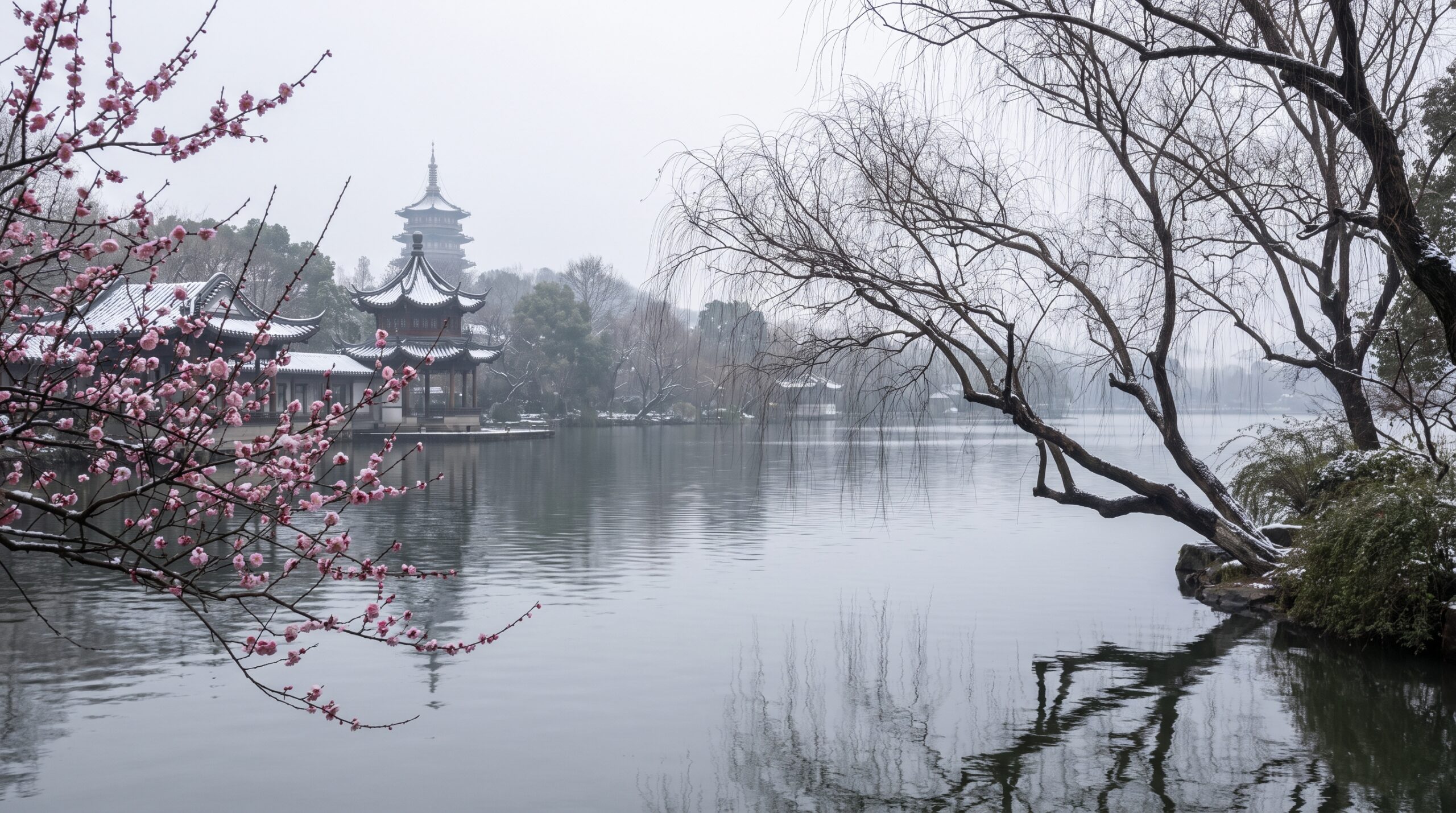
Hangzhou in winter is the city’s secret. The crowds thin to a fifth of what they are in March, hotel rates on the West Lake strip drop 40-50% from peak, and the same sight you waited in line for in spring is now walkable. The trade-off is real cold — Hangzhou winters run 0-8°C, damp, with no indoor heating in most older buildings — and shorter days. Plan around both and the season becomes the best time to be in town.
This guide covers what Hangzhou is like in December, January, and February: which sights are still worth seeing, which are bare and disappointing, where the plum blossoms open, what to expect on a snow day, and how to handle the cold in a city that wasn’t built for it. If you’re weighing a winter trip against the spring rush, this is the honest case for coming now.
What Winter in Hangzhou Actually Feels Like
December through February averages 3-9°C during the day and 0-4°C at night. Humidity stays at 70-80%. There’s no central heating in most homes, restaurants, or older hotels — south of the Yangtze, China relies on air-conditioner heat pumps and individual radiators. Newer international chain hotels (Marriott, Hyatt, Hilton) have proper heating; mid-range Chinese hotels often have only bed-sized heating pads and a wall unit that runs loud and weak.
Snow does fall, but most years only two or three times between mid-December and late February, and it rarely settles for more than a day. When it does, the city goes still: traffic slows, West Lake becomes a watercolor painting, and the plum blossoms on Gushan island bloom white on white. If your trip happens to coincide with a snow day, you’ve drawn a lucky ticket. Don’t plan around it.
What does settle is the rain — drizzling, grey, three to five days a week. Bring a proper rain jacket, not an umbrella you have to hold. The damp gets into everything, including the bones of buildings, and the cold feels about 5°C colder than the thermometer says.
Plum Blossoms on Gushan
The plum blossoms (梅花) at Gushan (孤山), the island in the middle of West Lake, open in mid-January and peak in early February. This is the single best reason to come to Hangzhou in winter. The varieties planted here are old — some trees are over a century — and the blossoms range from white to deep pink to a near-red that’s almost plum-colored.
The main grove is on the north side of the island, behind the Zhejiang Provincial Museum. Walk in from the Beishan Road bridge, turn right at the first path, and follow the crowd. Peak bloom is usually a one-week window in late January; the year before last it peaked the last week of January, last year it was the second week of February. Check the Hangzhou Botanical Garden’s social media a few days before your trip for the year’s actual forecast.
For a quieter plum experience, the Hangzhou Botanical Garden (杭州植物园) at the northwest corner of West Lake has a much larger and older plum grove. The garden’s plum pavilion (梅亭) is the best single viewing spot, and the path between the two main groves is lined with more than 100 mature trees.
What West Lake Looks Like in Winter
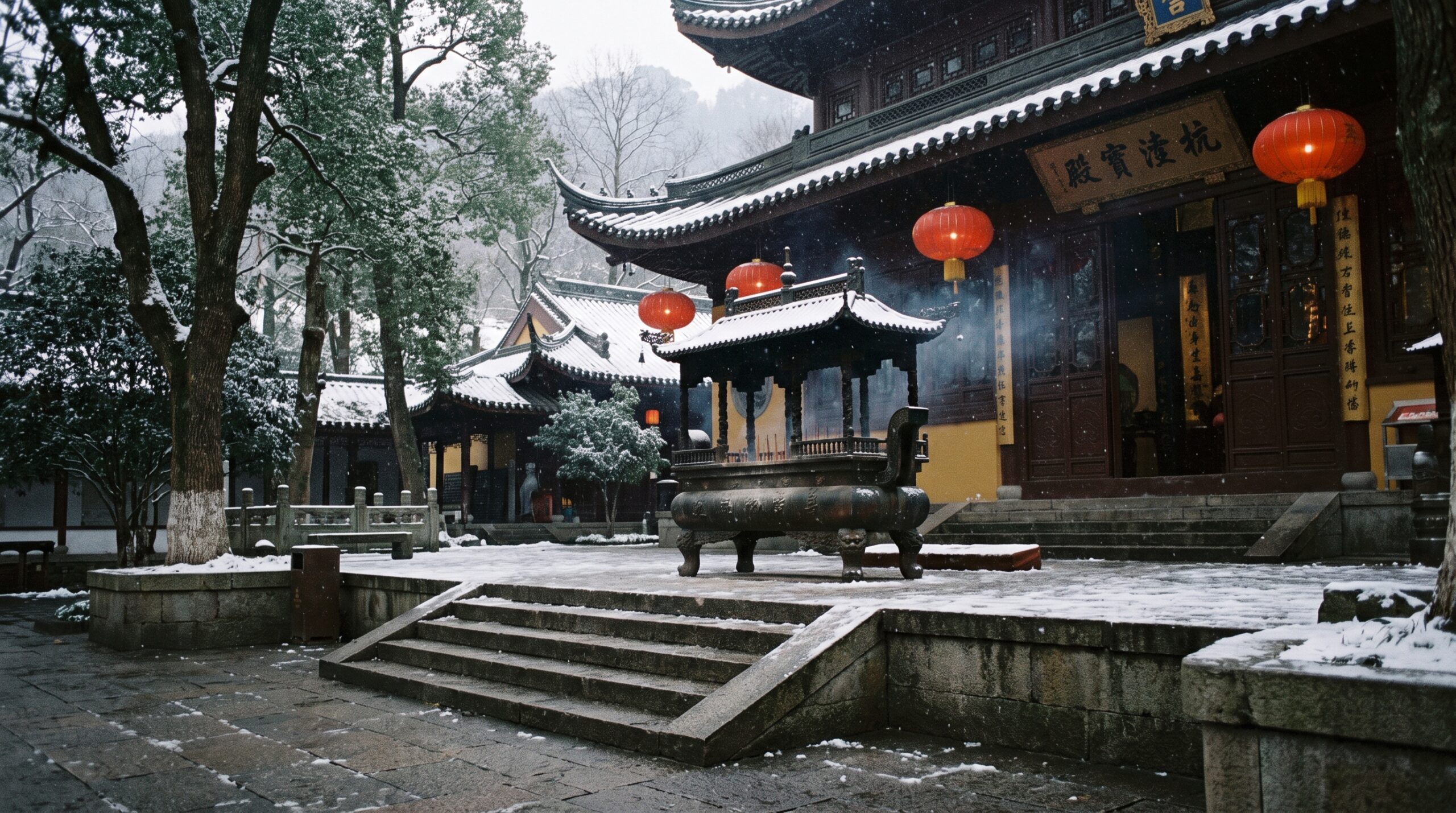
West Lake in winter is bare, moody, and genuinely beautiful in a way the spring crowds never see. The willow branches are stripped, the lotus stems are dry stalks, and the lake surface is a flat grey that picks up whatever light the sky gives. On a clear morning the reflections are perfect. On a rainy morning it’s a Chinese landscape painting come to life.
The three winter walks that work best:
- Su Causeway (苏堤) end to end, about 3 km, takes 45 minutes at a slow winter pace. The bridges are misty, the lake is still, and you’ll have the path almost to yourself before 10 a.m. After 10 a.m. the local retirees arrive in their red wool hats and the path becomes a group tai chi class.
- Bai Causeway (白堤) from Beishan Road to the Broken Bridge (断桥), about 1 km. This is the spot in the legend where the White Snake and Xu Xian first met. In winter with a dusting of snow it’s the most photographed view in the city.
- Hubin Lakeside Path (湖滨路) along the east shore, flat, paved, lit at night, and almost a complete loop of the eastern half of the lake. Best done after dinner, when the locals come out to walk off the meal and the willow silhouettes make the lake feel enclosed.
The West Lake boat rides run all year, but the covered boats (which seat 6) are the only realistic option in winter. They’re heated (sort of) and the ride is shorter in cold weather — about 30 minutes for the standard three-bridge crossing.
Indoor Days: Museums and Tea
On a grey winter day, the museum circuit is exactly what Hangzhou is good at. Four stand out:
- Zhejiang Provincial Museum (浙江省博物馆) on Gushan island. Free, well-curated, has the largest Song dynasty ceramic collection in the country. The permanent exhibition alone justifies two hours.
- China National Silk Museum (中国丝绸博物馆) near Yuetan Temple. The history of Chinese silk from the Neolithic to the present, told through actual garments, looms, and trade-route maps. Skip the gift shop.
- China National Tea Museum (中国茶叶博物馆) on the west side of the lake. Free, and pairs naturally with a visit to the Longjing tea fields on the same side of the lake — a winter visit is the off-season for picking, but the museum and the views of the terraces are still worth the trip.
- Liangzhu Museum (良渚博物院) in the Liangzhu district, about 30 minutes west of the lake. The 5,000-year-old jade culture site is a UNESCO World Heritage entry. The museum building is by David Chipperfield, and the collection is the strongest argument for treating the Yangtze basin as a peer to the Yellow River in early Chinese civilization.
For a slower afternoon, a session of Gongfu tea in any of the teahouses around Hupao Road is the Hangzhou winter ritual. Order a pot of aged Longjing or a roasted oolong, sit by the window, and the cold outside becomes part of the experience rather than an obstacle.
What to Skip in Winter
A few sights are not worth the trip in the cold months. Quyuan Fenghe (the lotus park) is bare stems and frozen water — return in summer. The lingering garden paths at Liuhe Pagoda and the canals of the Qinghefang historic district are best in mild weather. The spring-fed swimming areas at Jiuxi are too cold for wading. The Wuzhen day trip is technically possible, but the water-town atmosphere is gone when the willows are bare and the boats are tarped for the season.
Also, don’t plan around seeing a real snow day at West Lake unless you’re booking a flexible week-long stay. The snow chance in any given week is around 15-20%, and the temperature has to be just right (cold enough to snow, not cold enough to skip the cloud cover). The plum blossoms are the reliable winter prize; the snow is a bonus if it happens.
Where to Stay in Winter
The standard Hangzhou area guide applies, with one important winter-specific adjustment: pay for heating.
International chains (Hyatt, Marriott, Hilton, Sofitel) have proper central heating in the rooms. The Aman at the west side of the lake is the top end, with underfloor heating in the rooms and a heated pool. Mid-range Chinese chain hotels (Jinjiang, Hanting, Home Inn) vary widely — some have heating, some have only a wall unit that groans all night and barely moves the temperature. Read recent reviews on Ctrip or Trip.com before booking, and explicitly message the hotel to confirm 集中供暖 (central heating) or 空调取暖 (AC heating) is available.
Budget stays under 200 yuan/night in winter are a gamble. The 80-yuan hostels along Hubin Road often have no heating at all. Either pay up or bring a heavy down jacket to wear indoors.
Practical Winter Tips
- Pack layers, not one heavy coat. Indoor spaces are overheated (museums, malls, metro, chain cafés all blast the heat to 25°C+), so a heavy coat becomes a burden the moment you step inside.
- Bring heat packs (暖宝宝). Available at every convenience store for 1-2 yuan each. Stick one in your coat pocket and one in your shoe insoles for outdoor walks.
- Wear shoes with grip. The grey drizzly days leave a thin film on every stone path. The West Lake causeways get slick and a fall on the Su Causeway is a real risk after 3 p.m.
- Download Alipay and WeChat Pay in advance. Winter is when the small shops around West Lake most actively refuse cash. Card acceptance is also patchy.
- Pre-book any high-end restaurant. Winter is the wedding banquet season and the better restaurants book out 3-5 days ahead, especially for dinner on weekends.
Hangzhou in winter is for the traveler who’s already seen the city in spring and wants to see it without the crowds. The plum blossoms, the museum circuit, the lake in mist, and the value on offer are the trade for the cold. For a structured plan that works in winter, the 4-day Hangzhou itinerary has the right pace — three outdoor sights, one indoor day, and enough slack for the weather to cooperate.