 Leifeng Pagoda, Su Causeway, and Boats on a clear spring morning” loading=”lazy” />
4 Days in Hangzhou: The Complete Itinerary (2026)
Updated July 2026 – every hour, hotel, restaurant, and ticket price on this route re-checked in May 2026.
Four days is the right amount of time in Hangzhou. It gives you the West Lake cultural core, the Lingyin Temple complex, a tea-plantation morning, and a slower day to absorb the place. A 3-day Hangzhou trip covers the basics; a 5-day trip adds the Wuzhen day extension. Four days is the sweet spot for a foreign visitor who arrives from Shanghai or from the airport and wants to leave feeling like they understand the city, not just that they took photos of it.
This itinerary is the one I’d send to a friend visiting for the first time. It assumes you arrive at the West Lake area on Day 1 morning, sleep four nights in central Hangzhou, and don’t have a car (every step is metro + DiDi + walking). All hotels mentioned are tested options in the 350-800 RMB range, with one splurge night if you want it.
Before You Go: The Practical Stuff
Three things to settle before Day 1, all of which take less than an hour:
- Visa-free entry (if eligible): Citizens of 50+ countries can enter Hangzhou visa-free for 10-30 days in 2026. The full list changes quarterly; check the official China visa-free policy before booking. Most Western passports get 30 days visa-free if arriving at HGH or Shanghai PVG.
- Alipay with a foreign credit card: Set up Alipay (international version) and link your Visa or Mastercard before arrival. You’ll use it for metro, bus, DiDi, restaurants, and convenience stores. Cash still works in some places but Alipay is the default in 2026.
- Mobile data: Buy an Airalo China eSIM (US$9 for 5 GB / 30 days) before departure, or buy a China Mobile tourist SIM at HGH arrivals. Without Chinese mobile data, you can’t use Alipay’s transport features or DiDi.
Hotel Strategy: Two Bases, Four Nights
For a 4-day trip, I’d split the stay between two hotels: two nights near West Lake, then two nights in a quieter area. The two-area split lets you see the lake at different times of day and avoids the “I’ve been in the same neighborhood for four days” fatigue.
First two nights: West Lake area, near Beishan Road or Hubin Road. The Hubin Home Inn Plus, the Westlake View Hotel, or the Hanting Express Hubin are all 250-400 RMB/night and walking distance to the lake. Spend slightly more (700-1200 RMB) for a West Lake view if you want the postcard experience.
Last two nights: Hupao Road or the Lingyin area. The Hupao 1918 Boutique Hotel (500-700 RMB) or a chain hotel near Lingyin Temple (250-400 RMB) puts you closer to the tea-plantation morning. This is the area to splurge on the second half of the trip; the Westlake Vista Lingyin or the Aman Fayun are the luxury options if budget allows.
Day 1: West Lake South + Old City
The first day is the easiest to plan: land, settle in, see the southern half of West Lake, eat a famous Hangzhou dinner. No rushed morning, no big transportation day.
9:00 a.m. – 12:00 p.m.: Arrive at Hangzhou East Railway Station (from Shanghai) or HGH airport. DiDi to your West Lake hotel, check in if it’s morning or drop bags if not. Most hotels hold bags before check-in.
12:30 p.m. – 1:30 p.m.: Lunch at Zhi Wei Guan (知味观) Hubin location. The 100-year-old Hangzhou dim sum chain; the xiaolongbao, the congee, and the West Lake vinegar fish starter are all reliable. Budget 80-120 RMB per person.
2:00 p.m. – 5:00 p.m.: Southern half of West Lake. Start at Leifeng Pagoda (40 RMB entry, 1-1.5 hours including the climb), then walk north along the lakeshore to Su Causeway, cross to the south end of the causeway, and take the orange ferry (5 RMB) to Huagang Park (花港观鱼) on the west shore. The fish-viewing garden is small (30-40 minutes) but the ferry crossing is the highlight of the day.
5:30 p.m. – 7:00 p.m.: Watch the sunset from one of three places: the Leifeng Pagoda observation deck (best views, requires climbing), the Changqiao Park south end of Su Causeway (free, less crowded), or the Broken Bridge on the north shore (tourist classic).
7:30 p.m.: Dinner at Lou Wai Lou (楼外楼) the original location on Gushan Road. The 175-year-old restaurant is the standard for Hangzhou cuisine. Order the West Lake Vinegar Fish, Dongpo Pork, and Longjing Shrimp. Budget 200-300 RMB per person including tea.
Day 2: Lingyin Temple and the Western Hills
The western half of the city is the spiritual and natural Hangzhou: 1,700-year-old Buddhist temples, the Flying Peak rock carvings, and the Longjing tea terraces that surround them. This is the day that makes Hangzhou different from Suzhou or Nanjing.
8:00 a.m. – 9:00 a.m.: Breakfast at your hotel or at the small restaurant downstairs. Get an early start – Lingyin gets busy by 10 a.m. and the morning light on the temple courtyard is the reason to be there.
9:00 a.m. – 12:00 p.m.: Lingyin Temple and the Feilai Feng (飞来峰) rock carvings. Take Metro Line 3 to Huanglongdong Station, then a 10-minute DiDi to the temple entrance. Budget 3 hours total. The temple itself takes 1-1.5 hours (entry 75 RMB); the rock carvings across the courtyard take another 45-60 minutes (entry 45 RMB).
12:30 p.m. – 1:30 p.m.: Lunch at the Lingyin vegetarian restaurant (灵隐素斋) just outside the temple. It’s 80-120 RMB per person for a fixed menu of Buddhist vegetarian dishes, and the food is genuinely good. The setting – a Ming-dynasty courtyard with a koi pond – is more atmospheric than any other lunch option in the area.
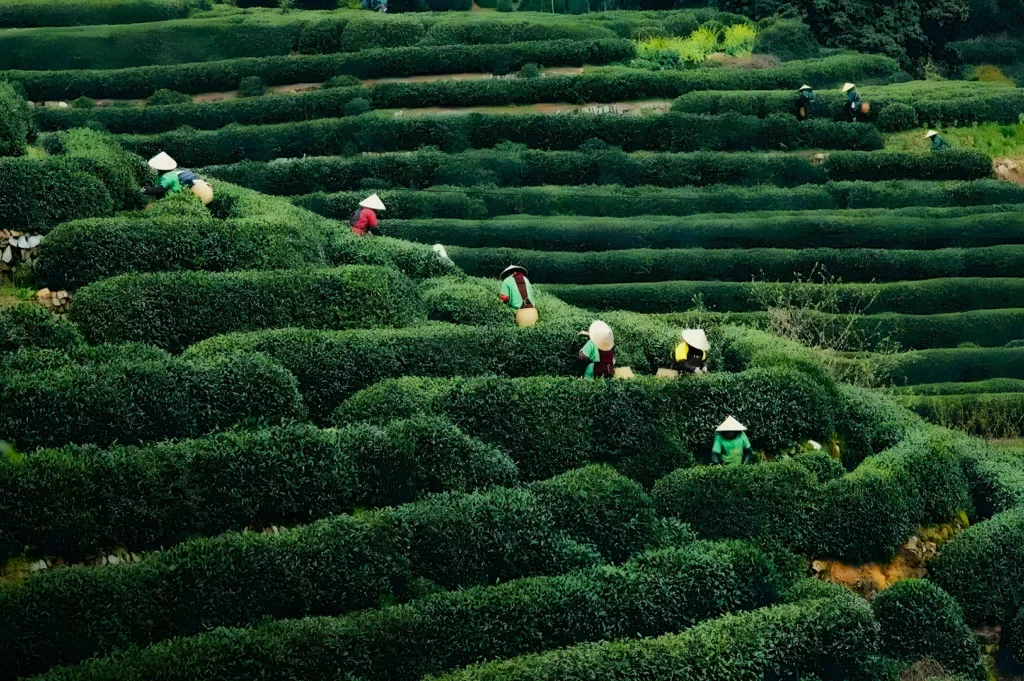
2:00 p.m. – 4:30 p.m.: Longjing tea-plantation walk. From Lingyin, walk south into the Longjing tea fields (no entry fee, just the area between villages). The 3-km loop passes through the Eight Imperial Tea Bushes, several working tea farms, and the panoramic terrace at Longjing Village itself. Allow 1.5-2 hours at a slow pace; the path is partly stone steps, partly dirt, with a few steep sections.
5:00 p.m. – 6:30 p.m.: Tea house at Longjing Village. Sit in one of the family-run tea houses for a 30-40 minute tasting of fresh Longjing (50-100 RMB per person for 3-4 cups). The hosts will explain the tea grades and brewing method; you’ll learn more about Chinese green tea in one session than from any guide book.
7:30 p.m.: Dinner at a lighter West Lake restaurant (your second day in the same neighborhood; you’ve earned a break from the famous places). The Zhi Wei Guan on Nanshan Road is a reliable alternative; the Green Tea Restaurant chain has Western-friendly versions of Hangzhou dishes. Budget 80-150 RMB per person.
Day 3: Chinese Tea + Lesser-Visited West Lake Corners
The third day is the slow one. You’ve done the cultural peaks (Lingyin) and the postcard views (Su Causeway); today is for the things locals recommend and visitors miss.
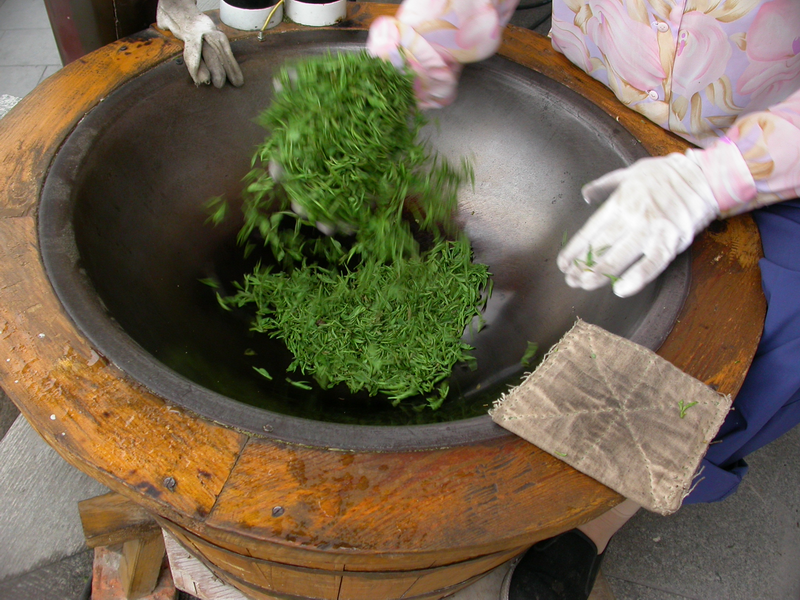
8:00 a.m. – 10:00 a.m.: China National Tea Museum (中国茶叶博物馆) on Longjing Road. Free entry, two buildings, 90 minutes to cover the history and production of Chinese tea. The gift shop is the cleanest source of Longjing tea in the city if you want to buy some to take home.
10:30 a.m. – 12:30 p.m.: Northern half of West Lake. Take the metro to Beishan Road Station, then walk south to the Yue Fei Temple (岳王庙) – the 12th-century Song dynasty general memorial. Continue south along the lake to the Su Causeway, but this time take the middle section rather than the whole length. The middle stretch (between the second and fourth bridges) is the most photogenic and the most crowd-free.
1:00 p.m. – 2:00 p.m.: Lunch at the Bai Causeway area. The Zhi Wei Xiang (知味香) near the Broken Bridge is the lunch-only sister of Zhi Wei Guan; smaller, cheaper, less famous. Try the West Lake Fish in Sour Soup, a more interesting dish than the standard vinegar fish.
2:30 p.m. – 5:00 p.m.: China National Silk Museum (中国丝绸博物馆) plus a quiet lake walk. The silk museum is 5 minutes from the West Lake area, free, and has the best explanation of the Silk Road in any museum in China. After, walk along the Su Causeway to Yang Causeway – the part of the lake that most visitors skip and locals walk. Stop at the Guan Yin Flower Garden if you want one more garden.
7:30 p.m.: Dinner at a Hangzhou family restaurant. The Lao Zheng Xing (老正兴) on Yan’an Road has been serving the same dishes since 1934 and is the unofficial “what locals actually eat” benchmark. Try the Beggar’s Chicken (叫化鸡) – the clay-baked chicken that has to be ordered 4 hours in advance, so message the restaurant before 3 p.m. the same day. Budget 150-250 RMB per person.
Day 4: Slow Morning + Choose Your Own Adventure
The fourth day is half-spent, half-spend-it. Sleep in, do a slow morning, then either head to the airport or extend the day based on your departure time.
8:00 a.m. – 10:00 a.m.: Final West Lake walk at sunrise. Start at the Su Causeway south end and walk north, finishing at the Broken Bridge. The morning light on the lake is the reason this becomes the first thing every Hangzhou resident does on a Sunday morning; the path is busy with locals doing the same.
10:30 a.m. – 12:00 p.m.: Check out of the West Lake hotel. Move bags to the Lingyin area hotel or store at Hangzhou East Railway Station for a few hours.
Options for the rest of the day (pick one based on departure time):
- If leaving Hangzhou in the evening (most common): Take Metro Line 3 to the HGH airport metro station (Line 19, 50 minutes from city center). Or, if your train is from Hangzhou East, store bags at the station and spend the remaining hours at the Hefang Ancient Street (河坊街) – a 1-km restored Qing-dynasty commercial street near the Drum Tower. Eat lunch there, buy tea, take the final lake photos from the Wu Hill (吴山) viewpoint.
- If you have a full extra day: Add a half-day at Xixi Wetland (西溪湿地) on the city’s west side. The hand-poled rowboat through the reed-lined back channels is the single most Hangzhou-specific experience. Entry 80 RMB + 100 RMB rowboat, 4-5 hours total. Take Metro Line 3 to Hongzhuang Station.
- If you want to extend the trip one more day: Take the high-speed train to Wuzhen (1 hour, 30-50 RMB) and spend a night in the water town. The Wuzhen day-trip from Hangzhou is well-trodden but staying overnight lets you see the canals empty of day-trippers, which is the whole point.
Daily Distance and Cost Breakdown
A realistic 4-day Hangzhou trip:
- Walking total: 35-40 km across the four days. The Day 2 Lingyin-Longjing combo is the most intense (8-10 km on day 2 alone). Average pace is 10-12 km/day.
- Total cost (budget, no splurge): 4,500-6,500 RMB for one person. This covers 4 nights in a 350 RMB hotel, all food, all entry tickets, and all local transport. Add 30-50% for mid-range hotels (600-900 RMB/night).
- Total cost (comfortable mid-range): 7,500-10,000 RMB for one person. 4 nights in a 700-1,200 RMB hotel, all food including 1-2 nicer dinners, all tickets, and all transport.
Hangzhou is one of the more expensive mainland Chinese cities for foreign tourists because the lake-area hotels price for Chinese business travel; the Hupao Road boutique hotels are 30-40% cheaper than the West Lake equivalents for similar quality. Use the two-hotel strategy above to save.
What to Skip on a 4-Day Trip
Five things that look essential but aren’t worth the time on a 4-day itinerary:
- Leifeng Pagoda interior: The rebuilt pagoda is a tourist trap. The 40 RMB entry is worth it for the view from the top on a clear day, but if the weather is bad, the view from the Broken Bridge north shore is free and better.
- The Impression West Lake show: 260+ RMB for a 60-minute outdoor performance, and the schedule is weather-dependent (cancelled on rain). Beautiful if you catch it, but it’s a half-day commitment that’s better spent on the actual lake.
- Hefang Ancient Street (河坊街): The restored commercial street is the most crowded place in Hangzhou after the Su Causeway on a weekend. The shops sell overpriced silk and tea. Skip unless you have a specific souvenir to buy and an hour to kill.
- The Nine Creeks (九溪十八涧) hike: Beautiful, but it needs 4-5 hours and is south of the lake. Save it for a 5-day trip or as a stand-alone day.
- Most West Lake boat tours: The dragon-boat tour from the south docks is 60-80 RMB and runs 30 minutes. The working-person ferry across the lake (5 RMB) is a better experience. If you want a longer boat ride, the Wulinmen ferry to the Grand Canal is more interesting than the West Lake option.
Common Mistakes to Avoid
Three mistakes that show up on every “Hangzhou 4-day itinerary” that doesn’t actually know the city:
- Doing the West Lake loop on Day 1. The 12-km lake loop is the most-photographed walk in Hangzhou, and it’s a trap. Most visitors do it on Day 1 because they think they need to “see the whole lake,” and they’re too tired to do anything else that day. Split the lake across days (south on Day 1, north on Day 3) and put Lingyin + Longjing on Day 2 when you have the most energy.
- Eating at the restaurants facing the Su Causeway. The lake-facing restaurants charge 30-50% more than the same food one street back. Eat at the Zhi Wei Guan on Hubin Road, not the one on the causeway. Same food, half the price.
- Skipping the China National Tea Museum. It’s free, it’s a 10-minute walk from the Longjing tea fields, and it explains everything you’ll see in the tea houses. Most itineraries skip it and visitors then don’t understand what they’re drinking at the Longjing Village tea houses.
Weather Considerations by Season
The 4-day Hangzhou trip is roughly the same in any season, but the small adjustments make a big difference:
- Spring (March-May): The best season. Cherry blossoms at Quyuan Fenghe (曲院风荷) in late March, peach blossoms on Su Causeway in early April, fresh Longjing tea in the Longjing Village in late April. Bring a light jacket for mornings (10-15°C) and a thin raincoat for the frequent drizzle (Hangzhou’s spring is famously wet).
- Summer (June-August): Hot (28-36°C) and humid. The lotus flowers at Quyuan Fenghe peak in mid-July, the West Lake evening breeze is best this time of year, but most walking is uncomfortable. Plan more breaks; carry water; take the boat across the lake more often to cool off.
- Autumn (September-November): The second-best season, often better than spring. The ginkgos on Su Causeway turn gold in late October, the osmanthus flowers bloom at Manjuelong in September, the heat is gone. Book hotels 1-2 months ahead for October.
- Winter (December-February): Cold (3-10°C) and clear. The lake has fewer crowds, the Lingyin temple has more worshippers (the Chinese New Year preparations), and the hotels are at their cheapest rates. The cold is a real factor; pack warmer clothes than you’d pack for a Shanghai winter at the same latitude.
The Bottom Line
Four days in Hangzhou is the right answer for a first visit. The two-day base split (West Lake area, then Hupao/Lingyin area) lets you see the city at different times of day, the Day 2 Lingyin + Longjing combo is the must-do, and the Day 4 flexibility means the trip adapts to your departure time rather than the other way around. Total cost 4,500-6,500 RMB for a budget version, 7,500-10,000 RMB for a comfortable mid-range version. Book hotels 1-2 months in advance for October; the rest of the year is bookable a week out.