One Day in Hangzhou: The Perfect Layover Itinerary (2026)
Updated July 2026 — transit times, visa-free rules, and ticket prices verified.
If you have a long layover in Shanghai, a stopover on a rail pass, or just one free day to break a business trip — Hangzhou is the single best day trip in eastern China. It is 47 minutes from Shanghai by high-speed train, the West Lake scenery is world-class, and (as of 2026) most Western passport holders don’t even need a visa. This itinerary is built for someone who arrives in the morning and leaves in the evening, with realistic transport times and a tested route that hits the highlights without exhausting you.
What you won’t get in a day: every single attraction. Hangzhou deserves a week. What you will get: West Lake at its most photogenic moment, one of China’s four most famous Buddhist temples, lunch like a local, and a sense of why Marco Polo called this the most beautiful city in the world. That is more than enough for a layover.
Before You Go: The 240-Hour Visa-Free Transit Rule
Since December 2024, China has run a generous visa-free transit policy that now covers most Western passports. The headline numbers: citizens of 54 countries (including the US, UK, Canada, Australia, all EU members, Japan, South Korea, and many more) can enter China for up to 240 hours (10 days) without a visa as long as they have a confirmed onward ticket to a third country. Crucially, the “third country” can be Hong Kong, Macau, or Taiwan — useful if you’re doing a loop trip.
For a one-day Hangzhou layover, the setup most travelers use: fly into Shanghai Pudong (PVG) or Hongqiao (SHA), spend the day in Hangzhou, then fly out of Hangzhou Xiaoshan (HGH) — or do the reverse. Both Shanghai airports are on the metro, both have direct trains to Hangzhou, and Hangzhou’s Xiaoshan airport now has direct flights to most major Asian and European cities. This routing gives you the full 240-hour window without any visa paperwork.
What you need at the border: passport (6+ months validity), printed or digital onward ticket, hotel booking (a real confirmation, not just an itinerary), and the completed arrival card. Foreign credit and debit cards (Visa, Mastercard, AmEx) work in most ATMs and many larger restaurants and shops, but always carry some RMB cash for taxis, street food, and small shops.
For a deeper dive on the rules, see our full China visa-free 2026 guide for Hangzhou. If you have more time and want to extend the trip, our 3-day Hangzhou itinerary and 5-day Hangzhou + Wuzhen route pick up from where this guide ends.
Getting to Hangzhou from Shanghai: The Honest Comparison
You have four real options. The first three work for a one-day visit. The fourth does not.
Option 1: High-Speed Train (recommended)
From: Shanghai Hongqiao Railway Station (SHA-HQH) — connected to Hongqiao Airport and on Metro Line 2/10/17
To: Hangzhou East Railway Station (HGH-EAS) or Hangzhou Station (HGH-CTS)
Frequency: Every 5-15 minutes, 06:00-22:00
Price: ¥73-117 second class (~$10-16), 45-60 minutes
Buy: Trip.com app, 12306.cn (official, English version works), or at the station
Hongqiao is the right station — most trains depart from here, and it’s directly connected to both Shanghai airports via metro. Hangzhou East is the larger, more modern station (connected to Metro Line 1 and 4). Hangzhou Station is smaller and closer to West Lake. If you have flexibility, get off at Hangzhou Station — you save 20 minutes of metro.
Option 2: Private Driver
¥600-900 one way (~$85-130), 1.5-2 hours door-to-door. Book through your Shanghai hotel concierge the night before, or use the DiDi app to call a “Premier” or “Express” car. Worth it if you have a lot of luggage or are traveling as a family of 3+.
Option 3: Bus (not recommended for short layovers)
¥70-90, 2-2.5 hours, frequent from Shanghai South Long-Distance Bus Station. The price is right, but the time penalty is real and the buses fill up on weekends. Skip for a one-day plan.
Option 4: Driving Yourself (no)
Foreign passports cannot rent a car in China without a Chinese driver’s license. Even if you could, Hangzhou traffic and the city’s famous license-plate lottery make driving painful. Don’t.
The Day, Hour by Hour
This schedule assumes a 08:00 arrival in Hangzhou and a 19:00 departure back. It’s tight but doable, and every minute is worth it. If you have more or less time, the marked anchors are the things not to skip.
07:30 — Arrive Hangzhou East, grab a taxi
From Hangzhou East, queue for a taxi (not DiDi — the queue is faster at peak times) and ask the driver to take you to the Su Causeway south entrance (苏堤南口). The 20-minute ride will cost ¥30-40. Pay with cash, Alipay (works with foreign cards via Tour Pass), or WeChat Pay if you’ve set that up. The driver will likely not speak English; the address written in Chinese characters — 杭州市西湖区苏堤南口 — solves this.
08:00 — 10:00: Walk the Su Causeway at sunrise
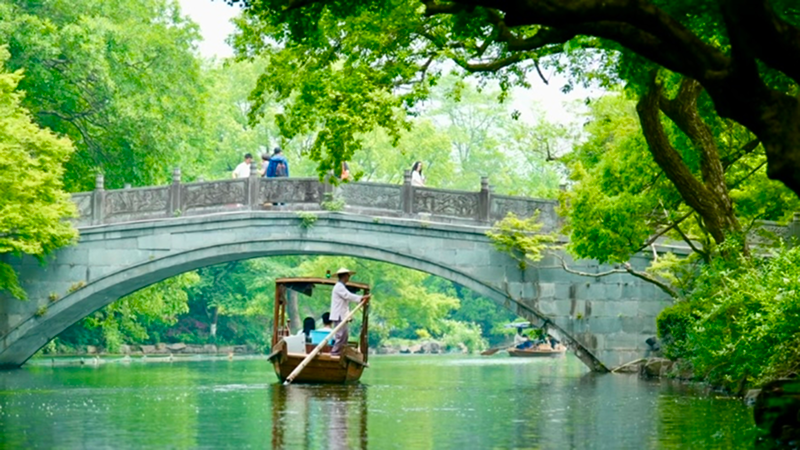
This is the single most important two hours of your day. The 2.8 km Su Causeway (苏堤), built in 1085 by the poet-official Su Dongpo, crosses the south third of West Lake and is lined with 3,000+ willow trees, peach trees, and cherry trees. At sunrise in any season, the light is golden, the crowds are thin, and you’ll have the path mostly to yourself. Walk it slow. Take photos. Stop at the three stone bridges.
Do not try to do this by bike or rickshaw — you’ll miss the experience. Walking is the point. For context on the bridge, the willow varieties, and the Song-dynasty story behind the causeway, see our West Lake: 10 things you can’t miss guide.
10:00 — 11:30: Leifeng Pagoda
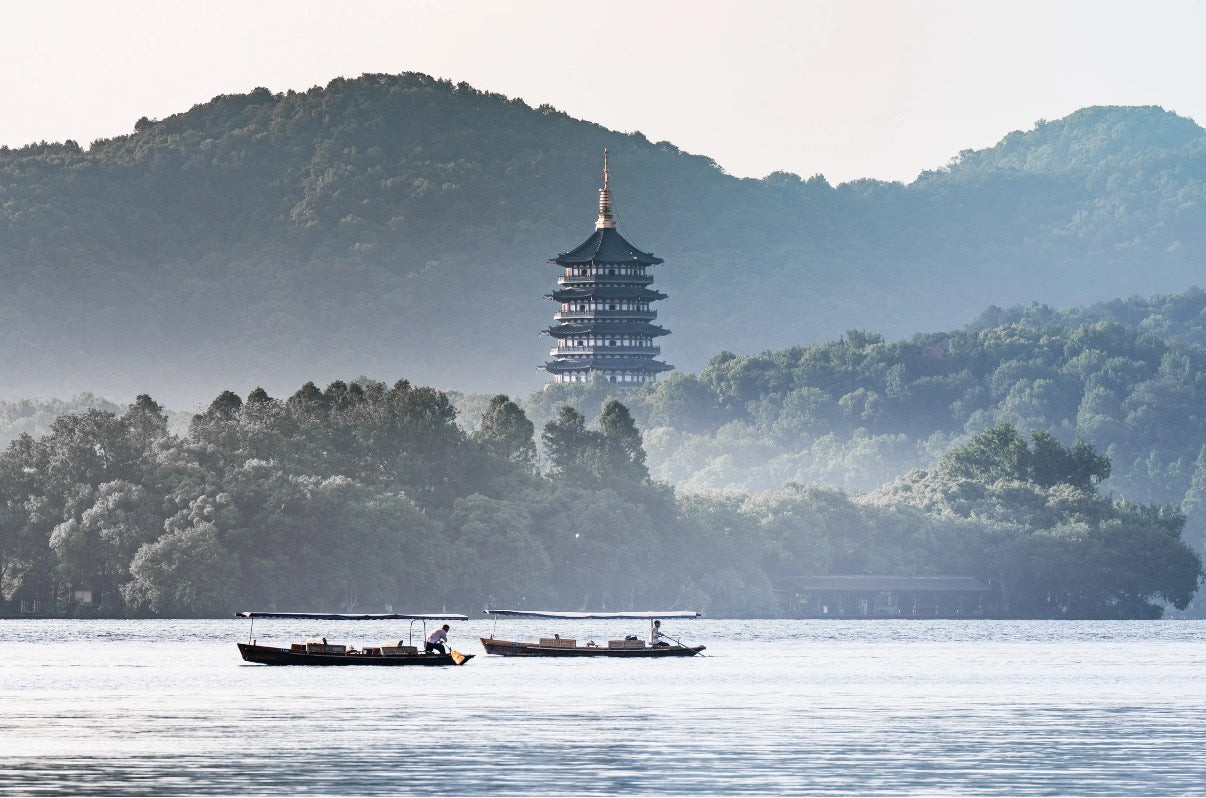
At the south end of the Su Causeway, you’ll see Leifeng Pagoda (雷峰塔, ¥40, ~$5.50) rising on Sunset Hill. The current pagoda is a 2002 rebuild of the original Song-dynasty tower — the original collapsed in 1924 and is preserved in the basement of the new building, which is itself worth seeing. Climb the five stories for the best view of West Lake in the city, especially on a clear day when you can see all the way to the northern hills.
Allow 60-75 minutes. The view from the top of Leifeng facing the Su Causeway is the exact scene on the back of the ¥1 banknote.
11:30 — 13:00: Lunch by the lake
Skip the hotel breakfast and eat a real Hangzhou lunch instead. The two cleanest options for a one-day visitor:
Louwailou (楼外楼) — the most famous Zhejiang restaurant in China, on the Gushan Road north shore. Reservations recommended (call ahead via your hotel concierge or use the Chinese apps). Dishes: West Lake Vinegar Fish (西湖醋鱼, ¥80-120), Dongpo Pork (东坡肉, ¥48-68), Longjing Shrimp (龙井虾仁, ¥88-128). Plan ¥150-200 per person.
Green Tea Restaurant (绿茶餐厅) — the local chain that’s much cheaper and still excellent. Multiple locations near West Lake. Their famous dish is the Green Tea Roast Chicken (绿茶烤鸡, ¥48). Plan ¥80-120 per person.
For street food and lighter bites, walk down Nanshan Road (南山路) — there are bakeries, jianbing stalls, and a dozen options between ¥10 and ¥30 per dish.
13:00 — 14:00: Boat ride on the lake
Buy a boat ticket (¥70 standard, ¥150 for the official “Three Pools” tour) at any of the main docks. The standard 45-minute ride takes you past Three Pools Mirroring the Moon (三潭印月, also on the ¥1 banknote) and gives you a complete West Lake overview. The official Three Pools tour is 90 minutes and includes a stop on the central island. Pick whichever your schedule allows — both are good.
14:00 — 16:30: Lingyin Temple (or Hefang Street, your call)
You have a real choice here. The “completist” path goes to Lingyin Temple (灵隐寺, 30 minutes by taxi from West Lake, ¥30 entry + ¥45 for Feilai Peak). It’s one of China’s most important Buddhist temples — a 1,700-year-old working monastery with active monks, incense, and 470+ stone Buddhist carvings on the adjacent Feilai Peak. A full visit is 2.5-3 hours. Allow 2 hours of actual time there and 30 minutes each way for the taxi. If you do this, you will skip the next two items.
The “leisure” path goes to Hefang Ancient Street (河坊街) — a restored Qing-dynasty pedestrian street with souvenir shops, tea houses, traditional snack stalls, and a few small museums. Cheaper, more relaxed, and on the way back to the train station. For more detail, see our Hefang Street complete guide.
Pick one. Both are good; neither is more “authentic” than the other.
16:30 — 18:00: Music Fountain or Longjing Tea
If you skipped Lingyin, you have time for either the West Lake Music Fountain show (Third Park, free, every evening after dark, runs ~20 minutes) or a Longjing tea tasting at one of the village teahouses (¥30-80 per pot for the real stuff, ¥15-30 for tourist-grade).
If you went to Lingyin, take the taxi straight back toward the train station and stop at the China National Tea Museum (中国茶叶博物馆, free, 20 minutes from Lingyin by car) for a 45-minute walkthrough.
18:00 — 19:00: Return to Shanghai
Trains back to Shanghai Hongqiao run every 5-15 minutes, last train around 22:30. Buy your return ticket while you still have phone signal (or at any station counter, they always have tickets). If you’re flying out of Pudong the same night, allow 2 hours for the metro from Hongqiao (Metro Line 2, direct, ~80 minutes).
The Honest Trade-Offs
A one-day Hangzhou trip is rewarding but compressed. Three things you will not get, no matter what:
- The full Su Causeway in spring — peach and cherry blossoms peak in late March to early April, and a day-trip misses the dawn mist that makes the lake famous.
- A working Longjing tea-picking experience — the spring harvest runs late March to mid-April, and the village teahouses get booked out by Chinese tour groups weeks ahead.
- Wuzhen — the famous water town is 1.5 hours west of Hangzhou and needs its own day. If you have a 2-day window, the Hangzhou-to-Wuzhen day trip guide is the next thing to read.
For a longer plan that adds Wuzhen, see our 5-day Hangzhou + Wuzhen + Shanghai route. If you have a full week, the 3-day Hangzhou itinerary covers everything not below in a realistic pace.
Frequently Asked Questions
Can I really see West Lake in a day?
Yes. The Su Causeway + Leifeng Pagoda + a boat ride covers roughly 80% of what a multi-day visitor sees. The remaining 20% is the dawn mist, the temple incense at sunrise, and the long evening walks — all of which need at least one overnight.
Do I need to pre-book the train?
Not strictly — tickets are sold up to 15 minutes before departure. But on weekends and holidays, the morning trains fill by 07:00. If you can book the night before on Trip.com or 12306, do it.
Is Hangzhou safe for a foreign tourist on a one-day visit?
Yes. Hangzhou is one of the safest major cities in China. Petty crime is rare, the metro is well-signed in English, and taxi drivers are honest. The bigger risk is missing your return train because you lingered too long at a teahouse.
Can I pay for everything with a foreign credit card?
Mostly, but not universally. Big hotels, large restaurants, the train station, and the airport accept Visa/Mastercard. Small restaurants, taxis, and street food are cash or Chinese mobile pay (Alipay or WeChat Pay). Withdraw RMB at the airport ATM, and set up Alipay’s “Tour Pass” feature before you leave home — it accepts foreign cards and works almost everywhere.
What’s the cheapest realistic budget for a Hangzhou day trip?
Round-trip second-class train: ¥150. Leifeng Pagoda: ¥40. Boat ride: ¥70. Lunch: ¥80. Snacks and water: ¥30. Taxi rides: ¥100. Museum entries: ¥0-50. Total: ¥470-520, or about $65-75 USD for a full day excluding your Shanghai hotel.
Have a question about your specific layover window? Drop a comment below — we answer most questions within a day.