
Solo Female Traveler in Hangzhou: A Real Story
Personal essay by L. M., a 32-year-old German journalist who spent 5 days alone in Hangzhou in May 2026. Reprinted with permission. Names of locals have been changed.
I almost didn’t go. I had a week between two work trips in Shanghai and a long list of excuses: I don’t speak Mandarin, I don’t know how to pay for things, I don’t want to spend a holiday alone. Then a Chinese friend said something that stuck: “You’ll regret not going more than you’ll regret going.” So I booked a train ticket to Hangzhou, packed for five days, and tried to keep my expectations low.
A short vlog from another solo traveler’s week in Hangzhou:
Five days later, I had a small sunburn, two new WeChat friends, and a notebook full of “I can’t believe this actually happened” moments. Here’s what I learned, for any woman considering a solo trip to Hangzhou.
Day 1: I Almost Got Off at the Wrong Station
The train from Shanghai Hongqiao to Hangzhou East is 47 minutes. I knew this. What I did not know was that Hangzhou has three major train stations, and my hotel was closer to a different one. I got off at Hangzhou East, took a 25-minute Didi (Chinese Uber, fine with foreign cards), and arrived at a tiny boutique hotel near West Lake that the owner had decorated entirely in wood and bamboo.
The owner, a woman in her forties named Ms. Wang, spoke no English. We communicated in a mixture of phone translation, hand gestures, and the limited Chinese I’d downloaded on Pleco. She showed me to my room, gestured at the window, and said one word I understood: “西湖” — West Lake. The view was the entire lake.
Lesson: Download Pleco (offline Chinese dictionary) and Google Translate’s Chinese pack before you leave home. WiFi and data were patchy enough that I needed offline tools daily.
Day 2: The Lake Taught Me to Slow Down
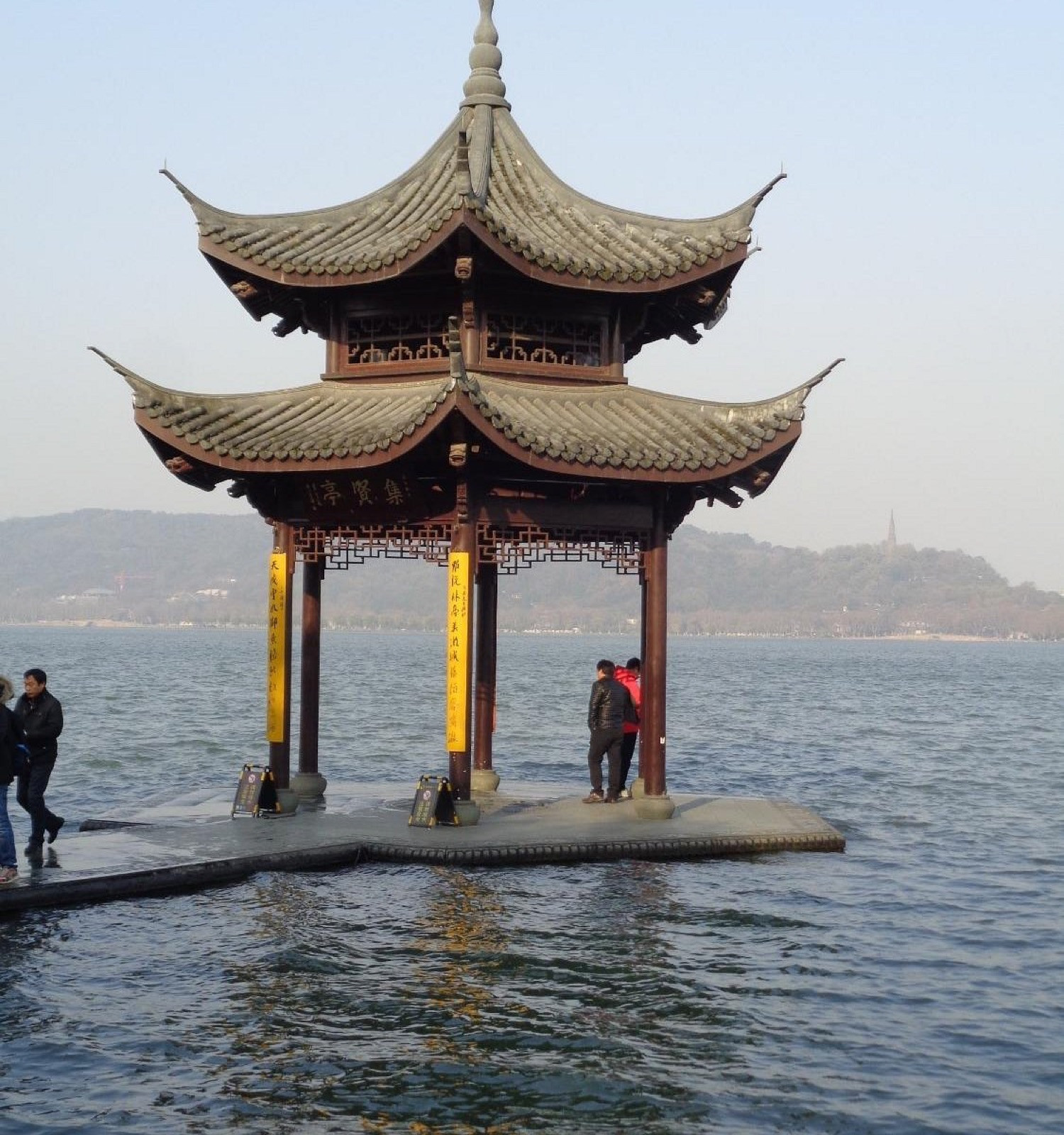
I had a 12-item to-do list for Day 2. By 10am, I had done three things and was sitting on a bench in Flower Harbor Park watching koi. I realized the list was making me miserable. I deleted it, bought a Longjing tea from a small stall, and walked for three hours without direction.
The most unexpected thing: I was not alone. West Lake is full of solo elderly Chinese — retirees practicing tai chi, painting, or just walking slowly. I was waved over to a tai chi group by a 70-year-old man in a white shirt. We didn’t share a single word, but he corrected my form for 20 minutes. We took a photo together, and he sent it to me via WeChat (his daughter, who spoke English, helped).
Lesson: Hangzhou is one of the best cities in China to do nothing. The infrastructure (benches, teahouses, clean restrooms) supports slow travel. Don’t overschedule.
Day 3: I Got Lost, Then Fed
I had planned to take a bus to Lingyin Temple. I took the wrong bus, ended up in a residential neighborhood 8 km from where I meant to be, and walked for an hour looking for a taxi. (Didi worked, but the app kept trying to give me motorbikes I didn’t want.) By the time I got back to the city, I was hungry, tired, and slightly panicking about Lingyin.
I ducked into a small restaurant that had no English menu and one English-speaking customer: a 28-year-old Hangzhou local named Wei. He translated the menu for me, ordered for me, and when the bill came, refused to let me pay — not out of romantic interest, he explained later, but because “foreigners who come alone to our city are ambassadors, and we want them to leave happy.”
He added me on WeChat, then spent 45 minutes writing me a custom itinerary for the rest of my trip in his phone’s notes app. He sent me the Chinese characters I needed to show taxi drivers. I still have it.
Lesson: Hangzhou locals are unusually warm to solo foreigners, and a small language barrier can be a feature, not a bug — it forces slower, more human interactions. Get on WeChat before you arrive (or have a friend with a Chinese number help you); many small shops and restaurants use it for everything.
Day 4: Tea, Tea, and More Tea
I spent Day 4 in Longjing Village, the original home of Dragon Well tea. I drank 11 cups of tea, walked 14,000 steps through terraced fields, and was taught the proper two-step brewing ritual by a 60-year-old farmer named Mr. Zhou, who kept a small teahouse overlooking the valley.
The most surprising thing: he served the first three cups to a small shrine on his table, “for the mountain.” When I asked (through translation app) why, he said: “The mountain gives us the tea. We give the first cup back. This is the deal.”
Lesson: If you like tea, plan a half-day just for Longjing Village. It’s a 20-minute taxi from central Hangzhou, completely safe to visit alone, and the kind of place where the farmer will sit and drink with you for an hour if you let him. Most farmers speak zero English; bring a translation app and patience.
Day 5: A Slow Goodbye
My last morning, I had breakfast at the hotel and walked around the east shore of West Lake one more time. The light was soft, the willow trees brushing the water, a few old men with fishing poles sitting on stone benches. I sat down and cried a little, which I had not expected.
I think what I cried about was how easy it had been. I had been afraid of this trip in a way I hadn’t been afraid of traveling in Europe, in Latin America, in Japan — places where I knew the language or at least the alphabet. China felt like a closed box. And what I found, in Hangzhou specifically, was a city that opened up to me the moment I opened up to it. Smiling at strangers worked. Showing up alone worked. Saying “I don’t know, please help” worked.
I left with a feeling I had not had in a long time: I could go anywhere. Even alone.
Practical Tips for Other Solo Female Travelers
These are the things I wish I’d known going in:
- Safety: I felt safer in Hangzhou than in most European capitals. The streets are well-lit, people are friendly, and violent crime against tourists is extremely rare. Use the same common sense you would anywhere.
- Getting around: DiDi works with foreign cards. Metro has English signage. Buses are harder — ask your hotel to write down your destination in Chinese characters before you go.
- Paying for things: Alipay now accepts foreign cards for top-up. Set it up before you arrive. Cash (RMB) is still useful for small vendors.
- Internet: Get a VPN before you arrive (Astrill, NordVPN). Google, WhatsApp, Instagram are blocked.
- Language: Pleco (offline dictionary) and Google Translate (offline Chinese pack) are non-negotiable.
- What to wear: Modest, comfortable, walking shoes. Avoid very short shorts in temples; bring a light scarf for shoulder coverage.
- Best areas to stay alone: Hubin (湖滨) is the most central and most populated — easy to walk to everything, lots of restaurants, and never feels empty even at night.
Would I Go Back?
Already booked. October this year, with a friend. We’re going to add Moganshan and maybe Shaoxing. I want to drink more tea.
If you’re a solo female traveler considering Hangzhou — or anywhere in China — just go. The version of the trip you’re afraid of is almost never the one that happens.
Have your own Hangzhou solo story? Share it in the comments — we feature reader essays once a month.