Hangzhou Food: 15 Dishes Every Visitor Should Try (and Where to Find Them)
Updated July 2026 — restaurant recommendations, dish descriptions, and ordering tips verified.
Hangzhou cuisine (Hangbang cai, 杭帮菜) is one of the eight great traditions of Chinese cooking, with a history of more than 1,000 years. It’s known for being fresh, light, slightly sweet, and deeply respectful of ingredients — the kind of food that doesn’t shout, just quietly impresses. Most of the iconic dishes revolve around the West Lake carp, the local pork, the Longjing tea, the bamboo shoots, and the lotus roots that grow in the wetlands around the city.
This guide covers the 15 dishes that define Hangzhou food, the restaurants that do them best, and how to order (and what to avoid) at each one. If you only eat 5 Hangzhou things in your life, eat these 5.
The 5 Must-Try Classics
If you only try five Hangzhou dishes, these are the ones. Every one of them is local, distinctive, and not really available outside the city (or at least not done well outside the city).
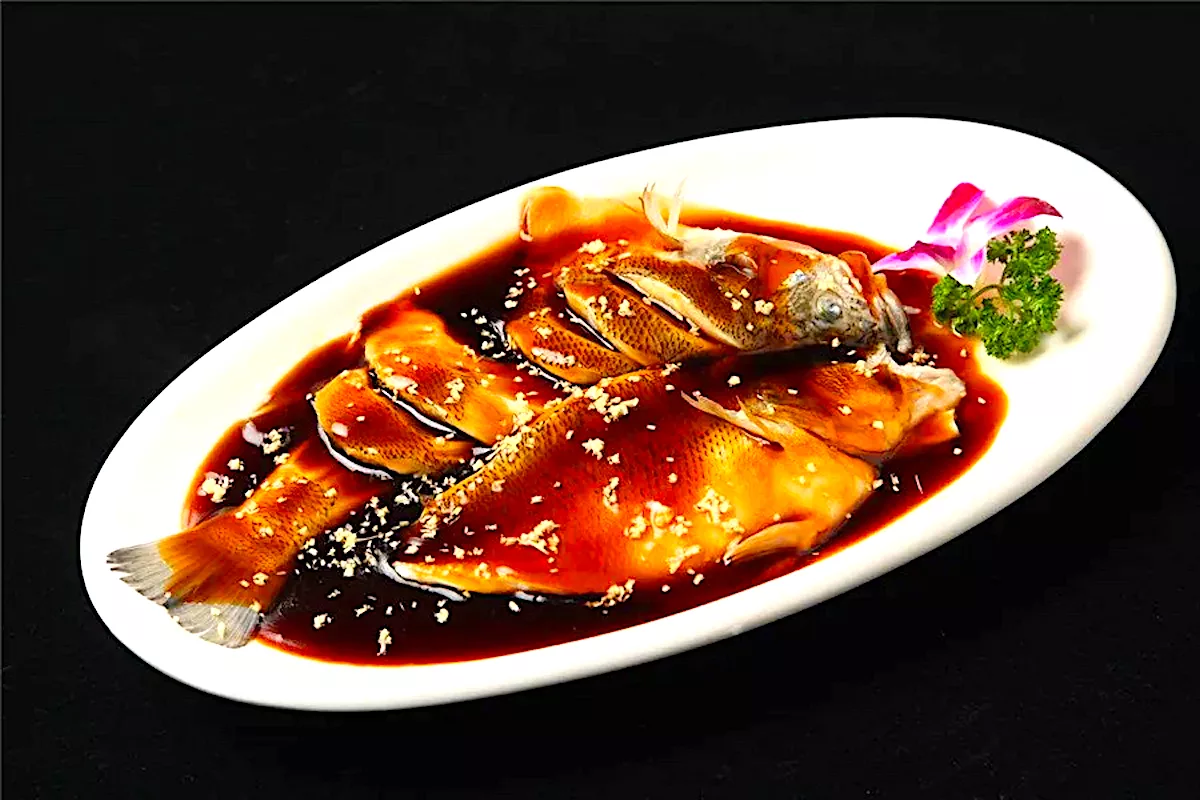
1. West Lake Vinegar Fish (西湖醋鱼)
The signature dish of Hangzhou cuisine. A whole grass carp from West Lake is briefly poached in hot water (not deep-fried, not braised), then topped with a sweet-sour vinegar glaze made from black vinegar, sugar, soy sauce, ginger, and a touch of sesame oil. The fish is tender, the sauce is sharp, the dish is meant to be eaten with white rice.
The dish is deceptively simple — get the fish wrong (overcooked, or not fresh enough) and the dish fails. That’s why you should only order it at restaurants that specialize in Hangzhou cuisine, never at random hotel restaurants or generic Chinese places.
Where to eat it: Zhi Wei Guan (知味观) at Hubin Yintai (湖滨银泰 in Hubin) is the most reliable spot in the city for this dish, and the price is fair (¥80-120 for a whole fish). The West Lake branch (on the south shore) is more atmospheric; the Hubin branch is more convenient.
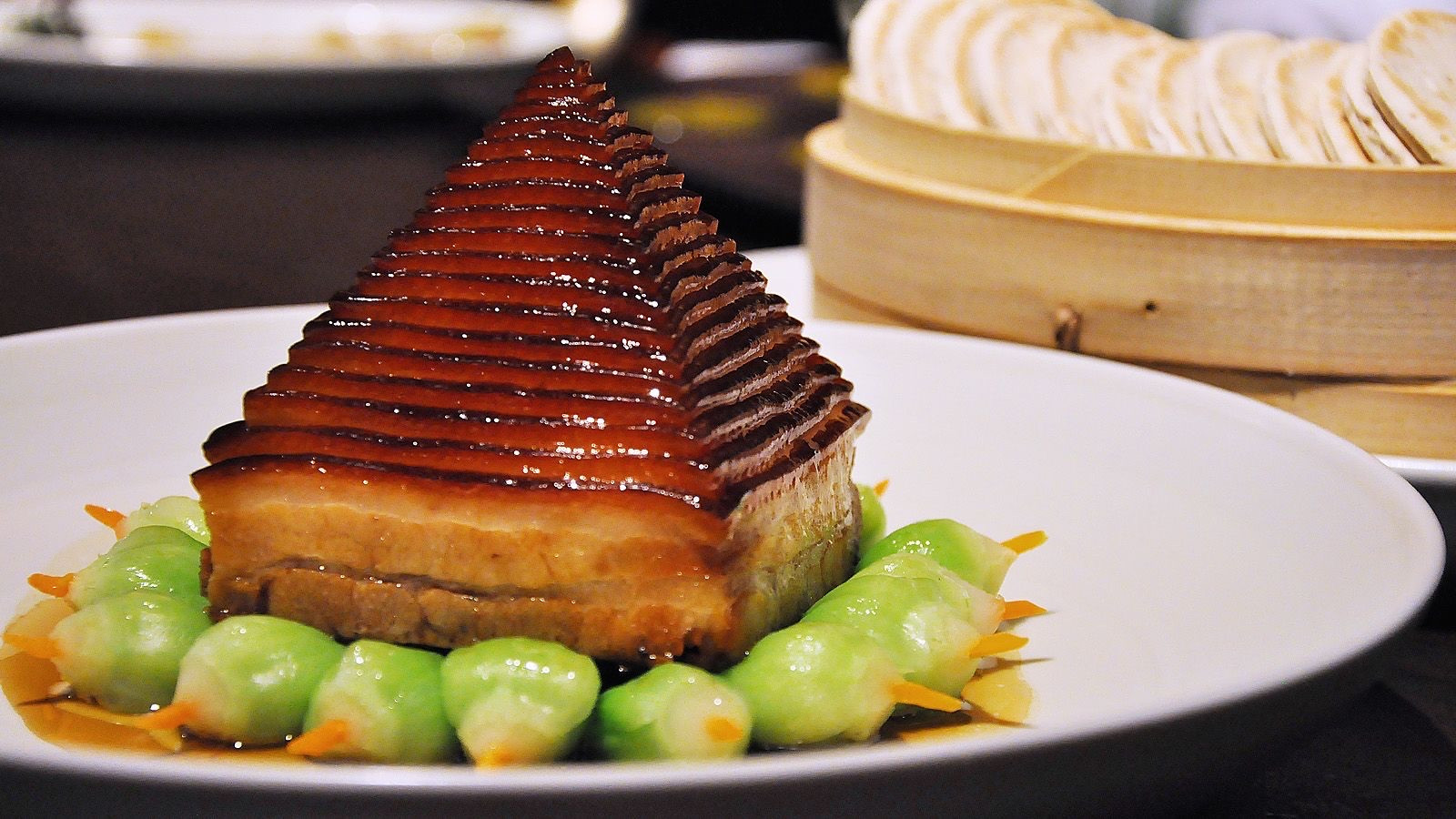
2. Dongpo Pork (东坡肉)
Named after Su Dongpo, the Song dynasty poet who was once governor of Hangzhou, this is a slab of pork belly braised for hours in soy sauce, rice wine, and sugar until it’s meltingly soft. The fat renders down, the sauce caramelizes, and the meat is so tender you cut it with a chopstick. It’s sweet, rich, savory, and the kind of dish you remember for years.
Where to eat it: Louwailou (楼外楼), the most famous restaurant in Hangzhou, has been making this dish for over 150 years. Order it at the Gushan (孤山) location on the north shore of West Lake for the full experience — it’s a bit touristy but the dish itself is excellent. A portion (around 300g) is ¥88-128.
3. Longjing Shrimp (龙井虾仁)
Fresh river shrimp, peeled and quickly stir-fried with tea leaves from the Longjing (Dragon Well) tea village, finished with a touch of Shaoxing wine. The dish tastes like spring — delicate, clean, and slightly grassy from the tea. It’s the opposite of heavy: a few perfect bites that you don’t want to overdo.
Where to eat it: the dish is on almost every Hangzhou menu, but the version at Green Tea Restaurant (绿茶) on Jiefang Road or the one at Zhi Wei Guan are both reliable. The price is ¥80-150 depending on portion size.
4. Beggar’s Chicken (叫花鸡)
A whole chicken is stuffed with mushrooms, ginger, scallions, and sometimes pork or chestnuts, wrapped in lotus leaves, then encased in clay and slow-baked for hours. The clay is cracked open at the table, the lotus leaves peeled back, and the chicken falls apart tender and steam-scented. It’s a theatrical dish — order it at a place that brings it to the table to crack open, and you’ll get the full experience.
Where to eat it: Louwailou and the Zhejiang Restaurant (浙江饭店) both do it well. A whole chicken is ¥180-280; a half chicken is enough for 2-3 people.
5. West Lake Lotus Root Soup (西湖藕羹)
Fresh lotus root, lotus seeds, and sometimes red dates, slow-simmered into a sweet soup thickened with rice starch. The lotus root is the star — it has a beautiful crunchy-but-tender texture, faintly sweet, and the soup is delicate and warming. It’s served as a dessert in most restaurants, or sometimes as a side dish to a main meal.
Where to eat it: almost any Hangzhou restaurant has it. The version at Zhi Wei Guan uses fresh lotus root from West Lake and is the benchmark. ¥30-50 a bowl.
The 5 Daily Staples You’ll See on Every Menu
These aren’t unique to Hangzhou the way the classics are, but Hangzhou does them exceptionally well. You’ll see them everywhere, and they’re worth ordering even if you’re not at a famous restaurant.
6. Cong Bao Hui (葱包桧)
A Hangzhou street food specialty: a thin wheat-flour pancake rolled around scallion (cong) and a deep-fried youtiao (a crispy Chinese cruller), then griddled with sweet bean sauce. The name is a political joke from the Southern Song dynasty (桧 = Qin Hui, the treacherous official) but the dish itself is just a delicious savory pancake. Vendors on Hefang Street make them for ¥6-10.
7. Pian Er Chuan Noodle (片儿川)
Hangzhou’s signature noodle dish. Wide wheat noodles in a light pork-and-bamboo broth, topped with sliced pork, fresh bamboo shoots, and a small handful of preserved mustard greens. The whole thing comes together in about 5 minutes of cooking and is meant to be eaten at any time of day — breakfast, lunch, or late-night snack. ¥18-30 a bowl at any noodle shop.
Where to eat it: Fang La Noodle Shop (方老大面馆) and Zhi Wei Guan Noodle Bar are both excellent. There are also dedicated 片儿川 shops all over the city that specialize in just this dish and a few sides.
8. Dingsheng Cake (定胜糕)
A small steamed rice-flour cake shaped like a Chinese ingot, traditionally given to scholars before the imperial exam. It’s slightly sweet, very fluffy, and dyed pink (the lucky color). You’ll see them at street stalls and at the Louwailou restaurant. ¥5-10 each.
9. Sweet Fermented Rice (酒酿圆子)
Glutinous rice balls in a warm sweet soup made from fermented rice (jiu niang, 酒酿) and a touch of osmanthus flower. The flavor is floral, sweet, slightly alcoholic, and the rice balls have a chewy texture that balances the soup. It’s a winter dish (the warmth is the point) and is sold at street stalls and at the bigger restaurants. ¥15-25 a bowl.
10. Longjing Tea Eggs (龙井茶叶蛋)
Regular tea eggs but made with Longjing tea leaves, which gives them a more floral, less bitter flavor than the standard soy-braised version. You’ll see them at convenience stores, street stalls, and at breakfast buffets. ¥3-5 each — the cheapest serious snack in Hangzhou.
The 5 You Shouldn’t Leave Without Trying
These are slightly more adventurous, slightly less ubiquitous, but all worth the effort.
11. West Lake Carp Soup (西湖莼菜汤)
A clear, simple soup made with chuncai (莼菜), a rare water plant that grows in West Lake and only in a few other places in the world. The leaves have a unique slippery, slightly mucilaginous texture (similar to okra, but more delicate) and the soup is finished with a touch of ham and Shaoxing wine. It’s the most “West Lake” dish on the menu after the vinegar fish, and you can only really get it in Hangzhou. ¥40-60 a bowl.
Where to eat it: Zhi Wei Guan and Louwailou both do it well.
12. Xiaolongbao (小笼包)
Yes, xiaolongbao is a Shanghai specialty, but Hangzhou has its own version — slightly bigger, the broth inside the dumpling is lighter and more pork-forward, and the wrappers are a bit thicker. You can find them at the bigger dim sum restaurants and at the Hangzhou locations of Jia Jia Tang Bao (佳家汤包) (a famous Shanghai chain that has a few Hangzhou branches). Order the crab roe (蟹粉) or pork (鲜肉) version. ¥40-60 for a steamer of 8.
13. Jianbing (煎饼) — Not the Beijing Version
Hangzhou jianbing is a thin rice-flour crepe griddled with egg, scallion, cilantro, and a smear of sweet bean sauce, with the optional addition of a crispy youtiao (Chinese cruller) folded inside. It looks similar to Beijing jianbing but is bigger, softer, and more herbaceous. Vendors make them fresh for ¥10-15 a piece, and they’re a great quick breakfast or late-night snack.
14. Fried Mandarin Fish with Sweet and Sour Sauce (干炸响铃)
A Hangzhou specialty that most people don’t know about: thinly-sliced pork or fish is wrapped in dried tofu skin (fu zhu), deep-fried until the outside is shatter-crisp, and served with a sweet-salty dipping sauce. The name literally means “dry-fried jingling bell” because of the sound the crispy tofu skin makes when you bite into it. ¥40-60 a portion.
15. Longjing Tea Roasted Chicken (龙井茶香鸡)
A whole chicken marinated in soy sauce, Shaoxing wine, ginger, and Longjing tea leaves, then roasted in a clay pot. The chicken is fragrant, tender, and infused with the grassy tea flavor. It’s not as famous as Dongpo pork but is a wonderful change of pace. ¥120-180 for a whole chicken, usually enough for 2-3 people.
Where to Eat: The Restaurant Map
Hangzhou has thousands of restaurants, but for Hangzhou cuisine specifically, the following are the most reliable.
High-end (¥300-600 per person with drinks)
- Louwailou (楼外楼) at Gushan: the most famous restaurant in Hangzhou, 150+ years old, full menu of Hangzhou classics, view of West Lake. Book 1-2 days ahead. The food is genuinely good (especially the Dongpo pork and the beggar’s chicken) and the experience is worth the price.
- Zhi Wei Guan (知味观) at Hubin Yintai: the other Hangzhou institution, slightly less famous but the food is equally excellent and the prices are 20-30% lower than Louwailou. Best for West Lake vinegar fish and chuncai soup.
Mid-range (¥100-200 per person)
- Green Tea Restaurant (绿茶) (multiple locations): a Hangzhou chain that does updated Hangzhou cuisine at reasonable prices. The menu has all the classics plus a few modern additions. Good for groups, family-friendly, English menu available.
- Grandma’s Home (外婆家) (multiple locations): a popular Hangzhou chain that does Hangzhou comfort food at very fair prices. The 麻婆豆腐 (mapo tofu) and 茶香鸡 (Longjing tea chicken) are particularly good. Expect a wait at dinner time.
- Zhejiang Restaurant (浙江饭店): slightly more formal, popular with locals for business dinners. Excellent beggar’s chicken.
Budget (¥30-80 per person)
- Fang La Noodle Shop (方老大面馆): the best 片儿川 in the city, plus a handful of other Hangzhou noodle dishes. Open 7 a.m. to 2 a.m. — the classic late-night Hangzhou meal.
- Hefang Street food stalls: walk the entire 1.5 km of Hefang Street and try the various stalls — cong bao hui, jianbing, dingsheng cake, sweet rice balls, all for ¥5-15 each.
- Wushan Night Market (吴山夜市): every Friday, Saturday, and Sunday night, a few blocks around Wushan Square turn into a food market with hundreds of stalls. ¥20-50 gets you a full meal of small plates.
How to Order at a Hangzhou Restaurant
For first-time visitors, the Chinese-only menu can be intimidating. Here are a few practical tips.
- Find an English menu first. All the high-end and most mid-range restaurants have English menus. If they don’t, the picture menu (every dish has a photo) is fine — point at what you want.
- Order 1-2 dishes per person. Portions in China are bigger than Western restaurants; 1.5-2 dishes per person is usually right. Add a soup and a starch (rice or noodles) and you’re set.
- Ask for “微糖” (wēi táng) if you don’t want it sweet. Hangzhou cuisine is slightly sweet by default. If you don’t like sweet-savory flavors, ask the server for “less sugar” or “微糖.” Most dishes can be adjusted.
- Tea is usually free. When you sit down, the server will bring a pot of tea (usually Longjing). It’s usually included in the service charge, but confirm if you’re not sure — paying ¥30-50 for tea you didn’t order is a common tourist surprise.
- Don’t tip. Tips are not expected in Chinese restaurants and can even be awkward. The service charge (10-15% in higher-end places) covers everything.
- Use Alipay or WeChat to pay. Most restaurants in Hangzhou accept Alipay and WeChat, often with a small discount (5-10%) for using them. International Visa/Mastercard is accepted at the high-end restaurants but not always at the smaller ones. Cash still works everywhere.
What to Drink With Hangzhou Food
Tea: Longjing (Dragon Well) green tea is the local classic, and almost every restaurant will bring a pot to the table for free. Ask for it specifically if they bring jasmine or another variety. A good cup of Longjing is grassy, slightly sweet, and rounds off the fatty dishes beautifully.
Beer: the local beer is West Lake Beer (西湖啤酒), a light lager that’s clean and pairs well with most Hangzhou dishes. Most restaurants have it for ¥8-15 a bottle.
Huangjiu (黄酒, yellow wine): Shaoxing huangjiu, a fermented rice wine, is the traditional pairing for richer Hangzhou dishes (Dongpo pork in particular). It comes in small ceramic pots and is gently warmed before serving. Sweet, slightly alcoholic (around 14%), and very food-friendly.
Baijiu (白酒): the strong sorghum liquor you’ll see in tiny glasses at Chinese business dinners. Foreigners rarely enjoy it, but if your local friends pour you a glass, the polite response is a small sip with a nod. Don’t try to keep up with the locals — they have a lifetime of practice.
The Bottom Line
Hangzhou cuisine is gentle, fresh, and built around the ingredients of the West Lake area. If you eat the 5 must-try classics (West Lake vinegar fish, Dongpo pork, Longjing shrimp, beggar’s chicken, lotus root soup), you’ll understand the cuisine. Add a street-food crawl of Hefang Street or a visit to Wushan Night Market and you’ll see the everyday side. Skip the Beijing/Shanghai chains that have moved into the tourist areas — Hangzhou has its own thing, and it’s well worth the time to find it.
Eat well, eat slowly, and let the tea pour freely.