Tea Ceremony in Hangzhou: A Complete Guide to Longjing, Gongfu Cha, and Tea Houses
Updated July 2026 — ceremony types, tea house prices, and Longjing variety info verified.
Hangzhou is the spiritual home of one of China’s most famous teas — Longjing (Dragon Well, 龙井) — and the place where the slow, deliberate Chinese tea ceremony known as gongfu cha (功夫茶, literally “tea with skill”) reaches its most refined form. Whether you want to watch a 30-minute demonstration, sit through a 2-hour immersive ceremony, or just drink a cup of fresh-picked tea in a hillside village, Hangzhou is the best city in China to do it.
This guide covers what gongfu cha actually is, why Hangzhou is its spiritual home, where to drink the best tea in the city, and how to choose a tea ceremony experience that matches your time and budget.
What “Tea Ceremony” Means in Hangzhou
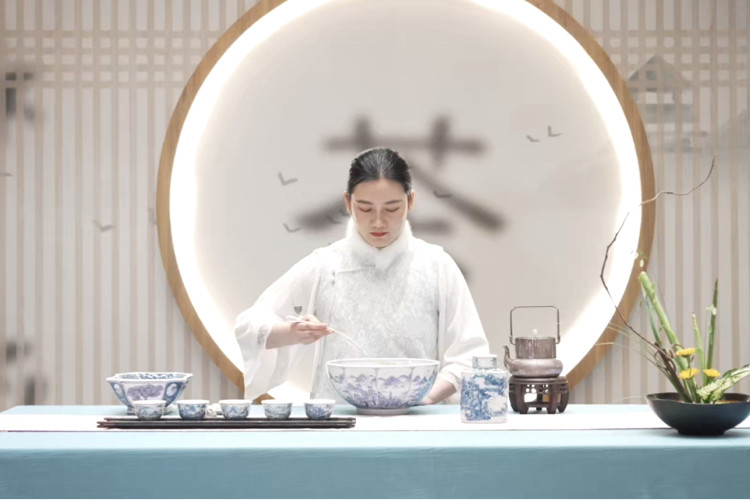
Westerners often think of the Japanese tea ceremony (chanoyu) when they hear “tea ceremony” — a strict, choreographed ritual of several hours. The Chinese version is different: more flexible, more focused on the tea itself, and generally less formal. The Chinese term is gongfu cha (“tea with skill”), and it refers to a method of brewing tea in a small clay or porcelain pot, in multiple short infusions, where each infusion brings out a different facet of the tea’s flavor.
The ceremony is not just about the tea — it’s also about the social ritual. In traditional settings, a host prepares tea for guests, and the guests admire the tea’s color, aroma, and taste before drinking. The host refills the cups several times, and the conversation moves slowly. The full ceremony can take 30 minutes to several hours depending on the formality and the number of infusions.
In Hangzhou specifically, the gongfu cha tradition has a few local characteristics:
- Glass teaware instead of clay. Longjing is a green tea, and Chinese tea masters use glass cups instead of Yixing clay pots (which would stain and alter the tea). Watching the leaves unfurl in hot water through the glass is part of the pleasure.
- Focus on the leaf’s appearance. Longjing leaves are flat, smooth, and bright green. A good ceremony highlights the visual quality of the leaves, not just the brewed tea.
- Multiple short infusions. Unlike the Japanese or British style of one long steep, gongfu cha uses 3-5 short infusions, each 30-60 seconds, gradually drawing out flavor without bitterness.
- The “Three Smells” tradition. Before drinking, the custom is to smell the empty cup three times — once for the tea’s aroma, once for the lingering “empty cup fragrance” (the smell left in the cup), and once for the steam.
Why Hangzhou Is the Spiritual Home
Hangzhou is the center of Longjing tea production. The Longjing village area in the hills southwest of West Lake has been growing tea for over 1,200 years, and the tea it produces is widely considered the best green tea in China. The microclimate — misty hills, well-drained soil, morning fog — gives the leaves their distinctive sweet, slightly chestnutty flavor.
The imperial court of the Southern Song dynasty (which was based in Hangzhou from 1127) made Longjing the official tribute tea. The famous 18 Imperial Tea Bushes (御茶, still tended near the village) are said to have been personally picked by Emperor Qianlong in 1751. Today, Longjing is the only tea in China with Protected Designation of Origin status — only tea grown in the specific Longjing village area can be called “West Lake Longjing” (西湖龙井).
All of this means that the tea ceremony in Hangzhou is not just a tourist experience — it’s a living tradition practiced by everyone from imperial-history enthusiasts to neighborhood grandmothers.
The Five Steps of a Hangzhou Gongfu Cha Ceremony
If you sit through a full ceremony, these are the five steps you’ll see. Knowing the steps makes the experience much richer — you’ll understand what the host is doing and why.
Step 1: Appreciating the Dry Leaves (赏干茶)
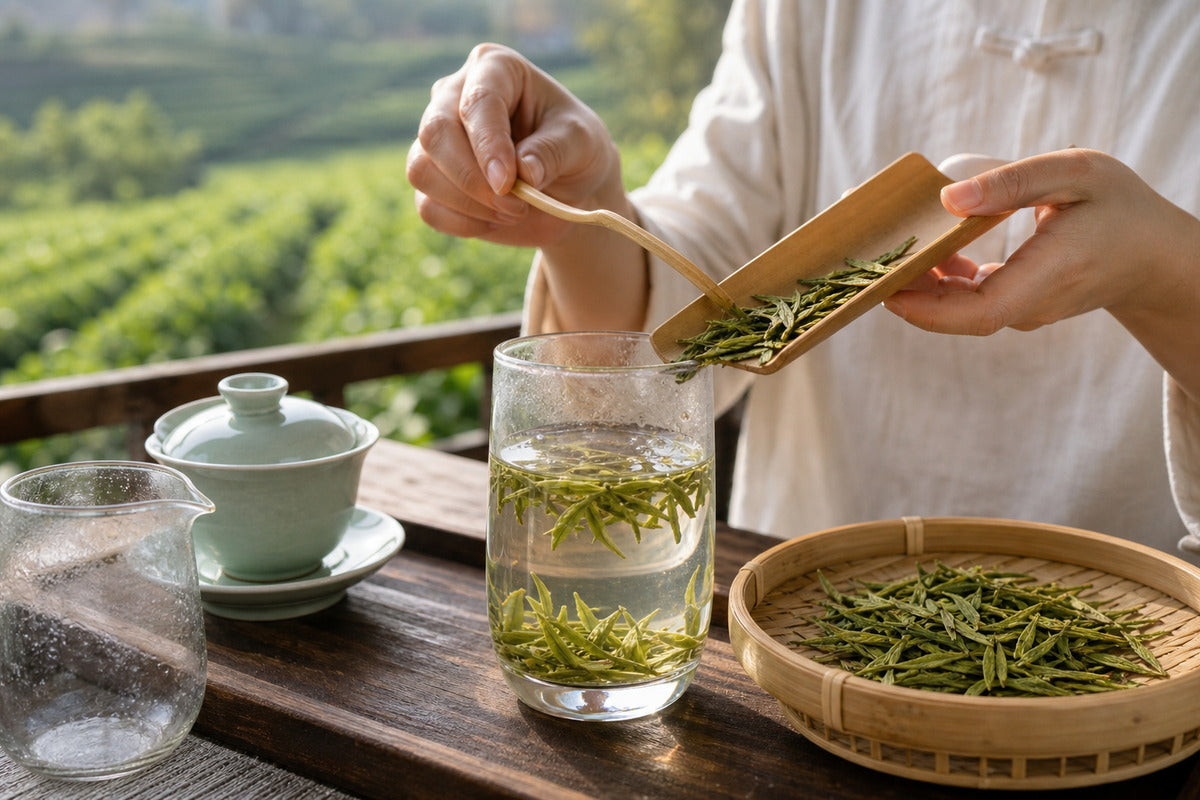
Before brewing, the host shows the guests the dry tea leaves. They’ll be displayed in a shallow dish or on a tea tray. You look at the color (should be bright green), the shape (Longjing leaves are flat and sword-shaped), and the uniformity (a sign of careful picking and processing). Pass the dish around and look closely — the “bud-to-leaf ratio” is the marker of premium Longjing.
Step 2: Warming the Vessels (温杯)
The host pours hot water into the glass pitcher and small tasting cups, then pours it out. This warms the glassware so the tea brews at the right temperature from the first infusion. Don’t skip this step — the temperature drop from cold glassware can ruin the first brew.
Step 3: Adding the Leaves (投茶)
The host places the measured amount of leaves into the warmed glass pitcher. For Longjing, this is typically 3-5 grams per 150-200 ml of water. The leaves settle at the bottom of the glass.
Step 4: The First Pour (头泡)
Hot water (80-85°C for Longjing — never boiling, which would scorch the leaves) is poured into the glass in a circular motion. The leaves rise and unfurl slowly, an effect called “雀舌” (sparrow’s tongue) for the way the buds point upward. The host steeps for 30-45 seconds, then pours the tea into the small tasting cups. The first infusion is the most delicate.
Step 5: Multiple Infusions (续泡)
The host repeats the process, with slightly longer steeping times for each subsequent infusion. Longjing typically gives 3-4 good infusions, each with a slightly different character. By the third infusion, the tea is bolder and more grassy. By the fourth, it’s usually weak — time to refresh the leaves or end the session.
Where to Experience a Tea Ceremony in Hangzhou
Hangzhou has options ranging from free (just order tea at a village tea house) to ¥500+ (private ceremony with a tea master). Here are the best choices by budget and style.
Free and Cheap: Village Tea Houses (¥30-80 per person)
The most authentic experience, and the cheapest, is to take a DiDi to the Longjing Tea Village area, walk into one of the family-run tea houses, order a pot of fresh Longjing, and let the family show you how to brew it. The ceremony isn’t formal, but the tea is excellent (often picked in the last few weeks), the views over the tea terraces are stunning, and the price is ¥30-80 per pot (the pot is shared, with multiple infusions). Most tea houses are open 9 a.m. to 6 p.m. and don’t take reservations — just walk in.
Recommended: walk up the main road from the village entrance past the first wave of more commercial houses, and pick one with a view you like. The tea is the same price across all of them; the difference is the view and the seating.
Mid-Range: The China National Tea Museum (¥0-100 per person)
The China National Tea Museum (中国茶叶博物馆) on the south side of West Lake (and a smaller branch on Hefang Street) has a small tea-tasting room and an outdoor tea garden where you can sit and drink Longjing. The setting is beautiful (next to a bamboo grove, overlooking the tea fields), the tea is high-quality, and the price is reasonable. The museum itself is free, and a pot of tea in the tea room is ¥30-80. Ceremonies are not formal here — it’s more of a “sit and drink in a beautiful place” experience than a structured ceremony.
Premium: Private Tea Ceremony (¥300-800 per person)
Several Hangzhou teahouses and boutique hotels offer formal gongfu cha ceremonies led by a tea master. The 60-90 minute ceremony covers the five steps above in detail, with the master explaining each move and answering questions in (limited) English. The price includes 2-3 different teas and a small tea snack. The best operators:
- Tea Culture Research Center (茶文化研究中心) at the China National Tea Museum’s main branch. ¥200-400 per person for a 90-minute ceremony in a dedicated tea room overlooking the tea fields. Book at least one week ahead.
- Longjing Manor (龙井草堂): a high-end private tea club in the tea village, set in a 200-year-old restored mansion. ¥500-1,000 per person for a 2-hour private ceremony with a master. Book 2-4 weeks ahead.
- The Amanfayun Resort offers tea ceremonies to outside guests for ¥300-500 per person. The setting is a restored Qing-era village in the tea fields; the ceremony is led by the resort’s tea master. Book through the resort.
What Tea to Drink in Hangzhou
Hangzhou is overwhelmingly a green tea city, but you’ll find a few other varieties if you look. Here’s the local lineup.
Longjing (Dragon Well) — The Classic
Green tea, flat sword-shaped leaves, sweet-grassy flavor with a hint of chestnut. This is what Hangzhou is famous for. Within Longjing, there are several grades:
- Pre-Qing Ming (明前龙井): picked before April 5 (the Qingming festival). The youngest, most tender leaves; the most expensive (¥1,000-3,000/500g). The “champagne of Longjing.”
- Pre-Rain (雨前龙井): picked before April 20 (Guyu). Slightly more mature leaves, more body and flavor. Excellent value (¥400-1,000/500g).
- Regular Longjing: picked through May. The everyday Longjing, more bitter and less aromatic (¥100-400/500g).
For a first-timer, the Pre-Rain grade is the sweet spot: real Longjing flavor, fair price, recognizable quality.
Jiukeng (九曲红梅) — The Local Black Tea
A black tea (fermented, not green) from the Nine Creeks area south of West Lake. Less famous than Longjing, but locally beloved for its malty, slightly floral flavor. ¥200-500/500g. Worth trying if you want a break from green tea.
Jasmine Tea (茉莉花茶) — The Traditional Blend
Green tea scented with fresh jasmine blossoms. Not specifically a Hangzhou variety, but widely available and historically popular in northern China. Hangzhou’s jasmine tea is high-quality (the local tea base is good). ¥100-300/500g.
White Tea, Oolong, and Pu’er — Imports
The big teahouses in Hangzhou also serve white tea (from Fujian), oolong (from Fujian and Guangdong), and pu’er (from Yunnan). These are not local, but the tea masters are typically knowledgeable and can introduce you to the broader Chinese tea world if you ask. Pricing is similar to other major Chinese cities.
How to Buy Longjing Without Getting Scammed
Longjing is one of the most faked teas in China. Real Pre-Qing Ming Longjing from the West Lake area sells for ¥1,500-3,000/500g, but you’ll see stalls in Hefang Street and elsewhere selling “Longjing” for ¥50-100/500g. None of that is real. Here’s how to spot the genuine article.
Look for These Markers
- Geography: the label should say “西湖龙井” (West Lake Longjing) or specifically mention the Longjing village. “浙江龙井” (Zhejiang Longjing) is from a wider area and acceptable but cheaper. Anything else (“福建龙井,” for example) is fake.
- Appearance: real Longjing leaves are flat, smooth, bright green, and about 1.5-2 cm long. The buds should be pointed. If the leaves are curly, yellow, or broken, it’s not real Longjing.
- Aroma: real Longjing has a distinctive fresh, sweet-grassy, slightly chestnutty aroma. Fake Longjing smells flat or vegetal.
- Price: ¥100/500g is suspicious. ¥300/500g is on the low end. ¥1,000+/500g is the real Pre-Rain grade.
- Vendor reputation: buy from the Longjing village tea houses, the China National Tea Museum, the established tea shops on Hupao Road, or the HZ Green Tea brand in supermarkets. Avoid street stalls and tourist-shop “tea ceremony” pitches.
How Much to Buy
Longjing is best fresh — within 6 months of picking. If you’re leaving Hangzhou in a few days, buy a small amount (50-100g) to take home. If you want a stash for a few months, 250-500g is fine. Buy in vacuum-sealed individual packets if possible, which keep the tea fresh longer.
Tea Etiquette: The 5 Things to Know
Westerners aren’t expected to know Chinese tea etiquette, but a few basics will make the experience much smoother.
- Receive the cup with both hands. When the host pours you tea, lift the cup with both hands as a sign of respect. With one hand is fine if both hands are occupied.
- Tap two fingers on the table to say thank you. This is the standard “thank you for the tea” gesture, derived from a Qing-dynasty story about the emperor. Tapping the index and middle finger on the table, two or three times, is universally understood.
- Smell the empty cup between infusions. The “empty cup fragrance” is part of the experience. After drinking, lift the empty cup to your nose and breathe in.
- Don’t pour your own tea in a group setting. If you’re at a group ceremony, the host will pour for everyone. If you want to pour for others, that’s a friendly gesture — accept when the host pours for you.
- Don’t add sugar, milk, or lemon. Chinese tea ceremony tea is drunk straight. Adding anything is a major faux pas in a formal setting, and a sign you don’t understand the ceremony.
Beyond the Ceremony: What Else Tea-Lovers Should See in Hangzhou
If you have extra time and tea is your thing, add these to your Hangzhou trip:
- The Meijiawu Tea Village: a smaller, less crowded alternative to Longjing village, with a working tea plantation, a small museum, and several family tea houses. ¥0 to enter, ¥30-60 for a pot of tea.
- The China Tea Museum’s main branch on Longjing Road: more extensive than the south branch, with a working tea-processing facility, a large collection of teaware, and a beautiful tea garden. Free.
- The Hupao Road Tea Houses: a row of established tea houses on the south side of West Lake, in business for generations. Less touristed than the village, more formal than the Hefang Street shops. ¥30-100 per pot.
- The HZ Tea Wholesale Market: an insider’s spot for serious tea buyers. Less polished than the village but with deeper inventory and the chance to talk directly to the tea farmers. Not for casual visitors.
The Bottom Line
A tea ceremony in Hangzhou is one of the most worthwhile cultural experiences in eastern China, and the city is the best place in the country to do it. Start with a free village tea house in Longjing village to see the basics; if you want depth, book a private ceremony at the Tea Museum or a high-end operator. Drink the tea slowly, smell the empty cup, and tap two fingers on the table when the host refills you. The tradition is 1,200 years old, but it still feels alive.