Hangzhou Xiaoshan Airport (HGH): The Complete Arrival and Transit Guide
Updated July 2026 — terminal map, transit options, and visa-free entry rules verified.
Hangzhou Xiaoshan International Airport (IATA: HGH, ICAO: ZSHC) is the main international gateway to Hangzhou, located about 27 km east of the city center. It’s a clean, modern, well-organized airport — substantially less stressful than Shanghai Pudong, and a real advantage of using Hangzhou as your China entry point. Most international travelers who use the 240-hour visa-free transit policy (US, UK, Canada, Australia, most of EU) can land here directly, skip the Shanghai transfer, and be in a Hangzhou hotel within an hour of wheels-up.
This guide covers every practical detail of arriving at, transiting through, and departing from HGH — the terminals, the visa-free policy as it applies at this specific airport, ground transport to the city, and the few things that go wrong here that are worth knowing in advance.
Terminals at a Glance
Hangzhou Xiaoshan has three terminals in active use, with a fourth (T4) under construction as of 2026 and scheduled to open in late 2027 or 2028.
| Terminal | Status | Used for | How to identify |
|---|---|---|---|
| T1 | Open (limited) | Some domestic flights, mostly older carriers | Older terminal, small footprint |
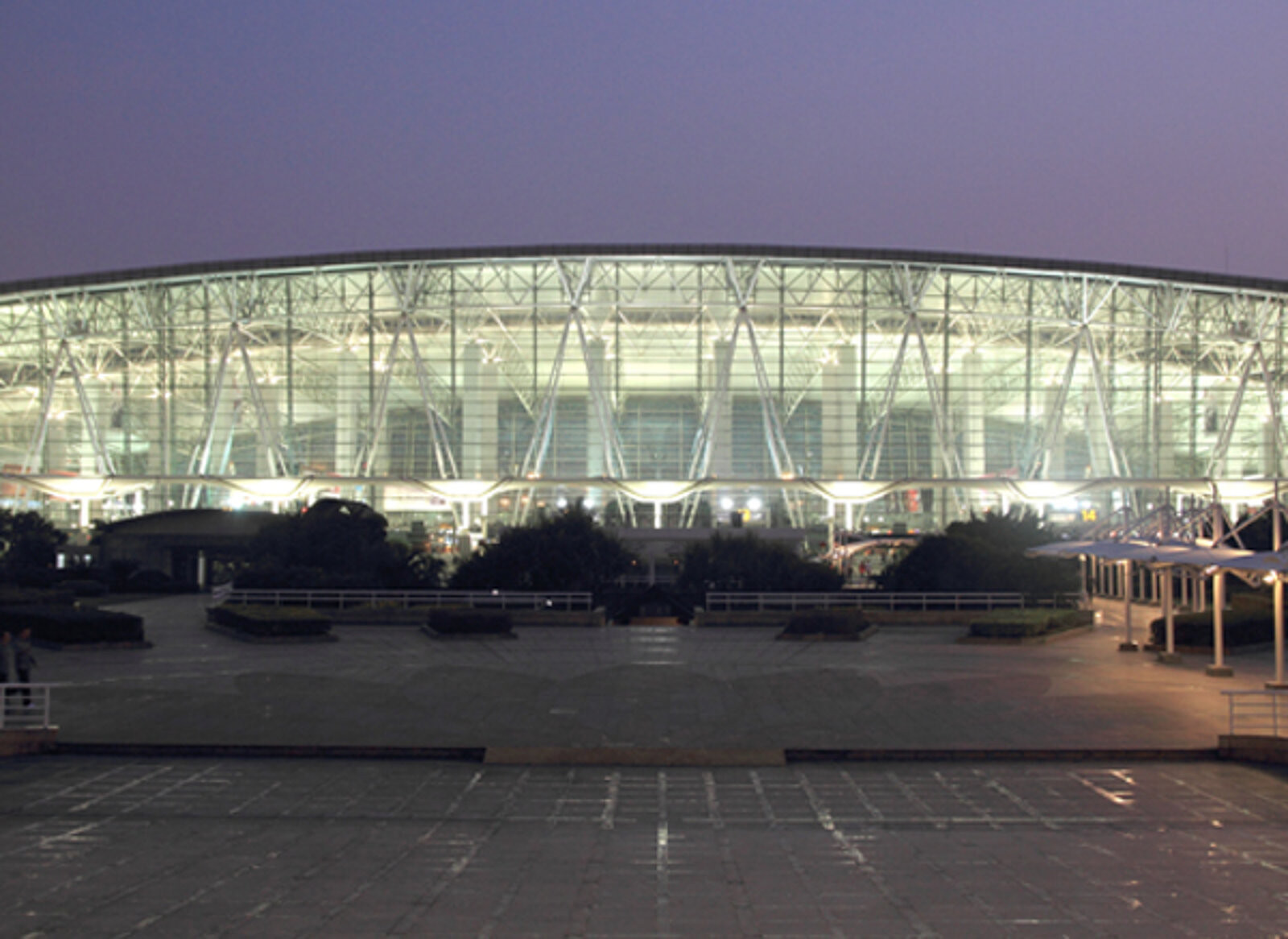
| T2 | Open | Majority of domestic departures and arrivals | Curved steel-and-glass structure, biggest terminal |
| T3 | Open | Most international flights | Adjacent to T2, dedicated international section |
| T4 | Under construction | Future expansion | Closed to public |
Which terminal will your flight use? your boarding pass will say. The terminals are connected by a short covered walkway (3-5 minutes’ walk), so if you make a mistake, you can correct it. The airport is also small enough that you won’t get lost — the entire post-security area is one long corridor with shops and gates on both sides.
Arriving at HGH: Step by Step
If you’re arriving on an international flight, here’s what to expect. The whole process from wheels-down to outside the terminal takes 30-60 minutes, depending on queues.
Step 1: Disembarkation and Walk to Immigration
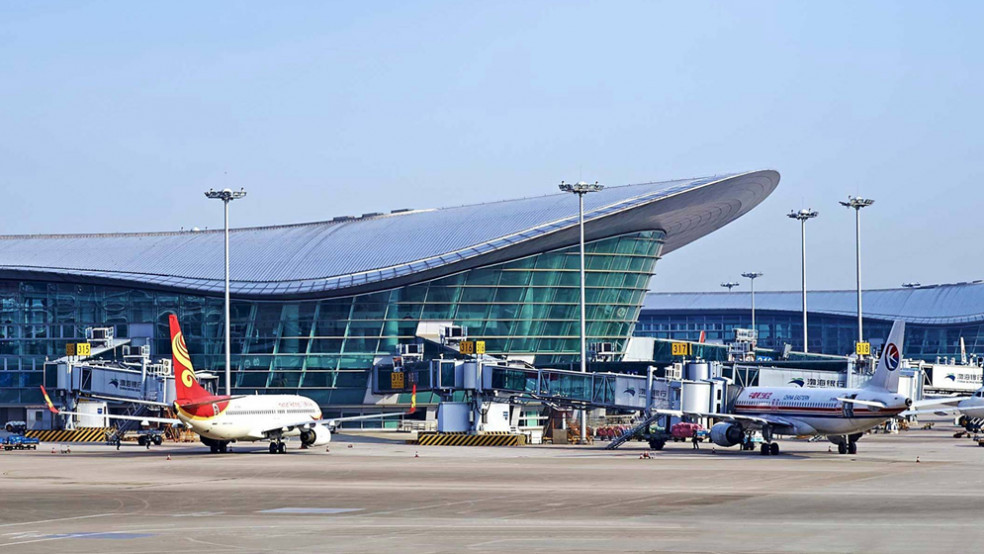
You’ll deplane either directly onto the apron (most common) or via a jetbridge. Walk to the immigration hall. The signs are in English and Chinese. Allow 10-15 minutes for the walk, especially if you’re at the far end of the terminal.
Step 2: Immigration (Passport Control)
Foreign passport holders go to the “Foreign Passport” lanes. There are usually 4-8 lanes open, and the queue moves quickly (5-15 minutes typical). Have ready:
- Your passport (6+ months validity, 2+ blank pages)
- Your visa or printed 240-hour transit confirmation (the airline should have given this on the plane)
- Your arrival card (filled out on the plane, in black pen, block letters)
- Your hotel booking confirmation (printed or on your phone, with the hotel’s address in Chinese)
- Your onward ticket to a third country (printed or on your phone, with a verifiable PNR)
The officer will take your photo, scan your fingerprints, stamp your passport, and you’re through.
Step 3: Baggage Claim
Follow the signs to baggage claim. Screens above each carousel show which flight is using which carousel. The walk from immigration to the carousels is 3-5 minutes. Allow 10-20 minutes for bags to appear, longer if your flight was one of the first to land.
Step 4: Customs
Walk through the “Nothing to Declare” lane (green) unless you’re carrying more than the duty-free allowance (USD 700 in goods for most travelers, USD 20,000 in cash equivalents requires declaration). X-ray scan is automatic; the process takes 1-2 minutes.
Step 5: Exit to Public Area
You exit into the arrivals hall of T3 (international). Money exchange, ATMs, SIM card vendors, and a few tourist info counters are on your left as you exit. The ground transport area (taxis, DiDi pickup, metro) is one floor down via escalator or elevator.
Getting from HGH to Downtown Hangzhou
You have four realistic options, ranging from ¥8 to ¥200 and 45 to 90 minutes.
| Option | Cost | Time | Best for |
|---|---|---|---|
| Metro Line 1 + Line 19 (Airport Express) | ¥9-12 | 55-70 min | Budget travelers, solo, no heavy bags |
| Airport Limousine Bus | ¥20-30 | 60-80 min | Mid-budget, large bags, want direct drop-off |
| DiDi (ride-hail) | ¥90-150 | 45-60 min | Groups, late night, lots of luggage |
| Taxi (metered) | ¥110-160 | 45-60 min | Anyone who can’t get DiDi to work |
Option 1: Metro (Cheapest)
The Airport Express (Line 19) connects HGH directly to the city center. From the airport station (located in the basement of T2/T3), you can either stay on Line 19 all the way to its terminal station at Hangzhou Railway Station, or transfer at Xixing Road Station to Line 1 for West Lake and Wulin Square. The full trip from airport to West Lake takes 55-70 minutes and costs ¥9-12. Last train departs the airport around 10:50 p.m.
Pros: cheapest, frequent (every 6-10 minutes), reliable. Cons: long ride with luggage, no views, you need to navigate to your hotel from the metro station.
Option 2: Airport Limousine Bus
There are 5-6 airport bus routes that go to different parts of the city. The most useful for tourists is the route to Wulin Square (武林广场), which terminates in the central downtown area near West Lake. Buses run every 20-30 minutes from 6 a.m. to 11 p.m. ¥20-30 per person, pay on board (cash or Alipay). Large luggage goes in the compartment under the bus. Travel time 60-80 minutes depending on traffic.
Pros: comfortable seats, luggage storage, drops you near hotels. Cons: less frequent than metro, slower, no flexibility on drop-off.
Option 3: DiDi
The pickup area for DiDi is on the first floor of the parking structure, well-signed from the arrivals hall. Open the DiDi app, set your destination, choose “Express” or “Premier,” and wait. Most drivers don’t speak English, but the app translates the chat automatically. The trip to most West Lake-area hotels is ¥90-150 and takes 45-60 minutes outside rush hour, 75-90 minutes during evening peak (5-7 p.m.).
Pros: door-to-door, comfortable, predictable cost. Cons: more expensive, can be hard to find the pickup spot the first time, surge pricing during peak hours.
Option 4: Taxi
The taxi queue is right outside the arrivals hall, well-signed. Hangzhou taxis are red with a green-roof light. Drivers turn on the meter; the trip to most West Lake-area hotels is ¥110-160 plus a ¥11 base fare. Drivers typically don’t speak English, so have your destination written in Chinese or use the offline map app to show them.
Pros: always available, no app needed. Cons: drivers occasionally take longer routes, language barrier, slightly more expensive than DiDi during off-peak.
Departing from HGH: What to Know
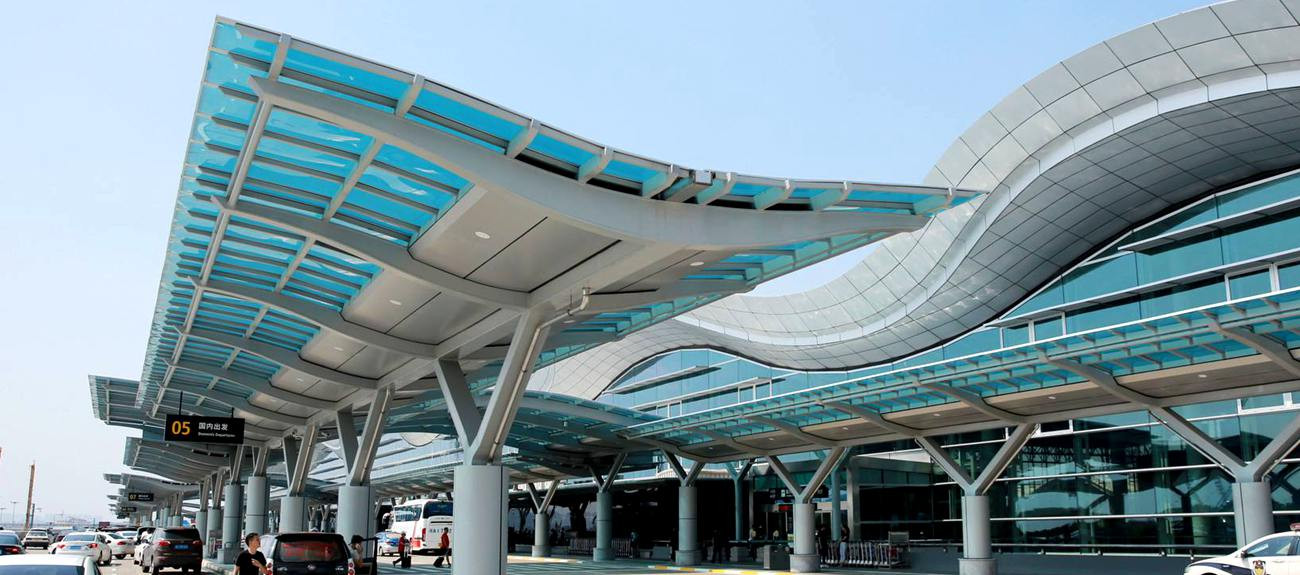
Hangzhou airport is efficient but has a few quirks worth knowing.
Arrive Early
For international flights, arrive 3 hours before departure. For domestic flights, 2 hours is enough. The lines at security and immigration can be 30-45 minutes during peak times (weekday evenings, Sunday afternoons, and any Chinese holiday). The airport is small enough that 2 hours is plenty if you don’t have checked bags; 3 hours is wise if you do.
Check-In Options
- Airline counters: open 3 hours before international, 2 hours before domestic. Self-service kiosks are available for most major Chinese carriers.
- Online check-in: available 24-48 hours before departure for most airlines, via the airline app or website. Saves 15-30 minutes.
- Self-bag drop: available for most major carriers in T2 and T3. Scan your boarding pass, weigh your bag, print the tag, drop on the belt. Faster than the counter.
Security
Security is at the entrance to each gate area. Have your boarding pass and passport ready. Laptops and large electronics go in a separate tray. Liquids in carry-on must be 100 ml or less, in a single 1-liter clear bag (standard international rules). Power banks must be under 100 Wh (most are 20-30 Wh, so this is rarely an issue).
Immigration Out
For international departures, you clear immigration and customs after security. The lines are usually 5-15 minutes for foreigners. Have your passport, boarding pass, and (if applicable) departure card ready.
Wi-Fi
Free airport Wi-Fi is available throughout both terminals. The SSID is “Airport-Free-WiFi” or similar; you need a Chinese phone number to receive the SMS verification code, which is a problem for most foreign travelers. Workarounds: buy a Chinese SIM at the arrivals hall before clearing immigration (cheaper), or use the airport’s paid premium Wi-Fi (¥10-30 for 1-4 hours, no SMS required).
SIM Cards and Mobile Data
Chinese mobile data is essential for navigating Hangzhou. You have three options:
Option 1: Chinese SIM Card (Best for Most Travelers)
Buy at the arrivals hall of T3 — look for the China Mobile, China Unicom, or China Telecom counters, all of which are in the same area. The standard tourist SIM is ¥100-200 for 10-30 days with 5-30 GB of data. You’ll need your passport. The SIM is activated within 30 minutes. China Unicom works best for foreign phones (best band support for North American and European devices).
Option 2: eSIM (If Your Phone Supports It)
Buy a Chinese eSIM before you arrive (Airalo, Nomad, and Holafly all have China eSIMs). Activate on landing. Coverage is similar to a physical SIM but you skip the airport counter. ¥30-100 for 5-30 GB. Best for short trips and people who don’t want to queue at the airport.
Option 3: International Roaming
Your home carrier may offer China roaming for ¥50-200/day. Convenient but expensive. Most modern phones will work, but the data speeds can be slow and some apps (Google, Instagram, WhatsApp) are blocked in mainland China without a VPN.
For 4G/5G speed in China, you need a Chinese SIM or eSIM — international roaming often falls back to 2G/3G and is unreliable for navigation and DiDi.
Money, ATMs, and Currency Exchange
The arrivals hall has currency exchange counters (open 24/7, rates are average — about 1-2% worse than the official rate) and several ATMs that accept international Visa, Mastercard, UnionPay, and Cirrus/Maestro cards. The ATMs dispense CNY (Chinese yuan) and have a per-transaction limit of ¥2,000-5,000 depending on the bank.
You’ll also find Alipay- and WeChat-supported payment QR codes at the airport convenience stores, restaurants, and even the airport buses. If you’ve set up Alipay with a foreign card (see the visa-free guide), you can pay with your phone from the moment you land.
Where to Eat and Drink in the Airport
Hangzhou Xiaoshan has decent post-security food options for a regional Chinese airport. Most are Chinese chains rather than global brands, but the food is solid.
Best options in the international departures area (T3):
- Starbucks — for familiar coffee. The only global chain with a presence; expect a queue.
- Local noodle shops — several serving 片儿川 (Pian Er Chuan, Hangzhou’s signature noodle) and other Hangzhou dishes. ¥30-50 a bowl.
- Lao Zheng Xing — a Hangzhou restaurant chain doing classic Hangbang cai at airport prices. ¥80-150 per person.
- Convenience stores — FamilyMart and 7-Eleven, with sandwiches, salads, onigiri, and bottled drinks. Good for a quick bite before the flight.
Tip: the food is significantly cheaper before security (in the public arrivals area) than after. If you have time before your flight, eat in the public area, then go through security.
Sleeping at the Airport
HGH is open 24/7, and there are several good options for overnight stays or long layovers.
- Airport hotels: the Hyatt Place Hangzhou Airport is connected to the terminal via a covered walkway. ¥600-900/night for a clean, quiet room. Book in advance; it’s popular with crew and overnight travelers.
- Transit hotel (inside T3 international): the “Air Sleep” capsule hotel is past immigration in the international departures area. ¥200-400 for 4-8 hours. Bookable on the spot if there’s space, or reserve via the airport’s official WeChat.
- Sleeping in the terminal: the public area has rows of seats without armrests on the arrivals level, and the post-security area is open 24/7. Bring a sleeping mask and earplugs; the airport gets noisy around 5 a.m. when the first flights start.
Common Issues at HGH (and How to Avoid Them)
Issue 1: Your Airline Sent You to the Wrong Terminal
Some international carriers use T3, others T2. If you go to the wrong terminal, you’ll waste 15-20 minutes walking to the other one. The fix: check your boarding pass carefully before leaving the airplane. The terminal is printed in large letters on the boarding pass and announced on the plane.
Issue 2: The DiDi Pickup Is Confusing
The DiDi pickup zone is in the parking structure, not the curb. The signs say “网约车” (online ride-hailing). Walk past the taxi queue, into the parking structure, up one floor, and look for the designated pickup area. The first time is confusing; allow 10-15 minutes from gate to car.
Issue 3: The Metro Stops Running at 10:50 p.m.
If your flight lands after 10:30 p.m., you will not be able to take the metro. Plan a DiDi or taxi from the airport. The metro first-train departs around 5:45 a.m.
Issue 4: Long Immigration Lines at Peak Times
Peak immigration times are 1-3 p.m. and 6-9 p.m. (when the most international flights arrive). If you have a choice of flight times, an early-morning or late-evening arrival has a much shorter line.
Issue 5: The Hotel Confirmation Doesn’t Show an Address in Chinese
Immigration wants to see a hotel address in Chinese. Booking.com and Agoda show the address in English by default, but most have a Chinese version in the details. If yours doesn’t, the front desk can email you a Chinese confirmation, or use the hotel’s official Chinese name on a map app to get the address.
The Bottom Line
Hangzhou Xiaoshan is one of the easiest Chinese airports to use, and a great entry point for first-time visitors to China. Allow 3 hours for international departure and 60 minutes from landing to ground transport, take the metro if you’re on a budget, take DiDi if you have luggage or are arriving late, and don’t worry about food — there are decent options on both sides of security. With a Chinese SIM or eSIM, navigation and payment are smooth from the moment you step out of arrivals.